Sack of Tumbleton
Fire & BloodThe Sack of Tumbleton followed the Treasons and exposed the collapse of authority within Aegon II’s loyalist army. With Lord Ormund Hightower dead and no leader able to restrain the host, rival commanders contested precedence while their soldiers plundered the town. The sack became not merely the aftermath of a military victory but a prolonged breakdown of command, in which ambition among the leaders and desertion among the ranks made an advance on King’s Landing increasingly remote.
Causes and the Leadership Vacuum
The loyalist host at Tumbleton was divided after the deaths of Ormund Hightower and his cousin Ser Bryndon, Oldtown’s foremost knight. Ormund’s sons were far away at the Hightower and still young. Daeron Targaryen, whom Ormund had praised as Daeron the Daring, was also a boy, accustomed more to receiving orders than giving them. The senior Hightower left with the host, Ser Hobert Hightower, had previously been entrusted only with its baggage train. Nevertheless, he claimed command through his kinship to Queen Alicent.
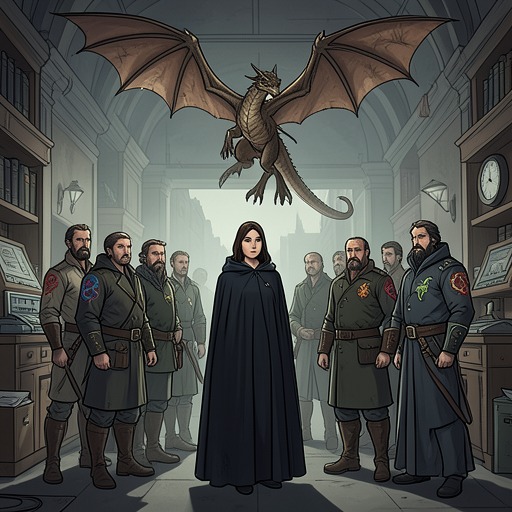
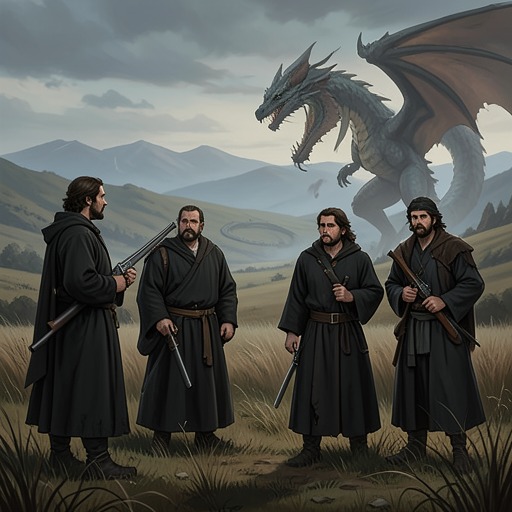
Other powerful men disputed that claim. Unwin Peake brought a hundred knights and nine hundred men-at-arms; Jon Roxton, feared for his temper and his Valyrian steel sword Orphan-Maker, was another contender. Owain Bourney maintained that his cunning had won Tumbleton and made him the man best suited to take King’s Landing. None, the account emphasizes, possessed enough authority and respect to restrain the common soldiers. As their leaders argued over precedence and plunder, their troops joined in the looting and destruction.
The Sack and Failed Restraint
The sack was described as exceptionally long and cruel by the standards of the Seven Kingdoms. Bands of soldiers roamed through Tumbleton’s homes and shops, stealing from residents and killing those who resisted. Women and girls were subjected to sexual violence; wealthy inhabitants were tortured for information about hidden valuables. Children were killed, and religious women, including septas and Silent Sisters, were assaulted. The dead, too, were denied burial and left exposed to carrion birds and wild dogs.
According to Septon Eustace and Grand Maester Munkun, Daeron was sickened by what he witnessed and ordered Ser Hobert to stop the abuses. Hobert’s efforts proved ineffective: the leaders themselves offered no united example of restraint. The account thus connects the soldiers’ violence to the contest among their commanders—not as a justification for the crimes, but as an explanation of how a host without effective discipline allowed them to continue.
The command dispute also turned into open violence among the lords. Jon Roxton claimed Lady Sharis Footly, the wife of Tumbleton’s lord, as a prize of war. When her husband objected, Roxton killed him with Orphan-Maker and seized Sharis. Two days later, an argument between Peake and Bourney at a war council ended when Peake stabbed Bourney through the eye. Daeron and Hobert watched in horror. These acts made the failure of authority visible even among the men who were supposed to lead the army.
The Betrayers and the Abandoned Campaign
The account presents Hugh Hammer and Ulf White, the two turncloak dragonriders known as the Two Betrayers, as among the worst offenders. Ulf gave himself over to drink and sexual violence; Mushroom claimed that he assaulted three maidens each night and fed those who displeased him to his dragon. His new status did not satisfy him: although Rhaenyra had knighted him and Daeron had made him Lord of Bitterbridge, he sought Highgarden. He argued that the Tyrells had taken no part in the Dance and should therefore be treated as traitors.
Hugh Hammer’s ambitions went further. A blacksmith’s son, he was an enormous and powerful man, said to be able to twist steel bars into torcs. Though largely untrained in warfare, he wielded a warhammer and rode Vermithor, once the mount of the Old King and one of the largest and oldest dragons in Westeros. Now styling himself Lord Hammer, he began to imagine taking a crown. A prophecy about a hammer falling upon a dragon and a new king arising circulated through the camp; its origin remained unknown, and Hugh himself could neither read nor write. Within days, the story had spread throughout the host.
Despite possessing a large army and three dragons, the loyalists did not press their attack on King’s Landing. The queen was believed to have three dragons, with two more expected if Daemon returned with Nettles. Peake preferred to wait for Lord Baratheon’s forces from Storm’s End, while Hobert wanted to retreat into the Reach to replenish dwindling supplies. Neither plan addressed the army’s ongoing disintegration: men deserted for home and the harvest, taking whatever plunder they could carry. Tumbleton’s sack therefore accompanied a widening failure of the campaign—an army that had won the town could neither govern it nor hold together for its next advance.
Significance
The sack’s defining reversal is the distance between military victory and political control. The loyalists held Tumbleton, but their competing leaders could not establish a functioning command; the violence inflicted on the town unfolded alongside their own disputes and the desertion of their soldiers. Daeron’s distress and orders show that he recognized the disorder, yet his position as a young prince did not give him the means to end it. Meanwhile, Hugh and Ulf treated their military power as a route to greater titles and, in Hugh’s case, kingship. The episode leaves the loyalist host powerful in dragons and numbers, but fractured in purpose and increasingly unable to act as a single army.