Taking the black in lieu of execution
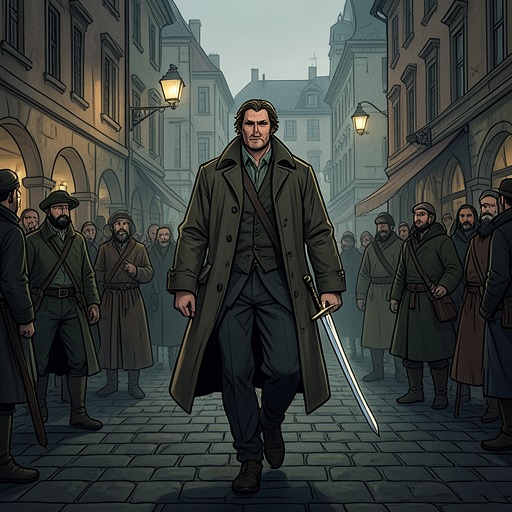
Fire & BloodTaking the black in lieu of execution was a possible reprieve for a condemned man: instead of being put to death, he could ask to join the Night’s Watch. At the executions following the end of Aegon II Targaryen’s reign, Cregan Stark honored the request, turning a morning prepared for mass beheadings into a last-minute reprieve for nearly all the condemned.
The request and its terms
The episode presents taking the black as a request, not an automatic escape from sentence. Cregan had brought the condemned from the dungeons to the Red Keep’s outer ward to carry out the executions. When he asked Ser Perkin the Flea for his final words, Perkin asked to take the black. Cregan’s willingness to accept the plea was tied to northern custom: the needs of the Night’s Watch were held in high regard in the North, even where a southron lord might not have granted the same request.
The executions at the Red Keep
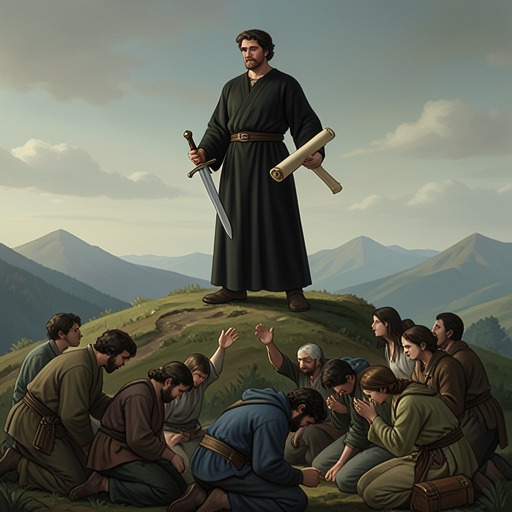
Perkin’s example changed the scene. As Cregan’s men moved to lift him to his feet, the other prisoners began asking for the same reprieve. The pleas came from men of varied stations, among them gutter knights, men-at-arms, servants, heralds, a wine-cellar keeper, and three Kingsguard. Grand Maester Orwyle also joined them. Cregan spared him as well, since the Night’s Watch needed men of the quill as well as men of the sword.
The reprieve was not universal. Ser Gyles Belgrave refused to exchange his white cloak for black, believing that a Kingsguard knight should not outlive his king. Cregan killed him with a single swing of Ice. Larys Strong likewise declined to take the black. He asked instead that Cregan cut off his clubfoot after death, a final request the lord granted before executing him.
Consequences and significance
Only Gyles and Larys died that morning. The other condemned men were returned to their cells while arrangements were made to send them to the Wall. The contrast between those who accepted the Night’s Watch and the two who refused makes the reprieve conditional on a condemned man’s own choice as well as the lord’s willingness to honor it.
Larys’s execution ended House Strong. His remains were given to the Silent Sisters, and his bones were later laid to rest at Harrenhal, but his clubfoot was buried separately in a pauper’s field by Cregan’s decree. It disappeared before burial. The heads of Larys and Gyles were mounted on either side of the Red Keep’s gates, while the spared prisoners awaited transfer to the Wall. The mass reprieve thus closed the executions—and the final line in the history of Aegon II’s reign—without carrying out the sentence against nearly all those condemned.