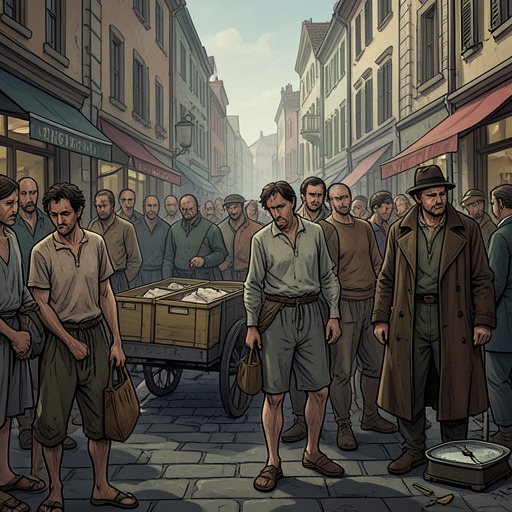
The Northern famine of 131–135 AC
Fire & BloodThe Northern famine of 131–135 AC was a prolonged crisis of hunger during the Four-Year Winter, intensified by the devastation and commercial collapse left by the Dance of the Dragons. Its effects varied from place to place: ports could bring in food, but at ruinous prices, while villages and even communities near Winterfell faced starvation. The famine continued amid wildling incursions and epidemic disease, and relief came only as winter began to loosen its hold.
Causes and conditions
Winter descended as the kingdom emerged from the Dance, whose fighting had helped collapse trade and left countless villages, towns, and castles damaged or destroyed. Outlaws and broken men haunted the roads and woods, further shadowing a realm already struggling to recover. In the North, the threat of famine became visible as Cregan Stark and his bannermen watched their food stores dwindle. The crisis was not simply a matter of a harsh season: the destruction of settlements and disruption of trade had weakened the means by which communities might otherwise obtain supplies.
Hunger across the North
By 134 AC, the shortages had become starkly different but equally severe local emergencies. At Barrowton, Lord Dustin shut the town’s gates while hundreds of starving villagers gathered outside them. White Harbor’s port offered a route for food to arrive from the south, but prices rose so high that some men sold themselves into bondage to foreign slave traders so their wives and children could eat; others sold their own families. Even in the winter town beneath Winterfell’s walls, people resorted to eating dogs and horses.
The famine also coincided with grave losses beyond the immediate struggle for food. Cold and hunger killed a third of the Night’s Watch, and when thousands of wildlings crossed the frozen sea east of the Wall, hundreds more black brothers died fighting them. The account presents food scarcity alongside military pressure: the same winter that exhausted stores also exposed the North to incursions that demanded a response.
Raids, disease, and the burden of survival
Wildling attacks continued to threaten the region as the famine spread. A raider named Sylas the Grim led three thousand wildlings against the Wall, overwhelmed the black brothers at Queensgate, and sent his followers across the Gift. Cregan rode out from Winterfell with the Glovers of Deepwood Motte, the Flints and Norreys of the hills, and a hundred Night's Watch rangers to hunt them down. The campaign checked the raiders, but its scale underscores the competing demands on a North already short of food and people.
Disease added another hardship. Winter Fever reached Barrowton, the first time it had traveled so far inland. Its arrival belongs to the same wider season of distress as the famine, though it is recorded as a further calamity rather than as its cause. Hunger, cold, war damage, raiding, and sickness together made recovery more than a matter of waiting for a better harvest.
Relief and significance
In the spring of 135 AC, as the long winter began to end, Cregan Stark borrowed a large sum from the Iron Bank of Braavos to buy food and seed for his starving smallfolk. The loan joined emergency relief to the work of restoring future production: food answered immediate need, while seed offered a means of growing new crops. The narrative records this intervention as the North faced the closing stages of the famine, without claiming that hardship vanished at once.
The famine’s course reveals how climate and political aftermath compounded one another. A severe winter struck a region whose trade and settlements had already been damaged, while wildling attacks and Winter Fever imposed further costs. The contrast between Barrowton’s closed gates, White Harbor’s costly imports, and Winterfell’s desperate resort to animal food shows that access to supplies did not guarantee security. Cregan’s appeal to foreign credit marks the scale of the need: the North’s recovery required resources beyond what its depleted local stores could provide.