Trials of the 136 AC Conspirators
Fire & BloodThe Trials of the 136 AC Conspirators were the final treason proceedings arising from a plot against Aegon III and the poisoning of Gaemon Palehair. Over thirty-three days, Torrhen Manderly and the regents heard eighteen defendants from an original forty-two, weighed confessions against denials, and imposed sharply different fates according to each accused person’s role and status. The hearings made the king’s absence as conspicuous as the court’s search for the conspiracy’s full extent: Aegon attended only three judgments, while the possibility of a wider circle around the queen’s household remained unresolved.
Background and Scope
The trials followed the poisoning of Gaemon Palehair and allegations of treason against the king. The inquiry widened as suspects questioned under pressure named others. Forty-two people were eventually accused; sixteen had fled and eight had died before the cases came to judgment, leaving eighteen defendants. Thirteen had confessed to some degree of involvement. Five continued to deny guilt, maintaining that they had believed the treason belonged to Lord Rowan and had joined the plot to protect Aegon from Lyseni conspirators who intended to kill him.
The proceedings therefore had to address not only whether the accused had participated, but what they thought they were doing and how far the conspiracy reached. The five denials offered a competing account of motive, while the growing number of names suggested an operation whose apparent boundaries had shifted during questioning. The source records these claims without resolving every contradiction, and the trials’ final cases would leave an important suspicion unproved.
The Hearings and Their Participants
The trials lasted thirty-three days. Prince Viserys attended throughout, often accompanied by his wife, Larra of Lys, who was pregnant with their second child, and their young son, who came with his wet nurse. Aegon III appeared only three times: for the judgments against Gareth Long, George Graceford, and Septon Bernard. He showed no interest in the other proceedings and did not ask what became of the remaining accused. Queen Daenaera did not attend at all. The contrast between Viserys’s sustained presence and the king’s sparse appearances placed the business of judgment largely in the hands of the Hand and the regents.
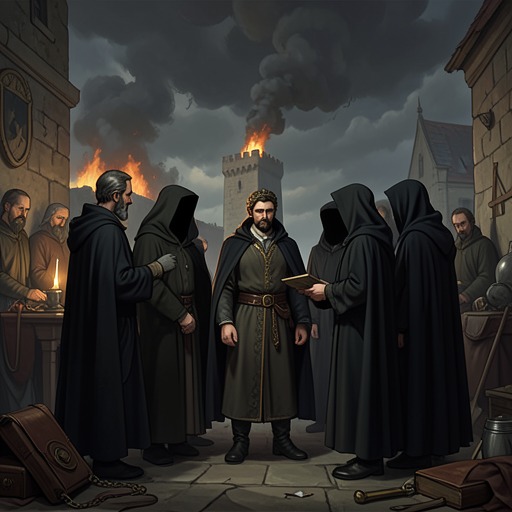
Among the accused was Ser Victor Risley, once the king’s justice, who invoked his right as an anointed knight to demand trial by battle. Gareth Long, who had named Risley as a participant in the plot, was brought back to face him. Gareth defeated Risley, and then turned to the condemned defendants in the throne room to ask whether anyone else would challenge him. The encounter gave the proceedings a distinct judicial spectacle: an accusation was tested not by further testimony, but by combat, and its result determined Risley’s fate.
Sentences, Clemency, and the Queen’s Household
Gareth Long and George Graceford were condemned to die, but both chose to take the black instead. Torrhen Manderly ordered them sent by ship to White Harbor, from where they could be taken to the Wall. Septon Bernard’s case drew a request for clemency from the High Septon, who argued that Bernard might atone through religious service. Manderly spared him execution and imposed a severe alternative sentence: Bernard was to travel barefoot from King’s Landing to Oldtown. He survived the journey and spent the rest of his life copying holy books at the Starry Sept under a vow of silence.
The captured gold cloaks and the surviving Fingers also chose the Wall rather than execution. Risley’s attempt to establish his innocence by combat failed, and Gareth’s victory put an end to his claim. Taken together, these outcomes show the court using the Night’s Watch as a commutation for several condemned men, while distinguishing the accused according to their office, conduct, and chosen defense.
The most troubling cases concerned three highborn women who had served as attendants to the queen: Lucinda Penrose, Cassandra Baratheon, and Priscella Hogg. Their admissions and explanations differed. Lucinda acknowledged that she had wanted Daenaera dead, attributing her hostility to resentment over her own prospects. Cassandra confessed to sharing a bed with Ser Mervyn Flowers and, at his request, Tessario the Tiger; when it was suggested that she had been part of a promised reward, she broke down. Priscella, aged fourteen, said she had imagined that Prince Viserys would marry her if Larra were removed. The court’s account presents these statements as evidence of the women’s involvement, but also of the unequal and personal circumstances surrounding their participation.
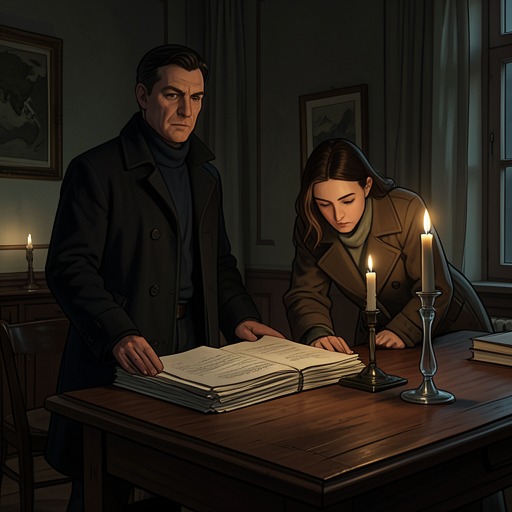
Torrhen Manderly, Grand Maester Munkun, and the regents questioned the women about a possible fourth participant, Lady Clarice Osgrey, who supervised the attendants of both Daenaera and the late Jaehaera. Mushroom alleged that Clarice and George Graceford had been lovers and suggested that Clarice had taken part in interrogations. The court also considered whether, if Clarice were involved, her nephew Unwin Peake might have been implicated. Yet the questioning yielded no confirmation: all three women denied that Clarice had participated. The suspected connection remained an open question, not an established finding.
Outcomes and Significance
The regents and Torrhen Manderly judged the women’s roles comparatively minor and showed them mercy. Lucinda Penrose and Priscella Hogg were sentenced to facial mutilation, but the punishment would be stayed if they entered the Faith and remained true to their vows. Cassandra, whose high birth and position as the eldest child of the late Borros Baratheon set her apart, was spared that sentence. Her mother, Elenda Baratheon, sent representatives from Storm’s End to speak for her. They arranged Cassandra’s marriage to Ser Walter Brownhill, a minor knight of Cape Wrath who had thirteen surviving children from earlier marriages. The proposed household was intended to occupy her with family responsibilities; the account states that it did prevent further treasonous plotting.
The end of these hearings did not empty the Red Keep’s dungeons or settle every case connected with the wider crisis. Larra’s brothers, Lotho and Roggerio, remained in custody. Though not accused of high treason, murder, or conspiracy, they still faced charges of fraud and theft associated with the collapse of the Rogare Bank, which had ruined thousands in Westeros and Lys. Their prosecution was treated as a separate matter. The trials thus closed the treason cases while leaving financial accountability unresolved, and they exposed the limits of the inquiry: the court punished established participation but could not confirm every suspected link to the plot.