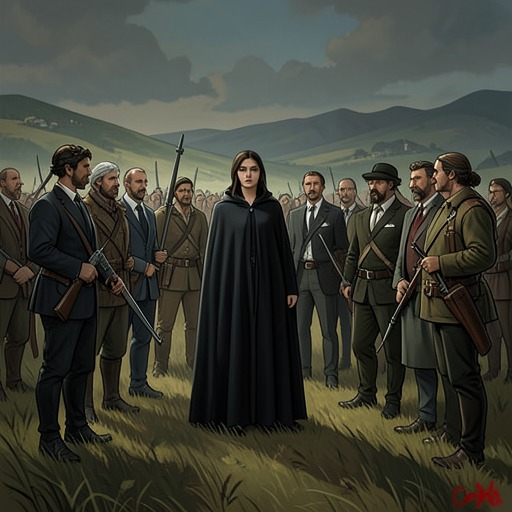
Vale campaign of 135 AC
Fire & BloodThe Vale campaign of 135 AC was a two-pronged attempt by the Crown to end rebellion in the Vale, but its operations were blunted by costly urban fighting, failed communications, deep mountain snows, and the unexpected appearance of Sheepstealer. Oakenfist took Gulltown’s harbor, yet the land force that struggled toward the Vale was reduced before it could become an effective fighting force there.
Background and Plan
The campaign followed a demand from Lord Rowan that the lords supporting the Mad Heir and Gilded Falcon lay down their arms. When no answer came, the Hand and Oakenfist planned to end the rebellion by force. With spring expected to reopen the high road through the Mountains of the Moon, an army set out along the kingsroad under Ser Robert Rowan, Lord Thaddeus Rowan’s eldest son. Levies from Maidenpool, Darry, and Hayford joined it; after crossing the Trident, it gained six hundred Freys and a thousand Blackwoods under Ben Blackwood. The host entered the mountains nine thousand strong.
A separate assault was launched by sea. Rather than use the royal fleet commanded by Ser Gedmund Peake, Lord Rowan turned to House Velaryon for ships, with Oakenfist taking command. Oakenfist’s wife, Baela Targaryen, went to Dragonstone to console her widowed twin, Lady Rhaena, and to ensure she did not try to avenge her husband’s death herself on Morning. The army assigned to Oakenfist’s operation was to be commanded by Moredo Rogare, whose appointment placed a Lysene at the head of Westerosi knights and became a source of suspicion at court.
Assault on Gulltown
Oakenfist’s fleet swept aside the Gilded Falcon’s sellsails and captured Gulltown’s harbor, but taking the port was costly. Hundreds of attackers fell in the assault on the walls, and three times as many were lost in the fighting through the town. The capture therefore brought a foothold at the coast, not an easy passage inland.
Moredo’s limited command of the Common Tongue became a serious obstacle when his translator was killed in the street fighting. His soldiers could not understand his orders, and he could not understand their reports; confusion followed. The choice of a commander who could not readily communicate with the troops under him thus compounded the losses of a battle already made costly by the town’s defenses.
The Mountain March and Sheepstealer
The overland force faced a different set of hazards. The high road was far less open than expected: deep snow in the upper passes slowed the march, while mountain clans repeatedly attacked the baggage train. Ben Blackwood later recalled that the attackers were hungry and desperate, and could not be deterred even when many were killed. Cold, snow, and nightly assaults steadily weakened the column.
One night, men looking for shelter climbed toward a cave whose entrance was strewn with bones. They disturbed Sheepstealer. Sixteen men died in the encounter and sixty more were burned before the dragon flew farther into the mountains with Nettles clinging to its back. This was the last recorded sighting of Sheepstealer and Nettles in Westeros. Later mountain stories remembered a fire witch in a hidden vale, but the campaign record offers no further sighting of the pair.
Outcome and Significance
The mountain march continued after the dragon encounter, but the column’s losses mounted. By the time it reached the Bloody Gate, a third of the force had died from attacks, cold, or hunger. Ser Robert Rowan was among the dead, crushed by a boulder when clansmen brought part of a mountainside down upon the column. Ben Blackwood took command in his place.
The survivors found food, warmth, and welcome at the Bloody Gate, but Ser Joffrey Arryn judged that the crossing had left Blackwood’s men unfit to fight. The land force had therefore reached the Vale only after losing its commander and a third of its strength, and could not provide the effective military support intended. Together, the costly capture of Gulltown and the attrition on the mountain road show how the campaign’s separate routes imposed distinct but cumulative limits on the Crown’s effort: a harbor could be seized, yet neither ships nor a battered army could by themselves resolve the rebellion.