Visenya Targaryen
Fire & BloodVisenya Targaryen was the eldest of Aegon’s siblings and queens, a skilled warrior and dragonrider whose decisions helped shape both the Conquest and the institutions of the new dynasty. Stern and austere where Rhaenys was playful, she combined personal martial ability with a hard-edged understanding of royal security: she helped secure the Vale, insisted that the king needed better protection, and created the Kingsguard to provide it. Her legacy is consequently divided between acts that strengthened the realm and rumors, never proved, that darkened her reputation.
Identity and Character
Visenya was as comfortable in ringmail as in silk. She had Valyrian silver-gold hair and purple eyes, but the account describes her beauty as severe rather than gentle. She carried the Valyrian steel sword Dark Sister and had trained with Aegon since childhood, becoming skilled in its use. Those closest to her found her stern, serious, and unforgiving; stories that she practiced with poisons or dark sorceries extended that formidable public image into the realm of suspicion.
Her contrast with Rhaenys is especially pronounced. Rhaenys loved music, dancing, poetry, and flight, while Visenya is introduced through discipline, arms, and severity. The difference is not simply temperament: the sisters embody distinct kinds of influence around Aegon. Visenya’s influence is associated with vigilance and force, and her actions repeatedly address the practical vulnerabilities of kingship. Her position as Aegon’s sister and wife also placed her close to the center of power, but the narrative gives her significance through decisions and interventions rather than through that relationship alone.
The Conquest and the Vale
After Aegon’s coronation, the Targaryen campaign advanced on several fronts. Visenya accompanied the fleet commanded by Daemon Velaryon as it sailed north toward Gulltown and the Vale, riding Vhagar. The fleet was defeated by an Arryn force augmented by Braavosi warships, and Daemon was among the dead. The ships that survived were not beyond the reach of the dragons: Visenya descended on the victorious fleet, and its vessels burned. The episode presents her as an active commander in the conquest, not merely a royal presence accompanying the expedition.
Her later submission of the Vale showed a different use of that power. Sharra Arryn had strengthened Gulltown, assembled troops at the Bloody Gate, and increased the garrisons of the waycastles guarding the approach to the Eyrie. Those preparations could not bar a dragon from the mountain fastness. Visenya rode Vhagar to the Eyrie’s inner courtyard, where she found the young king Ronnel Arryn seated on her knee, staring in wonder at the dragon. When Sharra came to confront her, the encounter proceeded through courtesies rather than threats. Sharra then surrendered three crowns: her own regent’s coronet, her son’s small crown, and the Falcon Crown of Mountain and Vale. She also yielded the garrison’s swords.
The account closes the scene with Ronnel flying three times around the summit of the Giant’s Lance and returning to find himself a lord rather than a king. The change in his title makes the political result plain, while the absence of battle distinguishes this submission from the earlier destruction of the fleet. Visenya’s dragon makes resistance futile, but the transfer of crowns and swords gives the conquest a formal shape: the Vale enters Aegon’s realm through surrender as well as superior force.
The Kingsguard and the King’s Safety
Visenya’s concern for royal security became institutional after she saw how exposed Aegon could be. During the Dornish War, she wore mail beneath her court clothes and urged him to do the same. When he relied on the guards around him, she demonstrated that their protection was inadequate by drawing Dark Sister and cutting his cheek before they could intervene. She then pressed the point that the king required better guards. The account presents the gesture as a deliberately forceful lesson, one that made her warning impossible to dismiss.
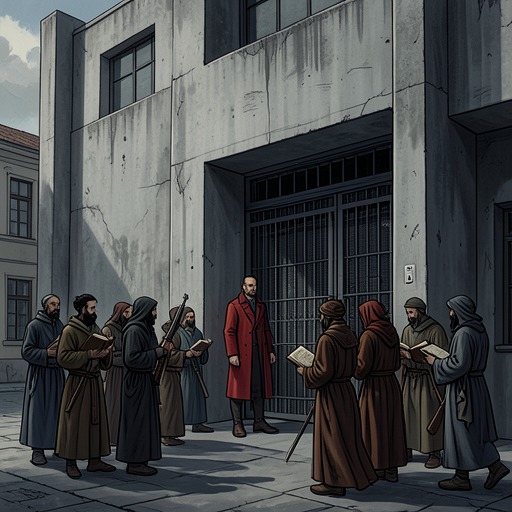
From that danger she drew a larger principle: a king who ruled seven kingdoms should have seven champions. The Kingsguard was formed as a brotherhood of seven knights, dressed in white and charged with defending the king, even at the cost of their lives. Visenya modeled their vows on those of the Night’s Watch. Like the black-cloaked brothers of the Wall, the White Swords would serve for life and surrender lands, titles, and worldly goods; their life was also marked by chastity and obedience, with honor as their reward.
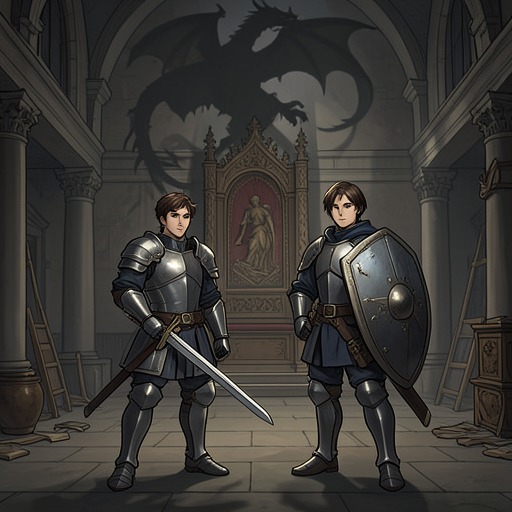
The method of choosing the first knights reflected her distrust of appearances and spectacle. Aegon considered holding a great tourney after many candidates volunteered, but Visenya rejected the idea: skill in a melee alone could not establish loyalty. She chose the knights herself. They varied in age, height, complexion, and origin; some were younger sons, some heirs who relinquished their inheritances, and the group included both a hedge knight and a man born a bastard. What qualified them in her judgment was not a single social background but their ability, alertness, and devotion to the king. The order thus embodied both her security policy and her insistence that the king’s protectors be selected for trust as well as martial competence.
Authority, Succession, and Reputation
Visenya’s political authority remained visible after Aegon’s death. When Maegor claimed the Iron Throne, she rode with him to King’s Landing, mounted on Vhagar while Maegor rode Balerion. The dragons’ return triggered panic in the city, whose gates had been closed and barred, and the Warrior’s Sons held key positions there. Visenya and Maegor raised their standards on Visenya’s Hill and summoned loyal supporters. She publicly declared Maegor to be king and challenged anyone who questioned his right to prove it in combat. Her intervention made her more than a witness to his accession: she supplied its public defense at a moment when armed opposition was ready to answer.
That act also stands in tension with the earlier founding of the Kingsguard. Visenya had created a brotherhood bound to defend the king, but during Maegor’s challenge the Kingsguard had gone with Aenys to Dragonstone, leaving Maegor without its protection. The succession crisis therefore exposes the limits of the institution in the face of dynastic division, even as Visenya again turns to force and the authority of the dragon to support the ruling claim.
The account also records a later insistence on the distinction between Visenya and Rhaenys: a speaker identifies one as Rhaenys and herself as Visenya, adding that she had never thought otherwise. The moment preserves the sisters’ names as sharply separate identities, rather than treating them as interchangeable figures of the Conquest. Meanwhile, the darker stories about Visenya’s later years remain explicitly unsubstantiated. Suggestions that she was a kinslayer or kingslayer are presented as calumnies without proof, in contrast to the concrete record of her defense of Aegon, her role in the Vale’s submission, and her creation of the Kingsguard. Her portrait is therefore built from a persistent duality: an unsparing guardian of royal power whose actions secured institutions and submissions, surrounded by a tradition of suspicion that the narrative does not establish as fact.