Viserys Names Rhaenyra Heir to the Iron Throne
Fire & BloodViserys Names Rhaenyra Heir to the Iron Throne is the public designation that made Rhaenyra Targaryen her father’s chosen successor, despite a recent precedent favoring male claimants. Viserys secured the lords’ sworn recognition of her right, but his declaration did not resolve the tension between royal choice, established expectations of succession, and the claims that later divided the dynasty.
Bereavement and the succession question
Late in 105 AC, Queen Aemma Arryn died at Maegor’s Holdfast while giving birth to the son Viserys had long desired. The boy, named Baelon after the king’s father, survived his mother by only a day. The loss left the king and court bereft, while Prince Daemon Targaryen was observed making drunken jests about the short-lived infant as an heir. When word of Daemon’s conduct reached Viserys, the king’s anger sharpened his existing frustration with his brother and his ambitions.
After his mourning had run its course, Viserys moved to settle the succession. The immediate family tragedy therefore preceded a decision with consequences far beyond the royal household: with no surviving son from his marriage to Aemma, the king named his daughter Rhaenyra his rightful heir and Princess of Dragonstone.
The designation and the lords’ oath
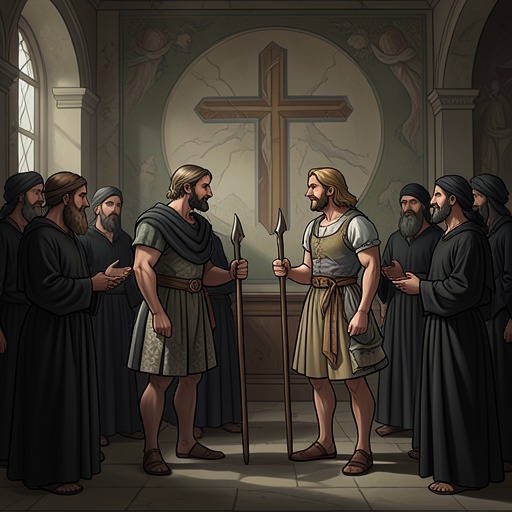
Viserys announced Rhaenyra’s status in a lavish ceremony at King’s Landing. Hundreds of lords did obeisance as she sat at her father’s feet at the base of the Iron Throne, each swearing to honor and defend her right to succeed him. The ceremony gave public and aristocratic form to the king’s decision: Rhaenyra was not merely his privately preferred successor but an heir whose claim the gathered lords had pledged to uphold.
That pledge was made against the force of recent precedent. At the Great Council of Harrenhal of 101 AC, the assembled lords had chosen Viserys over Laenor Velaryon by a reported margin of more than twenty to one. Many thereafter treated the council’s decision as establishing that the Iron Throne could not pass to a woman, or through a woman to her male descendants. Viserys’s designation of Rhaenyra set his authority as king against that interpretation, without making the underlying disagreement disappear.
Daemon’s departure and a widening breach
Daemon was absent from the ceremony. Furious at his brother’s decree, he resigned from the City Watch and left King’s Landing. He flew to Dragonstone with Mysaria, his paramour, and remained there for half a year. His departure made the succession decision an immediate rupture within the royal family as well as a question of law and custom.
The conflict between the brothers deepened during Daemon’s stay. After learning that Mysaria was pregnant, Daemon gave her a dragon’s egg. Viserys ordered him to return it, send Mysaria away, and go back to his lawful wife, threatening to attaint him as a traitor if he refused. Daemon obeyed unwillingly, sending Mysaria to Lys and flying to Runestone. She later lost the child during a storm at sea; afterward, Daemon spoke of Viserys with disdain and brooded on the succession. The episode did not undo Rhaenyra’s designation, but it further embittered a close dynastic rival.
Competing claims and the designation’s legacy
Viserys’s declaration remained central to Rhaenyra’s claim after his death. Aegon II was crowned first in the Dragonpit, with the iron-and-ruby crown of Aegon the Conqueror placed on his head. On Dragonstone, Rhaenyra was crowned the next day with the crown of Jaehaerys the Conciliator, brought there by Ser Steffon Darklyn. Daemon placed it on her head, and Rhaenyra named her eldest son, Jacaerys Velaryon, heir to the Iron Throne. These rival ceremonies gave visible shape to competing claims: Aegon’s accession drew on the male succession expectation, while Rhaenyra’s rested on Viserys’s designation and the oaths sworn to her.
The act that had appeared to settle the succession thus became one of the foundations of its later contest. Viserys had made his choice explicit and secured formal promises from the realm’s lords, but the precedent of the Great Council and the existence of rival royal claimants allowed the question of who could inherit the Iron Throne to remain unresolved.