Donnel Hightower
Fire & BloodDonnel Hightower, remembered as Donnel the Delayer, was Lord of the Hightower during the transition from Maegor Targaryen’s reign to the rule of Jaehaerys Targaryen. His tenure shows the tension between local power and royal authority: while a large religious host gathered outside Oldtown, he resisted taking the field; later, he helped shape the choice of a High Septon and accommodated the new king. That contrast made delay his defining reputation, but not the whole measure of his politics.
Lord of Oldtown in a religious crisis
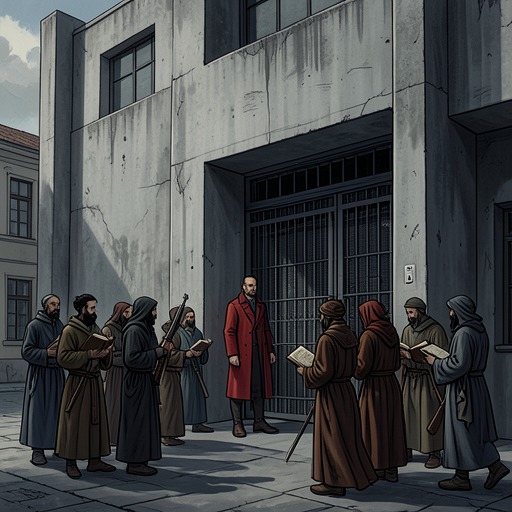
As Septon Moon’s followers gathered outside Oldtown, Donnel closed the city gates against them. He did not, however, answer their presence with force, even as the High Septon repeatedly urged him to act. Donnel explained his reluctance as distaste for shedding the blood of the pious. Many observers suspected a more practical concern: Lords Oakheart and Rowan had given Moon protection, and Donnel did not want to fight them. The maesters of the Citadel gave him the name Donnel the Delayer, a judgment that fixed his hesitation in the historical record.
The crisis mattered beyond Oldtown’s walls. Jaehaerys needed the High Septon to anoint him, but travelling to the city was unsafe while Moon’s host remained nearby. News of Maegor’s death dispersed some followers, yet most of the force—nearly five thousand—remained. Moon continued to denounce the Targaryens and demand that the High Septon leave the Starry Sept. Donnel’s refusal to confront the host therefore prolonged a dangerous obstacle to the new king’s coronation, even if it spared him an immediate battle with powerful lords who supported Moon.
Moon’s death was followed by the collapse of the host and a failed assault on Oldtown. Fewer than a hundred followers joined the attack led by Lorcas the Learned; the city’s defenders repelled them, and Hightower knights took Moon’s body. Lord Rowan departed within the hour, and Lord Oakheart followed the next day. Only after the remaining force had dwindled did Donnel ride out with troops to slaughter stragglers. The sequence sharpened the contrast between his earlier restraint and his decisive action once the threat had weakened. It also made the timing of his intervention conspicuous: his force acted after the crusade’s leadership and numbers had already disintegrated.
A contested political alignment
The murder that preceded the host’s collapse remained disputed. Some suspected the king, Rogar Baratheon, or the Queen Regent of arranging it; others proposed that the killer was one of the Faceless Men. Later scholars gave that theory little credence and considered it likelier that a camp follower acted for Lord Rowan, Lord Oakheart, or both. Their swift departure after Moon’s death suggested that their grievance had been against Maegor rather than House Targaryen. Neither account establishes Donnel’s involvement in the killing. His significance in this episode lies instead in his management of Oldtown and his eventual use of force against the remnants of the host.
Once the road to Oldtown was clear, Jaehaerys was crowned at the Starry Sept in the waning days of 48 AC. Donnel and the lords who had supported Moon returned to the king’s authority: Lord Rowan and Lord Oakheart came back, penitent, to bend the knee. The coronation ended the immediate crisis, but Donnel’s conduct had already demonstrated how his stated reluctance to shed pious blood could coexist with a forceful response when circumstances changed.
Family influence and the choice of High Septon
Donnel’s influence also rested on his family’s long-standing place within the Faith. The Hightowers customarily sent younger sons, brothers, cousins, and bastards into religious service, and many rose to high office. In 54 AC, Donnel had a younger brother, two nephews, and six cousins serving the Seven; his brother, one nephew, and two cousins belonged to the Most Devout. Donnel wanted one of his relatives to become High Septon.
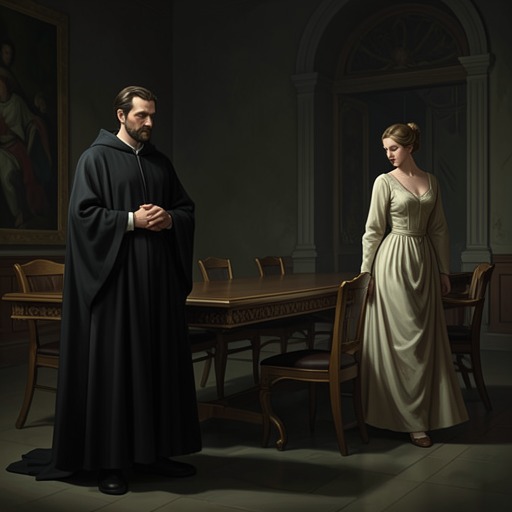
When the High Septon died, Jaehaerys and Alysanne travelled to Oldtown to attend to the succession. The council worried about the king and queen entering a city whose lord was not trusted by all his advisers. Donnel was described as a man who acted for himself, his house, and Oldtown rather than automatically for the king. Jaehaerys nevertheless chose to persuade him that those interests could coincide. The royal couple stayed in Donnel’s apartments at the top of the Hightower, and their negotiations took place privately.
The king’s central concern was that the next High Septon accept Exceptionalism, so that the Faith would no longer challenge the Targaryen practice of sibling marriage. Donnel’s own kin had not yet publicly committed themselves to that position. After hours of discussion, the two men reached an understanding, which they marked with a feast. Meanwhile, agents of Donnel and the king were present among the Most Devout as they voted. Septon Mattheus led the first ballot but failed to secure the required support; on the fourth, the Most Devout chose Septon Alfyn, a champion of Exceptionalism who had served Jaehaerys and Alysanne. Donnel was promised that a Hightower relative could succeed Alfyn if his family aligned itself with the Exceptionalists during Alfyn’s tenure. The arrangement linked a religious appointment to the Hightowers’ dynastic interest without giving Donnel’s preferred candidate the office immediately.
The king’s command and Donnel’s death
Donnel’s political accommodation did not mean that royal orders always reached their target in time. When Jaehaerys discovered that Elissa Farman, travelling under the name Alys Westhill, had assembled a crew and was preparing to leave Oldtown, he sent ravens ordering Donnel to take her into custody and deliver her to King’s Landing. She sailed before the message could prevent her departure. Some later suggested that Donnel had delayed deliberately; the account does not settle the question. He did dispatch a dozen of his swiftest ships to pursue her and his grandsons, Eustace and Norman, who had joined her expedition, but the vessels returned defeated. The Sun Chaser was faster, and the sea too vast for the search to succeed.
In the winter of 59 AC, the Shivers reached Oldtown. The city lost a quarter of its population, and the disease killed the High Septon, many members of the Most Devout, and a third of the archmaesters, maesters, acolytes, and novices at the Citadel. Donnel died in the epidemic as well. The account’s pointed reminder that even the Delayer could not delay death closes his story with the same epithet that had defined his public conduct. His legacy rests on a series of consequential pauses and bargains: restraint before Moon’s host, force after it had broken, and cooperation with a king whose religious settlement also offered the Hightowers a path to future influence.