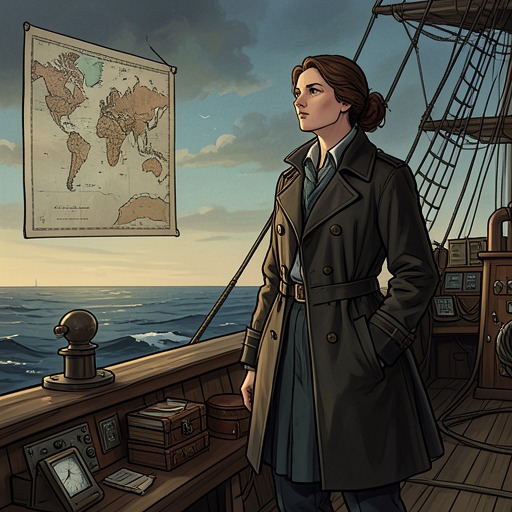
Elissa Farman’s Three Dragon Eggs
Fire & BloodElissa Farman’s Three Dragon Eggs were taken from Dragonstone by Elissa and sold in Braavos to finance the ship she had long dreamed of building. Their disappearance wounded Queen Rhaena Targaryen, exposed the vulnerability of the royal dragons’ eggs, and prompted King Jaehaerys Targaryen to fear that a rival dragonlord might emerge beyond his house. The Iron Throne never got the eggs back; instead, the pursuit ended in a negotiation that cut the Crown’s debt to the Iron Bank of Braavos in half.
The theft from Dragonstone
Elissa’s departure began as a personal break. Unable to endure life on Dragonstone, she told Rhaena that the sea was calling her. Princess Aerea Targaryen begged Elissa to take her along, but Elissa gently refused, telling her that her place was with her mother. The next morning Elissa left for Driftmark. Rhaena believed she had gone no farther, unaware that Elissa continued across the narrow sea to Pentos and then overland to Braavos.
A fortnight after Elissa’s departure, three dragon eggs were discovered missing. Ser Merrell Bullock, commander of Dragonstone’s garrison, questioned those with access to the dragons and concluded that Elissa had taken them. Rhaena responded with fury. She ordered sharper questioning of the grooms and stableboys; when it yielded nothing, she stripped Merrell of his command and expelled him, his son Ser Alyn, and a dozen other men she considered suspicious. She also confronted her husband, Androw Farman, demanding to know whether he had helped his sister. His denials did not calm her, and their argument echoed through Dragonstone’s halls.
Rhaena sent men first to Driftmark and then to Pentos, but Elissa’s trail had already moved on. Only after those searches failed did Rhaena fly Dreamfyre to the Red Keep to tell Jaehaerys what had happened. She believed Elissa wanted gold, not dragons: the eggs, if sold, could pay for a fleet of ships. Their value, however, was not merely financial. Jaehaerys feared that if they hatched, their owner could become a dragonlord outside House Targaryen. Grand Maester Benifer cautioned that eggs away from Dragonstone might fail to hatch and turn to stone, but that possibility did not remove the political danger.
From private alarm to a search across the Free Cities
Jaehaerys ordered eyes and ears placed in Pentos, Tyrosh, Myr, and the other Free Cities, offering rewards for reports of eggs or dragons. He also insisted that the theft remain secret. That caution came too late: on Dragonstone, the missing eggs were common knowledge even among the fisherfolk, whose travels carried the whispers to other islands. Through the Pentoshi master of coin, Benifer’s agents reached across the narrow sea, paying informers for news of the eggs, dragons, or Elissa. Hundreds of reports came in. Some proved useful to the Iron Throne for other reasons, but every rumor about the eggs proved worthless.
The later account reveals what the searchers in Westeros did not know. In Braavos, Elissa used the name Alys Westhill, a bastard name she had devised after being driven from Fair Isle and disowned by her brother, Lord Franklyn Farman. She obtained an audience with the Sealord, whose far-famed menagerie made him willing to buy the eggs. Elissa entrusted the gold she received to the Iron Bank and used it to finance the construction of the Sun Chaser. Thus the eggs were not simply traded for money: their sale converted royal dragon property into the means for Elissa to pursue a maritime ambition she had carried for years.
Septon Barth’s negotiation
By the time Septon Barth travelled to Braavos as Jaehaerys’s Hand, the issue had become a matter of war or peace. Barth went with Ser Gyles Morrigen and six guardsmen, but he alone took part in the discussions. He explained that Jaehaerys admired Braavos and understood its bitter history with Valyria and its dragonlords; that was why the king had sent an envoy rather than coming himself. Yet Barth made clear that if he could not settle the matter amicably, Jaehaerys might come in person on Vermithor.
When the Sealord asked what matter Barth meant, Barth identified the three eggs. The Sealord admitted to nothing, while maintaining that if he possessed such eggs, he could only have bought them. Barth answered that they had come from a thief. The exchange began the real bargaining, but it did not return the stolen objects. Barth came back to King’s Landing without a single egg, leading some to say that the Sealord had deceived and humiliated him. The outcome was more complicated: at the Sealord’s urging, the Iron Bank forgave the entire remaining principal of its loan to the Iron Throne. The Crown’s debt was cut in half, a substantial return for three eggs that Jaehaerys still feared might hatch.
Consequences and unresolved danger
The agreement altered the Crown’s finances for years to come. After Barth returned, Rego Draz examined the Crown’s debts and income and concluded that money formerly required for repayment to Braavos could instead be directed toward improvements to King’s Landing, a project Jaehaerys had long wanted to undertake. The eggs’ disappearance therefore produced an unexpected domestic consequence: the failure to recover them was accompanied by a major reduction in royal debt and new room for spending at home.
Their fate remained uncertain to the Iron Throne. Benifer’s warning that some eggs could turn to stone away from Dragonstone offered one possible explanation for why they might never hatch, but no such outcome was confirmed. Jaehaerys feared that the birth of young dragons could not easily be concealed and warned that the Sealord’s palace would be the first to burn if he heard that the eggs had hatched. The eggs thus remained both a lost treasure and an unresolved threat: Elissa had used them to set her shipbuilding dream in motion, while the king’s response revealed how closely the Targaryens connected control of dragon eggs to the security of their rule.