Greens and Blacks
Fire & BloodGreens and Blacks names the rival parties that formed around Queen Alicent Hightower and Princess Rhaenyra Targaryen during the reign of King Viserys I. The terms began as a distinction of color at court, but came to mark opposing claims to the Iron Throne; the public rivalry of the two women became a political division that survived the king’s efforts to contain it.
Origin at the tourney
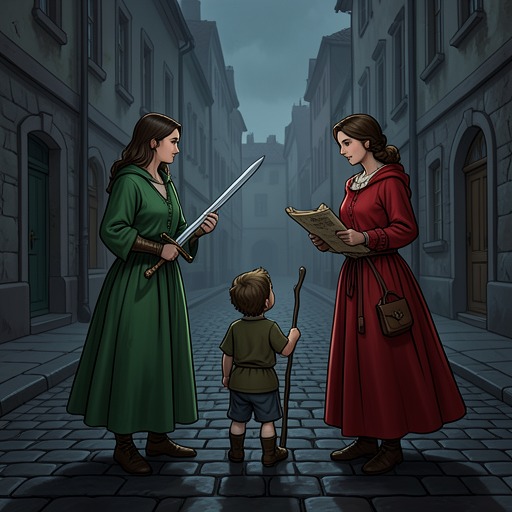
The names were attached to the factions after a great tourney at King's Landing in 111 AC, held on the fifth anniversary of King Viserys’s marriage to Alicent. At the opening feast, Alicent wore green, while Rhaenyra appeared in the Targaryen colors of red and black. Courtiers took note, and from then on the queen’s supporters were called the greens and the princess’s supporters the blacks.
The distinction was not introduced through a decree or a formal declaration. It arose from a visible contrast at a public celebration, then hardened into political shorthand. The tourney itself sharpened the comparison: Ser Criston Cole, wearing Rhaenyra’s favor, unhorsed all of the queen’s champions, including her cousins and her younger brother, Ser Gwayne Hightower. A contest of pageantry and arms thus gave the court a memorable way to identify the two sides.
The dispute behind the colors
The factions reflected a conflict over succession that predated the tourney. The Great Council of Harrenhal of 101 AC had chosen Viserys over Laenor Velaryon by a lopsided margin. Many thereafter treated its decision as a precedent against a woman inheriting the Iron Throne, or a male claimant inheriting through a woman. In that context, the rights of Rhaenyra and of Alicent’s sons could not be separated from the question of which succession principle the realm would accept.
Ser Otto Hightower, Alicent’s father and the king’s Hand, had argued that Rhaenyra should succeed Viserys while Daemon Targaryen remained a possible claimant. Yet Otto’s view of the succession was shaped by the same male-preference precedent: without a trueborn son, the king’s brother would traditionally come before the king’s daughter. Later, Alicent’s supporters favored the rights of her sons. Viserys loved both his wife and daughter and tried to maintain peace between them with gifts, honors, and a careful balance at court, but the underlying claims remained unresolved.
A court divided, a realm at stake
The parties existed as rival networks of powerful lords, not merely as a difference in dress. Even after Viserys dismissed Otto as Hand and Otto returned to Oldtown, a queen’s party remained at court, opposed by a party of the princess. Their rivalry was visible in the court’s ceremonies and, in the chronicler’s account, even in the dragons of the two sides snapping and spitting flame when they passed near one another. While Viserys lived and kept the balance, feasts and tourneys continued and peace prevailed across the realm; the appearance of calm did not remove the factional contest beneath it.
Alicent’s sons also changed Daemon’s position in the line of succession. After returning to court, he was reported to be notably cool toward her children, especially Aegon and Aemond. His personal hostility toward them gave the division a further family dimension, though the central contest remained the rival claims gathered around the queen and princess.
Rival crowns and political consequences
After Viserys’s death, the division became an open contest for rule. At the Dragonpit, Ser Criston Cole crowned Aegon as Aegon II, while Alicent placed her crown on her daughter Helaena and knelt before her. On Dragonstone, Rhaenyra’s supporters held a separate coronation: Daemon placed the crown of King Jaehaerys on her head, and she named her son Jacaerys heir. The rival ceremonies used crowns, titles, and public witnesses to assert competing authority, turning the court’s color-coded division into two claims to kingship.
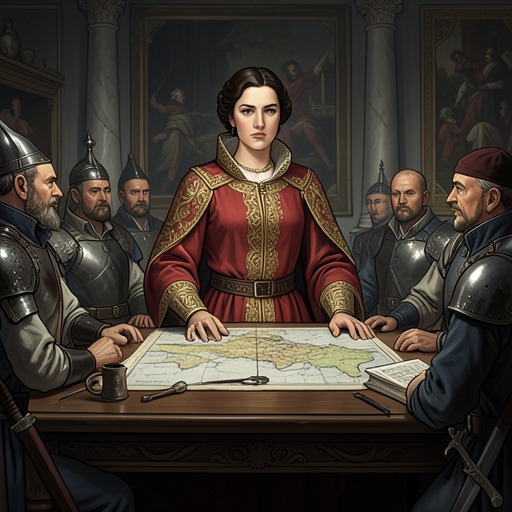
The factions also pursued power through resources and alliances. On the queen’s side, Ser Tyland Lannister divided the royal treasury among the Iron Bank of Braavos, Casterly Rock, Oldtown, and funds intended for bribes, gifts, and sellswords; Otto also sought the support of Dalton Greyjoy by offering him the admiralty and a place on the council. Rhaenyra’s side planned to use the Velaryon fleet to blockade the Gullet and sought support from the great houses, while Daemon identified Harrenhal as a mainland base for their forces. The colors had become labels for rival political strategies, military preparations, and loyalties.
The divide also reached beyond the competing royal courts. During the assault on the Dragonpit, a crowd of thousands moved toward the dragons after the Shepherd called for their destruction. That violence was part of the wider conflict’s consequences, not simply a courtly quarrel expressed through clothing. Greens and Blacks therefore records a progression from a striking contrast at a feast to a shorthand for a dynastic fracture whose claims, alliances, and consequences extended across the realm.