Hour of the Wolf
Fire & BloodThe Hour of the Wolf marks the uneasy passage from victory in the Dance of the Dragons to the punishment of those implicated in King Aegon II’s death. Cregan Stark arrived at King’s Landing to honor a pledge made to Jacaerys Velaryon, but found a city already treating the war as over. His arrival overturned that fragile calm: he accused the ruling council of mistaking a pause for peace, detained prominent figures, and insisted that the king’s killers answer for their actions. The resulting proceedings made his brief tenure a struggle over who could define justice after civil war—and who possessed the authority to impose it.
From the False Dawn to Cregan Stark’s arrival
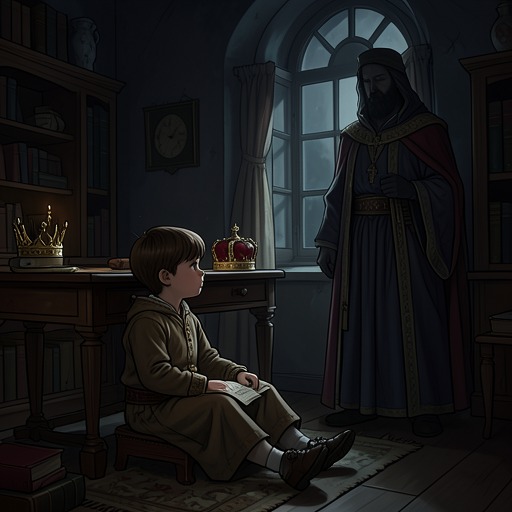
The period began in the aftermath of what Grand Maester Munkun called the False Dawn. For nearly a fortnight after Aegon II’s death, King’s Landing had appeared ready to celebrate a new beginning. The king’s corpse was burned, Prince Aegon promised that peace was at hand, and ravens summoned remaining loyalists to do homage to the new monarch under safe conducts and promises of pardon. The city’s confidence rested on plans for the boy’s coronation and marriage to Jaehaera. That apparent accord ended when Cregan Stark reached the capital with his Northmen.
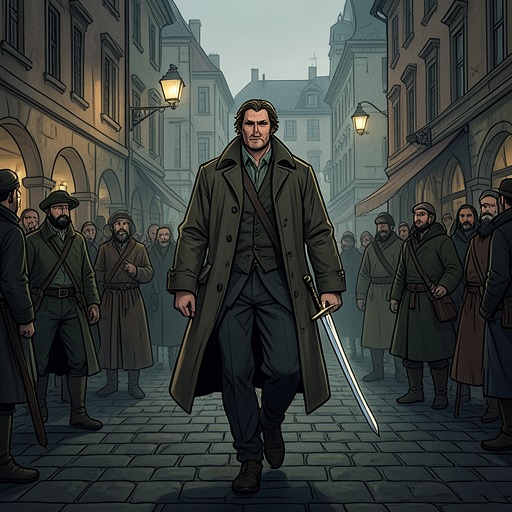
Cregan was only twenty-three, but those who saw him with the younger riverlords sensed the difference in age and bearing. The Lads, who had held influence in the capital, seemed to shrink in his presence. His force was twice the size of the host they had led, and its appearance contrasted sharply with the courtly image of Northmen familiar to King’s Landing through Ser Medrick Manderly and Ser Torrhen Manderly. Cregan’s men wore mail and shaggy fur cloaks, and their customs—including their worship of trees rather than the Seven—struck the city’s septons as alien. Their arrival changed the balance of power before Cregan had taken any formal action.
Cregan had come because of a promise he had made to Prince Jacaerys two years earlier. Jacaerys and his mother, Rhaenyra Targaryen, were both dead, but Cregan regarded the pledge as binding. At the welcome given by Prince Aegon, Corlys Velaryon, and the Lads, he made clear that he did not consider the war finished. Corlys replied that the war was over and the king dead; Cregan challenged him over the circumstances of Aegon’s death. To Cregan, accepting a place on the council after being freed by Aegon did not absolve Corlys of suspicion that he had helped bring about the king’s poisoning.
A settlement challenged
Cregan’s proposed response extended well beyond the capital. He intended to continue south against the remaining supporters of Aegon II, beginning with Storm’s End, then taking Oldtown and finally marching north along the Sunset Sea toward Casterly Rock. The scale of the plan alarmed the council. Kermit Tully and Bloody Ben Blackwood warned that strong castles would not fall easily and that many of Cregan’s men could die. Cregan answered that the men had accepted that risk when they marched.
The immediate conflict was not a new battle, however, but a confrontation over whether the realm could safely declare peace. Cregan argued that the war’s defeated parties had not all submitted, that important strongholds remained outside the new rulers’ control, and that envoys sent across the narrow sea by Aegon II might return with sellswords. Rhaenyra had once believed that taking King’s Landing meant victory; Aegon II had likewise believed the war ended after his sister’s death. In Cregan’s view, neither conclusion had made the opposition disappear. His argument turned the celebration of the new reign into a dispute over the difference between possessing the capital and securing the realm.
The arrival of Lady Jeyne Arryn and Rhaena Targaryen, followed by the addition of Lord Leowyn Corbray and his brother to the council, further narrowed Cregan’s room to act. Rhaena and her twin sister, Baela Targaryen, quickly became popular in the city, and Cregan could not keep them confined to the castle. The council increasingly favored making peace and restoring order, while Cregan remained fixed on punishing Aegon II’s killers. His influence was considerable, but it was neither uncontested nor permanent.
Arrests and the King’s Hand
Cregan’s accusation against Corlys became a direct assertion of authority. His men entered the council chamber, disarmed the guards, pulled the aged Sea Snake from his chair, and took him to the dungeons. Larys Strong, Grand Maester Orwyle, Ser Perkin the Flea, Septon Eustace, and many other people were also imprisoned. Cregan’s suspicions reached beyond the council’s most powerful members to a broad group of highborn and lowborn people he considered untrustworthy.
The arrests put Cregan’s demand for justice in tension with the limits on his authority. No lord had the right to execute another lord. Prince Aegon therefore made Cregan Hand of the King, giving him power to act in the king’s name. Cregan did not take the Iron Throne; he sat on a plain wooden bench beneath it while the accused were brought before him. The staging kept the king’s authority above the proceedings while making Cregan the person who conducted them.
The inquiry produced different outcomes rather than a single judgment against every prisoner. Septon Eustace was released because there was no proof against him. Orwyle, however, had confessed under torture to giving the poison to Larys Strong. He protested that he had not known what it was for; Cregan judged that Orwyle had chosen not to ask and found him complicit, sentencing him to death. The distinction between the two cases shows that the proceedings did not simply treat imprisonment as proof of guilt, even as the interrogation of Orwyle involved torture.
Ser Gyles Belgrave was also condemned. Cregan held him responsible either for placing poison in the king’s wine or for allowing it through carelessness or deliberate blindness. Three Kingsguard who had been present at Aegon’s death were condemned as well, although their involvement in the poisoning could not be proved; the three who had not been in the city were judged innocent. The judgments thus included both a standard tied to responsibility for the king’s violent death and a broader demand that the Kingsguard answer for failing to protect him.
Justice, authority, and the end of the hour
The inquiry also reached twenty-two lesser figures, including the king’s litter-bearers, herald, wine-cellar keeper, and the servant assigned to keep his flagon full. Those who had killed the king’s food taster, Ummet, were marked for death, as were the men responsible for killing Tom Tangletongue and drowning his father in ale. Many of the accused were gutter knights, sellswords, masterless men-at-arms, or men granted questionable knighthoods by Ser Perkin during the turmoil. They insisted that they had acted on Perkin’s orders, extending the question of responsibility beyond the king’s closest circle.
Cregan’s intervention did not resolve every political dispute or immediately end the difficulty of governing a fractured realm. By the time the Hour of the Wolf was waning, the city and the situation were slipping from his control. Other councillors and allies pressed for peace, while Cregan remained adamant that the murder of a king constituted high treason even if that king had been an oathbreaker, kinslayer, and usurper. His conduct made the event a reckoning with the violence that had ended the war, but also exposed the hazards of trying to convert military strength into lawful authority. The Hour of the Wolf is therefore defined not by a renewed battlefield campaign, but by the brief, forceful attempt to make a postwar settlement answer for the death it had inherited.