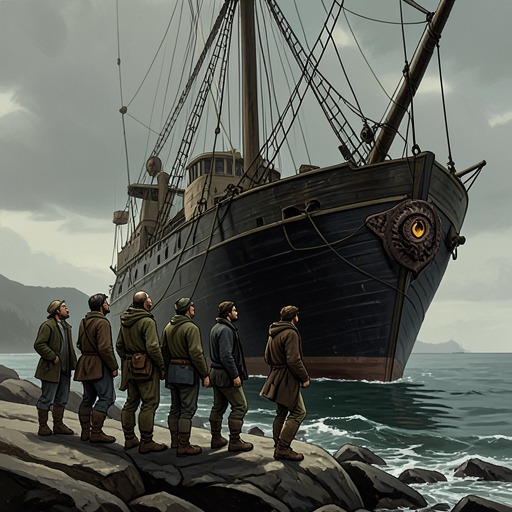
House Hoare
Fire & BloodHouse Hoare was an ironborn ruling dynasty whose power extended from the Iron Islands into the riverlands, where generations of conquest and Harren Hoare’s rule left a deep resentment. The house’s mainland dominion ended when the riverlords turned against Harren, joined Aegon Targaryen, and watched Harrenhal fall. Harren and his last sons died in the destruction, and House Hoare’s hold over the riverlands ended with them.
Origins and Expansion
House Hoare’s claim to the riverlands rested on successive conquests. Harren Hoare’s grandsire, Harwyn Hardhand, took the Trident from the Stormlands’ ruling line; that line’s forebears had themselves displaced the last river kings. The transfer of power was therefore not a peaceful inheritance but one turn in a long contest over who would rule the riverlands. House Hoare’s ironborn origin and its mainland kingdom remained joined in the title of King of the Isles and the Rivers.
Harren’s father extended the family’s domains eastward to Duskendale and Rosby. Harren then spent most of a reign lasting close to forty years building Harrenhal beside the Gods Eye. The project was not only an immense undertaking but a drain on the lands and people under his authority. Thousands died in the building, materials were taken from the riverlands, and the demand for gold impoverished both lords and smallfolk. As the castle neared completion, the ironborn seemed poised to seek further conquests; instead, the burdens of House Hoare’s rule had made resistance increasingly likely.
Rule and Revolt in the Riverlands
Harren’s cruelty was widely feared, but the riverlands were not reconciled to his rule. When Harren summoned his vassals to defend Harrenhal, Edmyn Tully of Riverrun openly refused. He declared for House Targaryen, raised its dragon banner over his castle, and rode out with his knights and archers to join Aegon’s forces. Tully’s defiance gave other riverlords confidence to renounce Harren in turn. Their levies gathered against the king whose castle had been built at their expense.
Outnumbered, Harren withdrew behind Harrenhal’s defenses. The fortress was presented as nearly impossible to take by ordinary means: it had five enormous towers, a dependable supply of fresh water, deep stores of provisions, and high, thick black-stone walls. Harren’s confidence in those defenses shaped the final confrontation. Aegon entered the castle’s walls by air on Balerion and set the towers alight. The scale of Harrenhal, intended to secure House Hoare’s power, could not protect it from the dragon that bypassed its walls.
Fall of the House
Harren and his last sons perished in the fires that consumed Harrenhal. Their deaths extinguished House Hoare, and with it the Iron Islands’ hold over the riverlands. The following day, outside the smoking ruins, Aegon accepted Edmyn Tully’s oath and named him Lord Paramount of the Trident. The other riverlords also did homage: to Aegon as king and to Tully as their new liege lord. The change was therefore more than the death of a king. It replaced House Hoare’s mainland rule with a riverlord’s authority under the new Targaryen kingship.
The fallen castle’s weapons made the conquest tangible. Once the ruins had cooled enough for men to enter, swords recovered from the dead were gathered and sent by wagon to the Aegonfort. Many had been shattered, melted, or twisted by the heat. The transfer of those weapons from Harrenhal to Aegon’s stronghold marked the defeat of the old ruling power and the appropriation of its symbols by the conqueror.
Succession and Legacy
House Hoare’s extinction also unsettled the Iron Islands. After Harren and his sons died, Qhorin Volmark of Harlaw claimed descent from the “black line” through a grandmother who had been a younger sister of Harren’s grandsire, and assumed the kingship. His claim shows that the destruction of Harren’s direct line did not immediately settle who could rule among the ironborn. Other claimants soon contested the islands, and their conflict lasted for more than a year.
When Aegon later intervened in the Iron Islands, he killed Qhorin but allowed Qhorin’s infant son to inherit his father’s lands and castle. That decision did not restore House Hoare or its rule in the riverlands; it dealt with a later claimant whose relationship to Harren’s dynasty came through extended kinship. The distinction matters to House Hoare’s legacy: the dynasty’s mainland dominion ended decisively at Harrenhal, while claims connected to its wider bloodline continued to shape succession in the islands.