Hugh Hammer
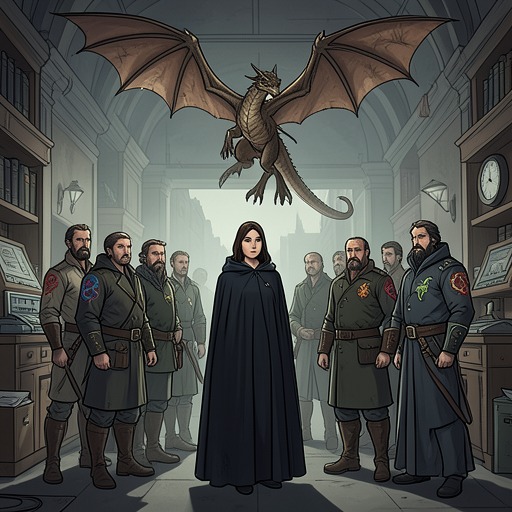
Fire & BloodHugh Hammer was a blacksmith’s bastard whose immense strength and bond with Vermithor carried him from obscurity to knighthood, lordship, and finally a short-lived claim to the throne. His rise made the promise of the dragonseeds tangible: a man of low birth could acquire power through a dragon. It also showed how quickly that power could turn from an asset of Rhaenyra Targaryen’s cause into a threat to it.
Identity and Rise
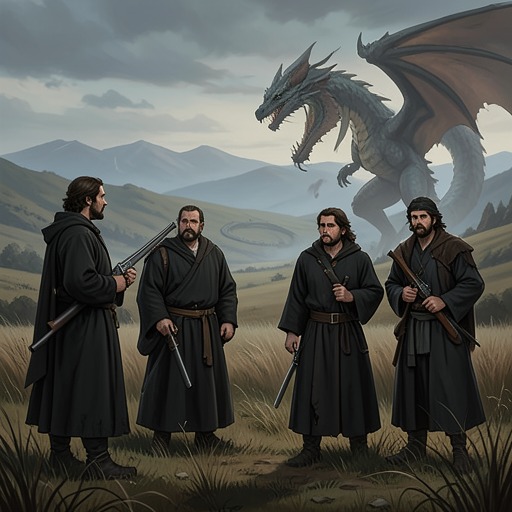
Hugh was known as Hugh the Hammer and Hard Hugh before adopting the style Lord Hammer. The son of a common blacksmith, he was described as a towering man, exceptionally strong even by the standards of a warrior. He had little formal training in warfare, but his size and strength made him formidable, and he favored a warhammer capable of delivering killing blows.
His opportunity came when Jacaerys Velaryon appealed to men who might be able to master a dragon. The offer promised lands and riches, knighthood for the successful rider, advancement for his children, and the chance to fight beside the Prince of Dragonstone against Aegon II Targaryen and his supporters. Hugh answered that call, becoming one of the dragonseeds whose success altered the balance of the war.
Vermithor and the Rewards of Service
Hugh claimed Vermithor, once the mount of the Old King. The dragon had already been ridden and was accustomed to people, which made him more receptive to a new rider than a dragon with no such history. Vermithor’s size and age gave Hugh a power that could not be measured by his birth or military experience. After Vhagar’s death, Vermithor was the oldest and largest living dragon in Westeros, and was described as three times the size of Prince Daeron Targaryen’s Tessarion.
Hugh’s service brought him knighthood after the Gullet and the fall of King’s Landing, as well as holdings from Queen Rhaenyra. These rewards did not satisfy him. The account presents the modesty of those holdings as a point of grievance: Hugh aspired to be a lord with greater power, not merely a knight whose status depended on the queen’s favor. His dragon gave that ambition an imposing public foundation, but his growing rank remained entangled with decisions made by the court.
Frustrated Ambitions and Defection
The question of the Rosby and Stokeworth inheritances sharpened the conflict between Hugh’s expectations and the queen’s policy. After the lords of those lands tried to change sides again, Rhaenyra ordered their execution. Each left a daughter, and Daemon Targaryen proposed that one should marry Hugh and the other Ulf White. Such marriages would have kept the estates aligned with the Blacks while rewarding the dragonseeds. Rhaenyra instead allowed the executed lords’ sons to inherit, leaving the proposed advancement unrealized.
Another account points to further rewards that Hugh and Ulf wanted: Storm’s End and Casterly Rock were held out as possibilities, but Rhaenyra denied them as well. The reasons for the Treasons of Tumbleton remain disputed. Some accounts stress fear; others suggest that avarice and hunger for power mattered more. Hugh’s later conduct gives particular force to the latter interpretation, though the history does not present the cause as settled. What is clear is that he and Ulf changed sides at a decisive moment, joining forces whose betrayal helped turn the situation at Tumbleton against the Blacks.
Tumbleton and the Claim to Kingship
The treachery at Tumbleton was not attributed to Hugh and Ulf alone. The town had received people fleeing Lord Hightower’s army, some of whom may have been sent ahead to infiltrate its defenders; Lord Owain Bourney and Ser Roger Corne were also secret supporters of Aegon II. The narrative nevertheless emphasizes that these betrayals would have mattered little without the change of allegiance by the two dragonriders. Hugh’s defection thus stood out not simply as another act of divided loyalty, but as the turning point that gave the opposing side powerful dragons and riders.
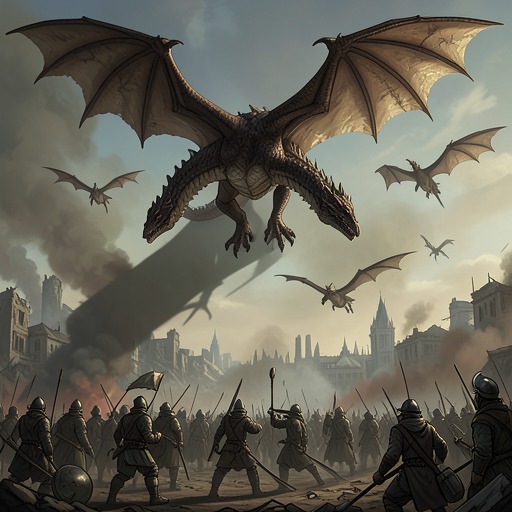
Tumbleton was then devastated by fire. Shops, homes, and septs were destroyed, and people died throughout the town. Outside the walls, Prince Daeron fought from Tessarion, while Hugh and Ulf—later called the Two Betrayers—used their dragons against the settlement. The destruction made the scale of their power brutally apparent: the same dragons that had been recruited to defend Rhaenyra’s cause could now be turned against a town caught in the war.
Hugh’s ambitions soon exceeded service to Aegon II. He rejected Daeron as a suitable king and argued that the throne should be his, reasoning that his dragon gave him a claim comparable to the Conqueror’s. A prophecy began circulating in camp that linked a hammer falling upon a dragon with the rise of a new king. Its origin remained unknown, and Hugh could neither read nor write; nevertheless, within days the prophecy was widely heard at Tumbleton. The rumor gave an air of destiny to a claim that Hugh grounded in force.
The lords and knights of Oldtown and the Reach resented his presumption. Daeron confronted Hugh and threw wine in his face; Hugh answered with an insult and a threat. Hugh and Ulf then began planning a coronation. The following day Hugh appeared wearing a crown of black iron, turning his private ambition into a public challenge to Daeron and the nobles who supported him.
Challenge, Death, and Narrative Significance
Ser Roger Corne challenged the meaning of Hugh’s crown by knocking it from his head and mocking its wearer. Hugh ordered his men to seize Corne and punish him. The confrontation escalated when Corne’s friends intervened, leaving three men dead and a dozen wounded. The episode exposed the fragility of Hugh’s claim: he could command violence and wear a crown, but neither fact won him the acceptance of the lords and knights around him.
Hugh’s kingship ended when Bold Jon Roxton found him and struck with Orphan-Maker, killing him. A dozen of Hugh’s men arrived in time to see his death, and Roxton was then killed in the fighting. One account claims that Roxton slipped as he died, but the history itself questions whether this detail is too neatly ironic to be true. Hugh’s rise and fall therefore end not in a settled succession but in another violent contest, with the man who claimed a crown because he rode Vermithor dead and his challenger dead in turn.
Hugh’s story connects the promise and peril of the dragonseeds. Jacaerys Velaryon’s offer made military service a route to wealth, honor, and advancement; Hugh’s career demonstrates how those rewards could create expectations the crown could not or would not meet. Once mounted on Vermithor, he possessed a power that made his ambition consequential, but it could not secure loyalty, legitimacy, or a lasting throne.