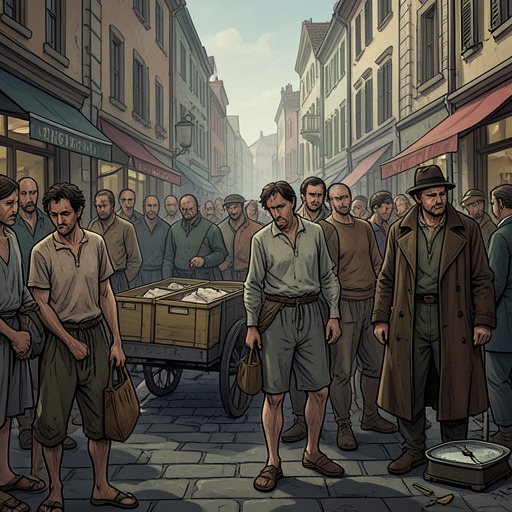
Lysandro Rogare
Fire & BloodLysandro Rogare rose from the upheavals of the Daughters’ War to become the most prominent figure in Lys and a powerful presence in the court of Aegon III. A wealthy banker and trader with a lineage traced to Valyria before the Doom, he acquired Prince Viserys Targaryen after the boy’s first captor died, then made Viserys’s return to Westeros the basis of a costly, binding alliance. Under Lysandro’s leadership, House Rogare’s influence reached beyond banking and trade into royal marriage, diplomacy, and the politics of the Stepstones.
Background and Rise in Lys
Lysandro belonged to a rich banking and trading dynasty with extensive holdings, among them the celebrated Perfumed Garden. His rise coincided with the conclusion of the Daughters’ War, which reshaped power across the Narrow Sea. Lys, Tyrosh, and Myr divided the Disputed Lands, while Dorne gained dominion over most of the Stepstones. In Lys, old houses fell and highborn magisters lost their power; Lysandro and his brother Drazenko were among those who rose to take their place.
Their family’s new influence rested on different kinds of connections. Drazenko had helped shape the Dornish alliance, while Lysandro’s ties reached the Iron Throne through Viserys. Together, the brothers made House Rogare the effective ruling power in Lys, though not formally its princes. The account presents their ascendancy as the result of both upheaval abroad and relationships built across political borders.
Viserys and the Bargain for His Return
Lysandro came into possession of Viserys after Bambarro Bazanne died in 132 AC. Bambarro had been leading a sellsword company against Tyrosh when his men turned against him over unpaid wages. His death exposed his substantial debts: creditors seized his manse, his family was sold into slavery, and his property—including the captive prince—passed to Lysandro.
Viserys had been held in comfortable, though restricted, circumstances at Bambarro’s residence, where tutors taught him languages, literature, mathematics, history, and music, and a master-at-arms instructed him in swordsmanship. Lysandro initially considered using the boy’s striking appearance for his own establishment, but changed course when Viserys revealed that he was a prince. He married Viserys to his youngest daughter, Larra Rogare, later known in Westerosi histories as Larra of Lys. A captive who might have been treated as a commodity thus became Lysandro’s son-in-law and a lasting link to the royal family.
The marriage did not by itself secure Viserys’s return. A chance meeting between Alyn Velaryon and Drazenko Rogare at Sunspear opened a route to negotiate, but Lysandro would not release something of value without payment. Alyn travelled to Lys and agreed to terms that bound the Iron Throne as well as the prince: a ransom of one hundred thousand golden dragons; a promise not to take up arms against House Rogare or its interests for a hundred years; the transfer to the Rogare Bank of funds then held by the Iron Bank of Braavos; lordships for three of Lysandro’s younger sons; and a guarantee that Viserys’s marriage to Larra would not be set aside. Alyn affixed his seal to the agreement. Viserys returned in 134 AC, aged twelve, accompanied by Larra, who was nineteen.
Power, Reputation, and Prosperity
By the end of 134 AC, the Rogares’ wealth and influence had become a subject of alarm in King’s Landing. Stories depicted the family as having bought or intimidated its way through the court: Lotho used gold, Roggerio used his brothel, and Moredo used armed force. The same account cautions that such tales mixed truth with fear and falsehood. The brothers did pursue influence through their respective businesses and means, but they were only one faction among several competing for power around Aegon III. The claim that Larra controlled them all is reported as part of the court’s stories, not established fact.
Lysandro’s own position was more formal and substantial than rumor alone suggests. He adopted the title of First Magister for Life, and his rule was called a velvet tyranny. His authority reached its apex when Drazenko married Princess Aliandra Martell, becoming her Prince Consort and Lord of the Stepstones. In Westeros, Lysandro became known as Lysandro the Magnificent, a name that captured the visibility and scale of the family’s success without resolving whether that success deserved admiration or distrust.
The period also brought material prosperity to King’s Landing, due in no small part to House Rogare. The Rogare Bank paid rich returns, encouraging more lords to entrust their gold to it. Trade expanded as ships from Lys and other cities crowded the Blackwater docks with silks, spices, Myrish lace, jade from Qarth, ivory from Sothoryos, and other goods seldom seen in the Seven Kingdoms. Duskendale, Maidenpool, Gulltown, White Harbor, Oldtown, and even Lannisport also benefited from the widening trade. Lysandro’s ascent therefore had consequences beyond his family’s political reach: its financial connections helped sustain a broader commercial boom.
Legacy and the Limits of Acceptance
The histories distinguish the Rogares’ actual influence from the more extravagant stories told about them. Their ambition, wealth, and use of banking and trade to gather allies are treated as credible; the image of a foreign family secretly controlling every instrument of royal power is treated more cautiously. Their success resembled the pursuit of wealth and influence by other courtiers, but their foreign birth, customs, and gods made them objects of suspicion in ways a Westerosi family might not have been.
Lysandro’s career thus joins practical achievement to the instability of reputation. He secured a royal marriage, extracted extensive guarantees for House Rogare, established himself as First Magister for Life, and presided over a period of expanding commerce. At the same time, the very networks that made his family powerful—banking, marriage, diplomacy, and trade—fed stories of foreign domination. His legacy in the account is not simply that he accumulated power, but that his rise exposed how prosperity and political influence could be welcomed for their benefits and feared for their source.