Rhaenys Targaryen
Fire & BloodTwo Women, One Name
The first Rhaenys was the youngest of the three Targaryens, and unlike her sister Visenya she was playful, curious, and impulsive, with a taste for flights of fancy. She loved music, dancing, and poetry, and supported singers, mummers, and puppeteers. Yet above all she loved flying: it was said that she spent more time on dragonback than Aegon I Targaryen and Visenya combined. She hoped to cross the Sunset Sea on Meraxes and see what lay beyond its western shores. Court observers also heard rumors about her relationships with handsome young men, but they noted that Aegon spent far more nights with Rhaenys than with Visenya.
The later Rhaenys was born in 74 AC, the daughter of Prince Aemon and Jocelyn Baratheon. Her black hair came from her Baratheon mother, while her pale violet eyes marked her Targaryen ancestry. She was the firstborn child of the Prince of Dragonstone, and many regarded her as next in line to the Iron Throne after her father. When Queen Alysanne first held her, she called the child their queen to be. That early expectation makes the later epithet Queen Who Never Was more than a nickname: it records the distance between the succession Rhaenys’s birth seemed to promise and the inheritance she was ultimately denied.
The First Queen’s Flight and Rule
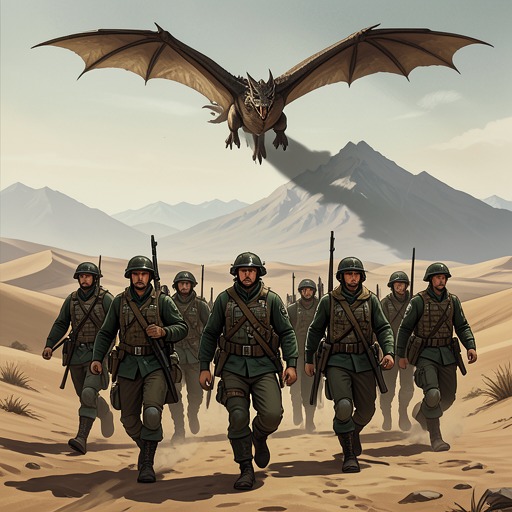
The first Rhaenys accompanied Aegon’s campaigns as a dragonrider. After his coronation, she flew with Meraxes alongside Orys Baratheon’s force as it marched toward Storm’s End, while Visenya and Vhagar went north with the fleet. In Dorne, Rhaenys avoided a direct engagement with the spearmen guarding the Prince’s Pass. Instead, she flew over the Red Mountains and descended on Vaith to demand submission, only to find the castle abandoned. The town below held only women, children, and old men, who would say no more than that their lords were away. Godsgrace was deserted as well. Rhaenys continued down the Greenblood to Planky Town, a floating settlement of boats, barges, and houseboats joined by ropes, chains, and planks, where only a few old women and small children appeared.
Her part in conquest was not limited to the battlefield. Aegon sought to bind the conquered lands into one realm by bringing people from across Westeros to court and encouraging marriages between noble houses from distant regions. The queens took particular pleasure in arranging such matches. Rhaenys arranged betrothals for the three daughters of the Evenstar of Tarth, linking them to House Corbray, House Hightower, and House Harlaw. The marriages served as political connections across regions, an extension of the work of reconciliation carried out at court.
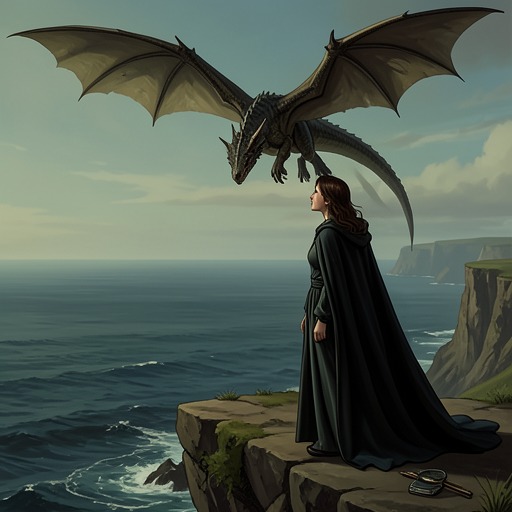
A later campaign against Dorne brought Rhaenys and Meraxes back to the Hellholt. A defender on the castle’s highest tower fired a scorpion bolt that struck Meraxes in the eye. The wounded dragon fell in mortal agony, bringing down the tower and part of the castle. Accounts disagree about what happened to Rhaenys in the fall: some say she fell from her dragon, others that she was crushed beneath it, while another version says she survived the crash and died later in captivity. The record cannot settle which account is true. It does agree that she died at the Hellholt in 10 AC, leaving her end as uncertain as her flight across the Sunset Sea had remained unrealized.
Marriage, Flight, and a Contested Inheritance
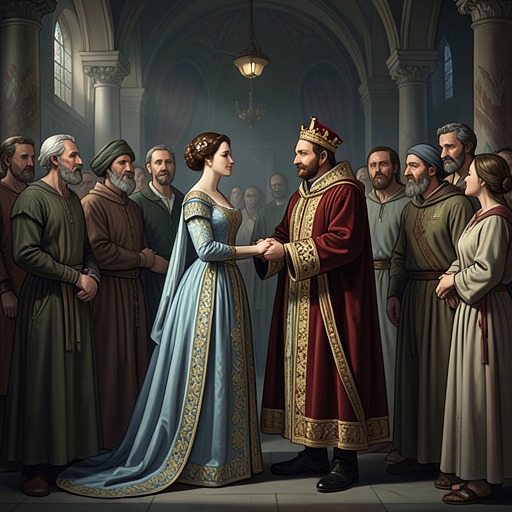
The later Rhaenys was a dragonrider from the age of thirteen. In 90 AC, at sixteen, she married Corlys Velaryon, Lord of the Tides, the celebrated sailor known as the Sea Snake. For their wedding, she insisted on arriving on Meleys, the scarlet dragon once ridden by Alyssa Targaryen. Rhaenys presented herself as a match for her mariner husband, but her marriage also joined two powerful families and placed her beside one of the realm’s most influential seafarers.
Her father’s death brought the succession question into the open. Rhaenys was pregnant when Aemon died, and Jaehaerys I Targaryen gave Dragonstone to Prince Baelon instead. The choice passed over Rhaenys and potentially her unborn child. She objected directly, arguing that the decision would deprive her son of his birthright. Corlys responded by surrendering his place as master of ships and on the small council, then taking Rhaenys back to Driftmark. Her mother Jocelyn and uncle Boremund, Lord of Storm’s End, were angry as well.
Queen Alysanne was the most prominent voice against the decision. She believed her granddaughter had been set aside because she was a woman, and left King’s Landing for Dragonstone on Silverwing. She and Jaehaerys remained apart for two years in the estrangement later called the Second Quarrel. They reconciled in 94 AC through their daughter Septa Maegelle, but not over the question of succession. Rhaenys’s unborn child, often called the boy in the belly during the dispute, proved to be a girl: Laena was born in 93 AC. Rhaenys gave birth to a son, Laenor, the following year. By then Baelon was established as heir, but House Velaryon and House Baratheon continued to regard Laenor as a stronger claimant, while some also supported the claims of Rhaenys and Laena.
The Queen Who Never Was in War
By the time of the Dance of the Dragons, Rhaenys was fifty-five. Her appearance had changed—her face was lean and lined, and her black hair streaked with white—but she remained fierce and fearless. She joined Corlys in pledging his strength to Rhaenyra. The epithet Queen Who Never Was, used of her by Mushroom, condensed a lifetime of disputed succession into a phrase; it did not diminish the authority she exercised as a political ally and dragonrider.
The Blacks’ strategy made use of both her and Corlys’s strengths. Daemon was to lead an assault on Harrenhal, while the Velaryon fleet would close the Gullet and block shipping entering or leaving Blackwater Bay. Corlys would command the ships, and Rhaenys would fly above them to deter attacks by enemy dragons. This placed her once more in the air, not as a companion to a king’s conquest but as protection for a fleet serving the claimant whose cause she had chosen.
Nine days after Lord Staunton sent a plea for help from Rook’s Rest, Meleys appeared above the castle with Rhaenys in steel and copper armor. She did not flee when confronted by Vhagar and Sunfyre, but turned Meleys toward them. In the aerial battle, Meleys caught Sunfyre by the neck before Vhagar fell upon the combatants; all three dragons plunged to the ground. The encounter destroyed the dragons’ flight and ended Rhaenys’s life. A body believed to be hers was found beside Meleys, but it was too badly blackened to identify with certainty. The account gives her age as fifty-five and describes her as Corlys’s faithful wife, a mother and grandmother, and a woman who had lived fearlessly and died amid the war’s fire and blood.