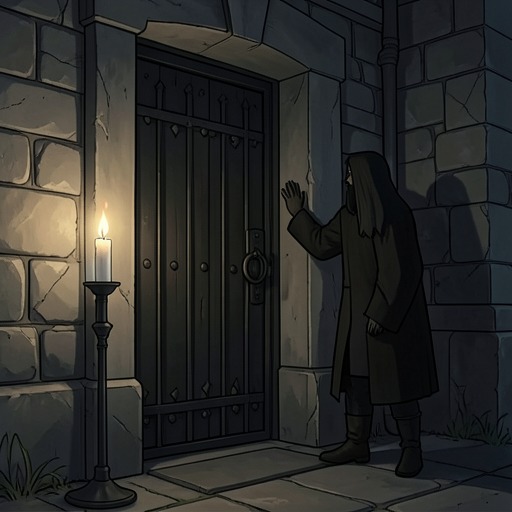
The poisoning of Gaemon Palehair and Daenaera Velaryon
Fire & BloodThe poisoning of Gaemon Palehair and Daenaera Velaryon was an attack at a private supper that killed Gaemon, the young king’s friend and cupbearer, and left Queen Daenaera gravely ill. The poison was traced to the crust of apple tarts, but the inquiry produced no reliable account of who had arranged the attack or why. Gaemon’s death left Aegon Targaryen the Younger inconsolable and briefly brought him and his brother Viserys closer after a quarrel.
The Supper and the Poisoning
The attack came during a quiet supper in the king’s solar. Aegon was with Daenaera and Gaemon, who was entertaining them with a comic song, when Gaemon complained of stomach cramps. Aegon sent Mushroom to fetch Grand Maester Munkun; by the time they returned, Gaemon had collapsed, and Daenaera was also suffering pain.
Munkun identified both Gaemon and the queen as victims of poisoning. He gave Daenaera a powerful purgative, which likely saved her life. Though she endured a painful night and remained too weak to leave her bed the following day, she recovered. Munkun arrived too late to save Gaemon, who died within the hour.
The Investigation
Gaemon had served Aegon as both food taster and cupbearer, a role that made his death especially striking: the person entrusted with guarding the king’s food had himself been poisoned. After the supper, Munkun tested what remained by feeding it to caged rats. The rats’ deaths led him to determine that the poison had been baked into the crust of the apple tarts. Aegon escaped illness because he disliked sweets and, more generally, had little appetite.
The Kingsguard searched the Red Keep’s kitchens and arrested twelve cooks, bakers, scullions, and serving girls. Under torture, seven confessed to trying to poison the king. Their statements contradicted one another, did not agree on where the poison came from, and failed to identify the dish that had contained it. Lord Confessor George Graceford received the captives, but Lord Rowan ultimately dismissed the confessions as untrustworthy. The investigation therefore established where the poison had been placed without establishing who was responsible; the evidence does not resolve whether Gaemon, Daenaera, or Aegon had been the intended target.
Gaemon and the King
Gaemon’s death carried the weight of a friendship as well as a political danger. Born a bastard in a brothel, he had briefly ruled a hilltop kingdom during The Moon of Madness and had seen his mother put to death. He later served Aegon as cupbearer and whipping boy, and became his friend. He was thought to be only nine when he died.
Although Aegon had spent less time with Gaemon since Viserys returned to Westeros, the loss devastated him. Viserys broke a silence that had lasted for a moon’s turn, comforting his brother in his grief and sitting with him beside Daenaera’s sickbed. The shared crisis helped heal their rift. That relief proved temporary: afterward Aegon himself fell silent, his old gloom returned, and he appeared to lose interest in both court and kingdom.
Aftermath and Significance
The account leaves the poisoning unresolved. The rat test supplies a specific physical clue, while the kitchen arrests and confessions offer apparent leads that collapse under contradiction. No perpetrator is identified, and the supposed confessions do not furnish a dependable explanation of the attack. The episode’s clearest consequence is personal: Gaemon’s death removes a companion from Aegon’s life, while the effort to comfort the king briefly restores closeness between the brothers.