Tyland Lannister
Fire & BloodTyland Lannister’s career was shaped by a striking reversal: the financial measures he took for Aegon II helped deprive Rhaenyra Targaryen of the throne, yet after her fall he served her son Aegon III with conspicuous loyalty. As master of coin and later Hand, Tyland moved from the machinery of factional victory to the difficult work of governing a realm exhausted by war. The costs of that passage were written into his body and his reputation, but his final service was not to either faction’s triumph. It was to the young king and the kingdom he inherited.
Identity and Place at Court
Tyland was one of the youngest members of Viserys I’s small council, serving as lord admiral and master of ships on the eve of the succession crisis. He was the brother of Jason Lannister, Lord of Casterly Rock, but his birth after his twin left him without the lordship and wealth that went to Jason. He never married or had children, and the account presents him as someone who had to make his own place in the world.
The council around Viserys included powerful and sharply divided figures: Otto Hightower was Hand, Criston Cole commanded the Kingsguard, and Lyman Beesbury was master of coin. Larys Strong served as master of whisperers, while Jasper Wylde held the office of master of laws. Tyland’s position among them was practical as well as political. When Viserys became too ill to govern consistently, the council and the Hand increasingly took on the work of rule, making the offices they held central to the struggle that followed.
The Succession Crisis and the Crown’s Treasure
When the council met after Viserys’s death, Beesbury argued for Rhaenyra’s right to succeed. Tyland opposed him, emphasizing that many of the lords who had sworn to defend her claim were dead and that he himself had been a child when the oaths were made. The debate was not merely about competing interpretations of succession: the council was deciding which claimant would command the institutions of the Crown. Tyland’s arguments helped clear the way for Aegon II’s supporters to act.
After Beesbury’s death, Tyland was appointed master of coin and moved quickly to secure the royal treasury. He divided the Crown’s gold into four portions: one was placed with the Iron Bank of Braavos, another sent under guard to Casterly Rock, and a third to Oldtown. The remaining funds were reserved for gifts and bribes and, if necessary, the hiring of sellswords. This dispersal protected the wealth from being captured all at once, but it also placed much of the Crown’s money beyond Rhaenyra’s immediate reach. The measure would become one of the defining acts of his political career.
At the same time, Otto sought to replace Tyland as master of ships by offering Dalton Greyjoy a place on the council and the admiralty in exchange for allegiance. The appointment and the transfer of the treasury were parts of a larger effort to prepare the new regime for resistance and secure its allies. When Rhaenyra’s forces later took King’s Landing, Tyland was among those who surrendered. He was not executed then: Rhaenyra ordered him tortured in the hope that he would reveal where the Crown’s treasure had gone.
Capture, Injury, and Service to Aegon III
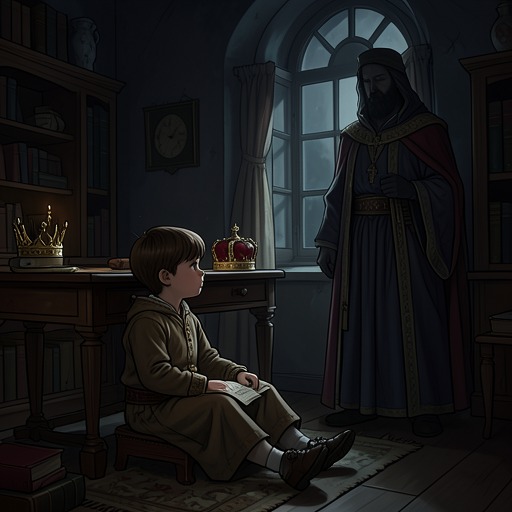
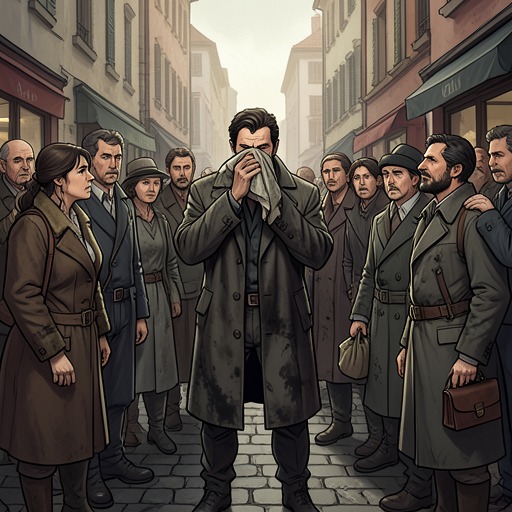
Tyland’s punishment left him blind and badly disfigured. When Aegon III became king as a boy, the former councillor was appointed Hand. He appeared at court in a silken hood, partly to spare visitors the sight of his altered face; instead, the covering encouraged rumours among the smallfolk that a sinister masked figure held power in the Red Keep. The contrast between those rumours and his actual conduct is central to his later record. Though he might have been expected to seek revenge, he professed not to remember which councillors had been black or green and remained loyal to the son of the queen who had ordered his torture.
Tyland’s authority grew as the regents met less often. By law, the Hand and the Lord Protector, Leowyn Corbray, were subject to the council of regency. In practice, Tyland’s persistent work and political judgment gave him increasing influence, while Corbray held the office of protector. The account marks Tyland’s ability to govern despite blindness and the lasting effects of his ordeal, without suggesting that those conditions diminished his capacity. His hood became a public symbol onto which others projected fears, even as his actions were directed toward the practical problems of rule.
Those problems were severe. Winter lasted for four years; trade had collapsed during the Dance, settlements had been damaged or destroyed, and outlaws and broken men troubled the roads and woods. Tyland began rebuilding trade and restoring the kingdom’s resources. He abolished the taxes imposed by Rhaenyra and Lord Celtigar, a change welcomed by both great lords and smallfolk. He also set aside a million golden dragons as loans for lords whose holdings had been ruined. Many borrowed, though the loans created a rift between the Iron Throne and the Iron Bank of Braavos.
His recovery measures also addressed food and infrastructure. He ordered three large fortified granaries built in King’s Landing, Lannisport, and Gulltown, and arranged to fill them with purchased grain. The policy raised grain prices: it benefited places and lords with supplies to sell, while burdening innkeepers, proprietors of pot shops, and the poor and hungry. Tyland’s government therefore pursued security and restoration through choices that produced uneven consequences, especially in a kingdom where scarcity made the price of grain an immediate hardship.
Building, Defense, and the Limits of Peace
Tyland halted work on the enormous statues of Aemond and Daeron commissioned by Aegon II, although their heads had already been carved. He redirected labor toward the Dragonpit, employing hundreds of stonemasons, carpenters, and builders in its repair. He also ordered King’s Landing’s gates strengthened so they could withstand attacks from inside as well as outside the walls. These projects linked the rebuilding of the capital to the practical defense of the regime.
He further announced Crown funding for fifty new war galleys. The stated purposes were to provide work for the shipyards and protect the city from the fleets of the Triarchy; observers also suspected that the ships would reduce dependence on House Velaryon. The policy unfolded while fighting continued in the west: Johanna Lannister resisted the Ironborn raids led by Dalton Greyjoy in the name of her young son, Loreon. Aegon III’s accession had ended the worst of the Dance, but it had not brought peace throughout the realm. Tyland’s building program belonged to this unsettled aftermath, when economic recovery and military readiness remained intertwined.
Death and Legacy
During the Winter Fever, Tyland remained in the Tower of the Hand, working against the epidemic until he himself fell ill. Aegon III visited him as he had visited other sufferers, and took his hand when he died. Tyland’s decline was swift: after a moment of confusion about the cold in a room where the fire was burning and the window was already shut, he died within two days.
His legacy resists an easy factional judgment. He had urged Aegon II to kill Rhaenyra’s son, earning the hatred of some blacks; later, by serving Aegon III, he drew the hostility of some greens. His transfer of three-quarters of the Crown’s gold out of King’s Landing had helped bring about Rhaenyra’s defeat, but the same act cost him his eyes, ears, and health, and contributed to the loss of her throne and life. The account nevertheless distinguishes his earlier service to Aegon II from his later conduct as Hand: Tyland served Rhaenyra’s son faithfully, even after the queen’s regime had destroyed his former life. In that divided service lies his defining significance—not reconciliation between the factions, but the work of a capable official who continued to govern after the political order he had helped shape turned against him.