Widow’s Law
Fire & BloodThe Widow’s Law was a royal measure of 52 AC addressing the vulnerability of widows and the competing claims within households formed by remarriage. It required heirs to maintain a surviving widow in the circumstances she had enjoyed before her husband’s death, while also preventing a husband from favoring a later wife and her children at the expense of children from his first marriage. The law sought to protect both the widow’s security and the established line of inheritance.
Background and the problem of widowhood
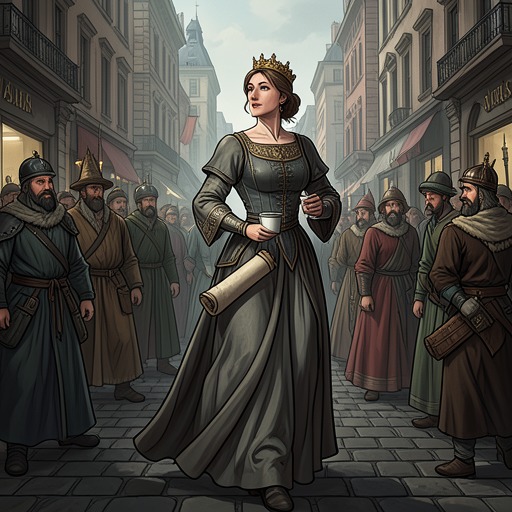
The issue came to Alysanne Targaryen’s attention through the women’s courts she held during the royal progress through the Vale. Their accounts revealed a recurring hardship: men who outlived their first wives might remarry, and the children of the first marriage could resent the new wife. When the husband died, those heirs might expel her from the home. A lord’s heirs could instead leave her in the castle but strip away her prerogatives, income, and servants, reducing her to little more than a boarder. The danger applied to widows of humble birth as well as noblewomen.
The law responded to a household problem sharpened by inheritance. A second or later wife might have occupied a place in the household for years, yet her security could depend on the goodwill of heirs who stood to inherit her husband’s lands and property. The measure addressed this vulnerability without granting the widow her husband’s inheritance in place of his heirs.
Provisions and protections
Jaehaerys Targaryen promulgated the law in 52 AC. It reaffirmed that the eldest son inherited; where there was no son, the eldest daughter inherited. The heirs were required to maintain their father’s surviving widow in the same condition she had enjoyed during his life. A lord’s widow, whether his second, third, or later wife, could no longer be driven from his castle or deprived of her servants, clothing, and income.
The law also constrained the husband’s choices before his death. He could not disinherit children by his first wife in order to give his lands, seat, or property to a later wife or to her children. In this way, the measure paired the widow’s protection with a limit on the displacement of an earlier marriage’s descendants. It did not replace the ordinary order of inheritance: it required heirs to care for the widow while preventing the property she depended on from being redirected away from the first wife’s children.
Alysanne’s influence and the king’s authority
Although the measure is often associated with Alysanne, she had no power to enact laws, issue decrees, or pass sentences. Her influence over Jaehaerys was considerable, however, and he listened to her counsel. The sequence makes her role clear: the women’s courts exposed the circumstances of widows; Alysanne brought that knowledge to the king; and Jaehaerys made the law. The distinction matters because her work shaped royal policy without making her the formal legislator.
The Widow’s Law formed part of a broader effort to address the consequences of marriage and kinship across the realm, but its subject was specifically the widow’s place in her deceased husband’s household and the obligations of his heirs. Its protections applied even to a lord’s later wife, while its restraint on disinheritance guarded the children of an earlier marriage. The measure thus recognized the claims created by more than one family relationship without treating them as interchangeable.
Scope and significance
The law’s balance was deliberate: a widow could retain her home, income, clothing, and servants, but the eldest son—or, in his absence, the eldest daughter—remained the heir. It protected a surviving wife from being cast out or reduced to dependence, while denying a husband the power to redirect his estate so as to deprive children of his first marriage. The result was neither a transfer of the inheritance to the widow nor an unrestricted right for heirs to dispossess her.
Its inheritance provisions should also be distinguished from succession to the Iron Throne. The Great Council of 101 AC had selected Viserys Targaryen over Laenor Velaryon, and many understood its decision to establish that the throne could not pass to a woman or through a woman to her male descendants. The Widow’s Law addressed inheritance within households and expressly allowed an eldest daughter to inherit where there was no son. It therefore set protections and obligations for family property without erasing the distinct precedent governing the crown.