Winter Wolves
Fire & BloodThe Winter Wolves were a force of veteran Northmen who fought for Rhaenyra Targaryen during the Dance of the Dragons. Their reputation was forged in two costly battles: at the Fishfeed they led the attack against the Lannister host, and at Tumbleton they broke from a fortified position to strike Lord Ormund Hightower’s force. Their story joins martial distinction to an explicit willingness to spend their lives for the queen’s cause.
Identity and command
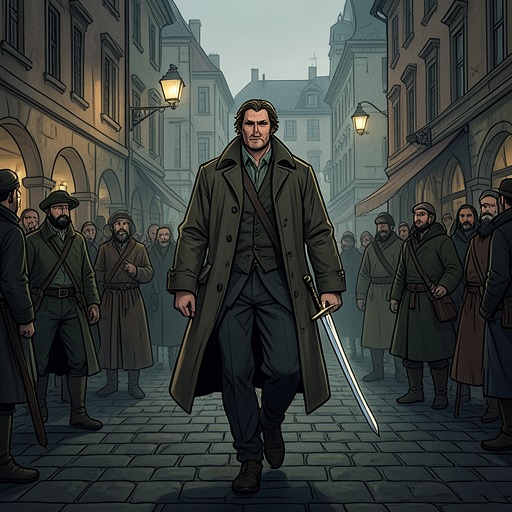
The Winter Wolves numbered about two thousand and came south under Roderick Dustin, Lord of Barrowton, whom men called Roddy the Ruin. They rode beneath Rhaenyra’s quartered banners. The account describes them as greybeards dressed in old mail and ragged skins, but emphasizes that every man was an experienced warrior and mounted. Their name and appearance marked them as old soldiers; their speed and battlefield role depended on their horses.
When they reached Frey’s Twins, Lady Sabitha Frey rode out to meet them. Roderick made clear that they had come south prepared to die for the queen. The declaration establishes the force’s purpose in the campaign: they were not simply reinforcements, but a contingent committed to a cause whose pursuit they expected might cost them their lives.
The Fishfeed
After fresh riverland forces joined Rhaenyra’s supporters, the queen’s commanders decided to attack the Lannister host before additional dragons arrived. The Winter Wolves asked for the honor of leading the assault. Their role at the Fishfeed was therefore both tactical and symbolic: they took the most exposed position in the attack and became the spearhead against the opposing infantry.
The battle drove the Lannisters back toward the waters, where many were killed or drowned. The Winter Wolves charged five times into the ranks of Lannister spears. Their repeated assaults helped make the victory possible, but exacted a severe price: more than two-thirds of the men who had ridden south with Roderick were dead or wounded. The battle’s success did not spare the force that had led it.
The attack at Tumbleton
The Winter Wolves fought again at Tumbleton. After Rhaenyra’s men were pushed back toward the town, Red Robb Rivers and his archers covered their retreat. Once most of the survivors had reached safety inside the gates, Roderick and the Winter Wolves emerged through a postern gate and swept against the attackers’ left flank.
Their assault carried them through a force described as ten times their number, toward Ormund Hightower, who was mounted beneath the banners of King Aegon and Oldtown. Roderick killed Ormund before dying himself. The fall of the Hightower banners briefly led townspeople to believe the battle had turned in their favor. That hope ended when Vermithor and Silverwing took to the sky and attacked Tumbleton. The Wolves’ breakthrough was a striking moment in the battle, but it did not determine its final course.
Losses and significance
The Winter Wolves appear in the campaign as a small, defined body of northern veterans whose repeated willingness to take the hardest assignments shaped their battlefield role. At the Fishfeed, their five charges helped break the Lannister host while leaving most of their original force dead or wounded. At Tumbleton, the survivors again took the initiative, attacking from the flank and reaching the opposing commander, but Roderick and the force’s remaining history are not further traced in these passages.
Their narrative significance lies in the contrast between their fearsome effectiveness and the cost of using them. The Winter Wolves could turn a retreat into a counterattack and bring a commander within reach, yet their sacrifices could not secure lasting victory: at the Fishfeed the price was immense, and at Tumbleton the arrival of dragons overwhelmed the momentary success of their assault.