
Will as the First Cause
FirestarterThis thread traces how an experimental drug awakens psychic capacities, how institutions try to measure and suppress them, and how personal will becomes both their trigger and their imperfect restraint.
increasing Bearing strength in each event
 decreasing
Bearing strength in each eventdecreasingThe Lot Six Experiment

The Lot Six Experiment
An experiment under false assurances
Andrew McGee and Victoria Tomlinson enter a supposedly controlled study led by Joseph Wanless. The researchers describe Lot Six as a mild hallucinogen, while concealing the government’s interest in its possible psychic effects.
The drug brings a disordered surge of perception and apparent shared phenomena. What should have been a supervised trial becomes a scene of panic, injury, and death, leaving the volunteers unable to distinguish what they witnessed from what they hallucinated.
Will revealed through damage
The experiment establishes the novel’s central uncertainty: psychic power can appear without reliable explanation or control. Later theories will treat will as the first cause, but Room 70 offers no clean boundary between conscious intention, altered perception, and bodily consequence.
The volunteers’ lasting abilities are not gifts delivered by a dependable science. They are hazardous residues of an experiment whose investigators cannot fully explain what they have done.
The Push and Its Price
The Push and Its Price
A power shaped by intention
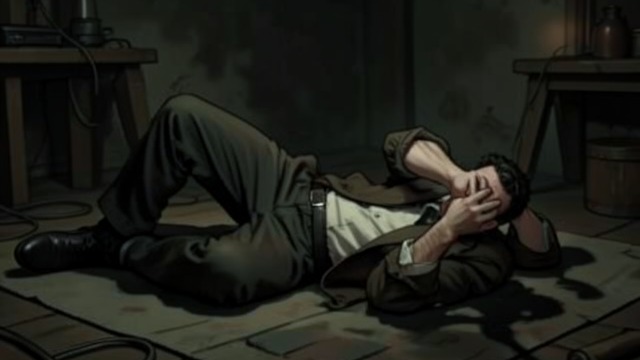
After the experiment, Andrew McGee can influence other people’s decisions through what he calls the push. He uses it cautiously in ordinary life, helping clients gain confidence or change habits, and comes to see the ability as useful when directed toward humane ends.
Yet every forceful use has a physical cost. A severe push brings crushing headaches, weakness, and signs that his body may be sustaining serious damage. His gift is therefore bounded not by scientific safeguards but by pain and the risk of collapse.
The limits become visible
During the flight from New York, Andrew pushes a taxi driver to take him and Charlie to Albany. The effort leaves him nearly helpless, demonstrating that intention can command another person but cannot exempt its user from consequence.
That cost complicates the idea of power as simple mastery. Andrew can shape another person’s will, but the ability does not make him invulnerable, omniscient, or free from responsibility for what happens next.
The Self-Directed Push
The Self-Directed Push
A power turned inward
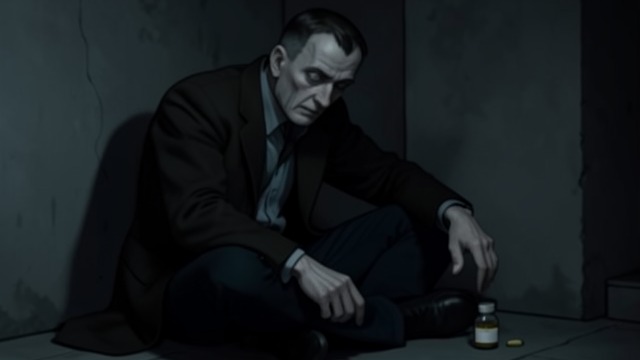
Separated from Charlie and trapped in darkness, Andy confronts fear, disorientation, and his dependence on Thorazine. His earlier attempts to use his ability in tests have failed, and he has begun to accept the agency’s conclusion that it is gone.
As the blackout deepens, he recognizes that the push might be directed at himself. Rather than obeying the craving for medication, he makes the thought of taking a pill emotionally neutral, and the urge loses its hold.
Agency regained, not guaranteed
The moment offers a new model of psychic ability: will can alter not only another person’s behavior but the user’s own relationship to desire. Andy experiences the change as a return of agency, though he cannot know whether it will last or what produced it.
His recovery does not erase the danger. The ability reappears in a man whose brain is already vulnerable, and his next decisions will require him to spend that recovered will at the risk of further injury.
The Fire Learns Direction
The Fire Learns Direction
Practice changes the ability
Charlie McGee has been taught since childhood that her firestarting power is dangerous and must be suppressed. Under pressure from the agency, she eventually agrees to perform limited tests, hoping that cooperation will bring her closer to her father.
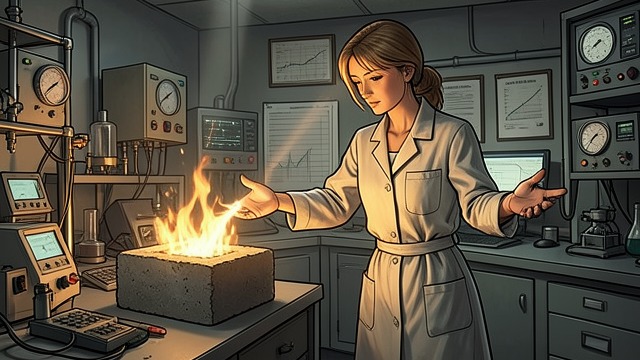
The experiments give her repeated practice. She learns to aim heat at chosen targets and to divert its effects toward water, turning a power once associated with accidental outbreaks into something more deliberate.
Control enlarges the danger
When Charlie destroys a cinderblock wall, the demonstration exceeds the researchers’ expectations. The force is concentrated and increasingly precise, while measurements of her ordinary bodily activity fail to explain the heat being produced.
The researchers gain evidence, but not mastery. Each test teaches Charlie more about what she can do, while the instruments reveal how little they understand about its source, limits, or future scale.
The Final Release
The Final Release
Will under extreme pressure
At the stable, Charlie’s anger, grief, and fear push her power close to the point where she cannot restrain it. The threat to the horses gives her a reason to hold back, but the confrontation continues to escalate around her.
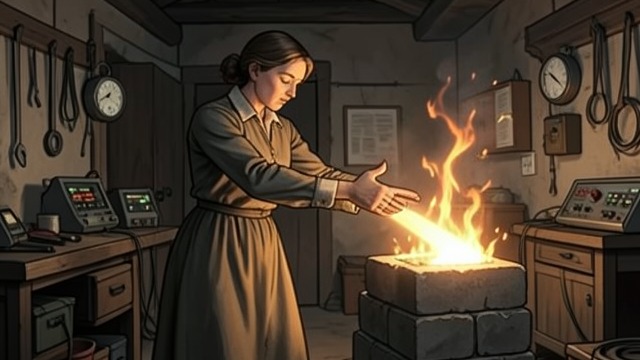
After Andrew is shot and John Rainbird fires again, Charlie’s power erupts beyond the narrow, directed uses developed in the test rooms. It destroys Rainbird and blasts through the stable, spreading danger to people, buildings, and animals.
Restraint at the edge of catastrophe
Charlie’s ability has grown far beyond what the agency’s tests could safely contain. She directs the force into the duckpond and fights to keep it from collapsing back onto her or reaching the panicked survivors.
Her eventual restraint matters as much as the destruction. The power does not simply vanish; Charlie chooses to stop feeding it outward, even while mourning her father and facing the possibility of what she might become.
May 1969, in Room 70 at Harrison State College
From Andy’s early adulthood through the first day of the New York flight
August 19, during the blackout at the Shop facility
From Charlie’s first Shop tests to the destruction of the cinderblock wall
October 9, during the stable confrontation and the compound’s destruction
