
The Burden of Fire
FirestarterThis thread follows how a childhood prohibition turns Charlie’s firestarting into a source of shame, how necessity repeatedly tests that lesson, and how she ultimately rejects the idea that guilt makes her responsible for everything done in her name.
increasing Bearing strength in each event
 decreasing
Bearing strength in each eventdecreasingThe First Lesson
The First Lesson
A frightening power at home
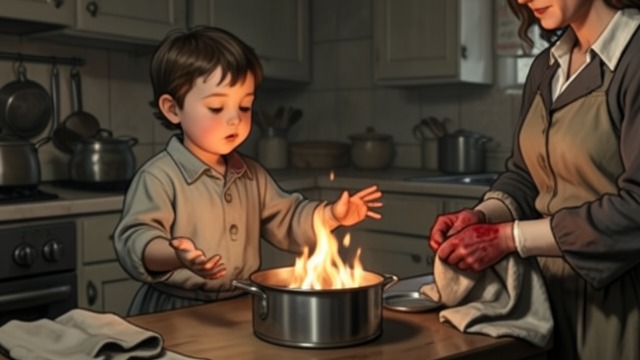
Charlie McGee’s firestarting appears before she can understand or control it. Small fires break out around her, and a serious childhood accident burns her mother’s hands after Charlie’s anger escapes into the world.
Andrew and Victoria respond with emergency precautions and repeated warnings. They tell Charlie that the ability can injure people, teach her to direct it away from bodies, and make clear that it must never be used against another person.
Protection becomes prohibition
The parents’ rules are rooted in love and genuine danger, but they also leave Charlie with a childhood framework of absolute guilt. She comes to regard the fire as a bad thing inside her, something that could make her bad whenever it escapes control.
The lesson protects others, yet it cannot explain how a child should understand an ability she did not choose. That unresolved tension will shape her later fear, her reluctance to act in self-defense, and her need for her father’s judgment.
The Airport Accident
The Airport Accident
An attempt to help
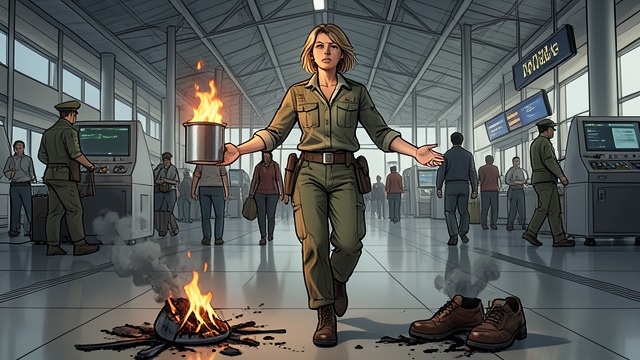
While Andrew is incapacitated by the push, Charlie gathers money from airport pay phones because her father needs shelter and food. She is already afraid that using her ability could make the situation worse, but she acts because there seems to be no safer choice.
On her way back, anger at a deceitful soldier sparks an involuntary burst of heat. His shoes catch fire, and the incident terrifies Charlie because it shows how easily emotion can turn into physical harm.
Shame after survival
Andrew tries to reassure her that the soldier is not seriously injured and that the event shows her power was more contained than in earlier childhood. His interpretation offers comfort, but Charlie remains frightened by the pleasure and force she senses beneath the ability.
The episode establishes a repeating pattern: practical need draws her toward using power, an emotional trigger sends it beyond her intention, and guilt follows. Her fear is not merely of being discovered; it is fear of what she may want or be capable of doing.
The Farm’s Burning Line
The Farm’s Burning Line
Necessity and consent
When Charlie senses that the agents intend to kill her father, Andrew asks whether she can stop them. He does not pretend that killing would be harmless; he tells her plainly that it may be wrong, while affirming that she must decide whether she can bear to act.
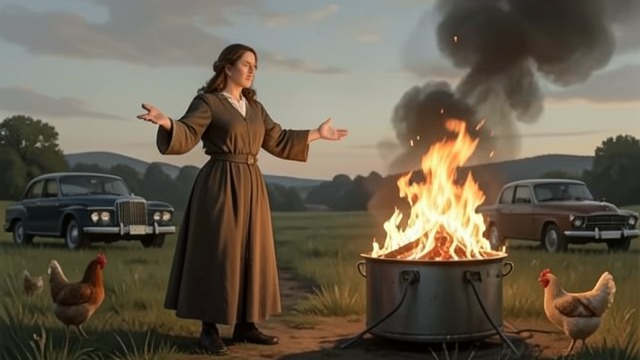
Charlie chooses to protect him. Her fire first burns the approaching agents, then spreads beyond the small targets she intended, consuming cars, chickens, and the farmhouse and nearly engulfing Andrew himself.
The cost of survival
The destruction saves the father and daughter from immediate capture, but Charlie experiences it as a moral catastrophe. She says she will never use the power again, trying to turn terror into a rule strong enough to prevent a repeat.
Irv Manders refuses to treat a vow of absolute restraint as a reliable solution. His warning that circumstances can force a person to break a promise recognizes both Charlie’s vulnerability and the limits of moral certainty under threat.
The Vow Under Pressure
The Vow Under Pressure
A promise used against her
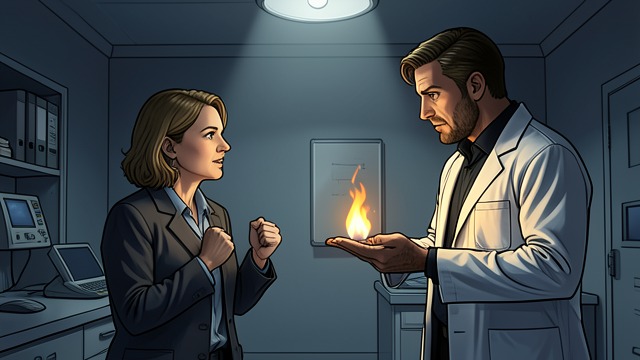
In captivity, Charlie refuses to light fires because she believes that using the power would make her complicit in the harm it causes. The researchers frame that refusal as an obstacle to their work and use separation from her father as leverage.
John Rainbird argues that controlled practice might make the power safer, and that small cooperation could win privileges. His reasoning exploits Charlie’s real fear that an uncontrolled episode might hurt others, while obscuring the agency’s purpose in demanding more.
The temptation of mastery
When Charlie begins the tests, she discovers that the power is stronger and more satisfying than she had understood. The act of control itself becomes rewarding, making her fear that the ability may be changing her rather than simply obeying her.
Her demand to see her father marks the return of her own moral compass. She recognizes that cooperation cannot be measured only by technical control: she needs someone who loves her to help distinguish responsible choice from a coercive bargain.
Refusing the Blame
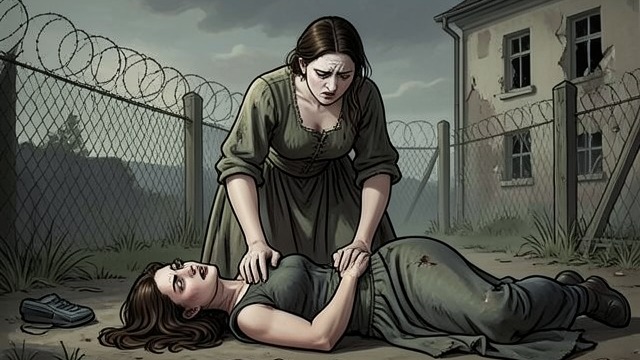
Refusing the Blame
A survivor’s accusation
After the destruction, Charlie crosses the fence and finds a woman injured and terrified. The woman calls her a witch and says she should have been killed, reducing the catastrophe to the supposed evil of the child who survived it.
Charlie tries to apologize for the woman’s injury, but the attempt is met with more rejection. Grief over her father, shame over the dead, and the old childhood belief that the fire makes her bad converge in one moment.
A moral distinction
Charlie finally insists that the disaster was not simply her fault. She does not deny that she caused destruction or that people died; she refuses the larger claim that she alone should carry the blame for the agency’s pursuit, coercion, and violence.
She also pushes the power back down rather than letting anger dictate another act. Her refusal to accept total guilt and her refusal to act on every impulse are paired forms of agency, leaving open the difficult work of living with both power and responsibility.
Charlie’s infancy and early childhood in Harrison
The first night of the escape, at Albany County Airport
The following morning, during the Shop’s raid on the Manders farm
During captivity, after the first Shop fire test
After the compound’s destruction, outside the Shop’s fence
