
The Limits of Scientific Knowledge
FirestarterThis thread follows the widening gap between the agency’s confidence in its research and its inability to explain the powers it records, as Wanless’s warnings, the tests, and the final catastrophe expose measurement without understanding.
increasing Bearing strength in each event
 decreasing
Bearing strength in each eventdecreasingWanless’s Retrospective Warning
Wanless’s Retrospective Warning
A theory after the damage
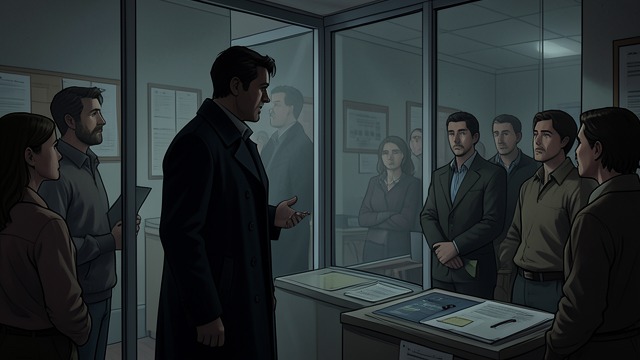
Joseph Wanless argues that Lot Six altered the participants in ways the original investigators never understood. He describes Andrew McGee’s mental domination, Victoria’s limited telekinetic effects, and Charlie’s apparently distinct inheritance as an unpredictable result rather than a controllable program.
He warns that Charlie’s firestarting may be only the visible portion of a much larger capacity. Her development, he believes, could transform a laboratory curiosity into a danger the organization cannot contain.
Knowledge without humility
Captain Hollister hears Wanless but remains committed to obtaining Charlie for research. The warning is treated as one opinion among several, even though the agency has no reliable basis for ruling it out.
Wanless’s theory is not confirmed in every detail. Its importance lies in the ethical question it poses: when investigators cannot define a power’s limits, does uncertainty justify further experimentation, or require restraint?
The Report and the Instrument
The Report and the Instrument
Numbers that fail to explain
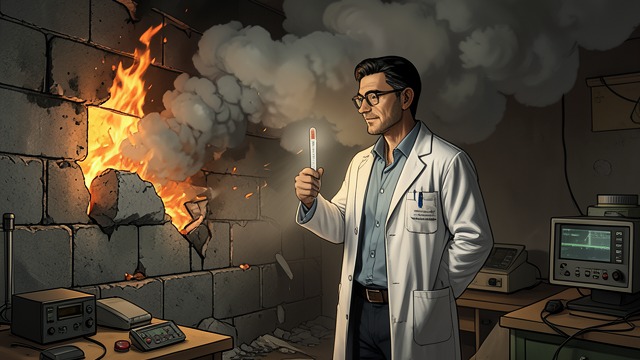
Charlie’s tests produce dramatic evidence: intense heat, distorted metal, and a cinderblock wall destroyed from within. The instruments record temperature and brain activity, but ordinary metabolic readings do not account for the energy released.
A researcher’s report notes the mismatch between the enormous heat and Charlie’s modest bodily exertion. The data show that something occurred, yet offer no credible mechanism for how it happened or where the energy came from.
Measurement mistaken for mastery
The agency’s confidence rises with each successful recording. The same evidence that makes Charlie’s ability harder to deny also encourages the researchers to believe that additional tests will produce control and usable knowledge.
The report’s unresolved questions should have limited the project. Instead, they become a reason to gather more data, revealing how institutions can mistake the visibility of an effect for understanding of its cause.
The Body as an Inadequate Gauge
The Body as an Inadequate Gauge
A controlled demonstration
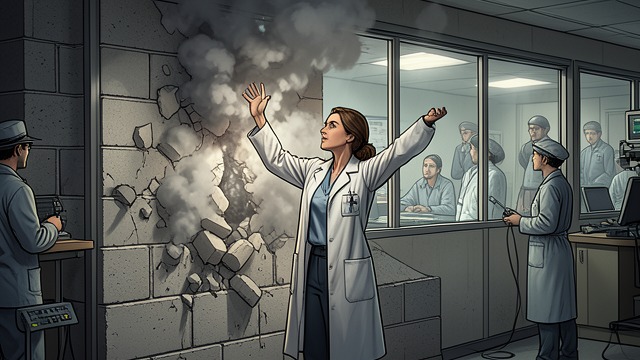
Charlie directs heat at a cinderblock wall while researchers observe through protected viewing ports. The wall smokes, crumbles, and burns; the temperature sensor fails before the event has reached its apparent limit.
The room’s air conditioners cannot prevent the temperature from rising. The researchers possess cameras and instruments, but those tools merely document an effect that outruns their assumptions.
Evidence deepens uncertainty
The test proves that Charlie can produce extraordinary heat under deliberate conditions. It does not establish a dependable upper limit, a biological explanation, or a safe method for stopping her if control fails.
The more spectacular the demonstration, the more dangerous the researchers’ confidence becomes. Their evidence is real, but the conclusions they wish to draw from it remain speculative.
A Theory of Will
A Theory of Will
The proposed common principle
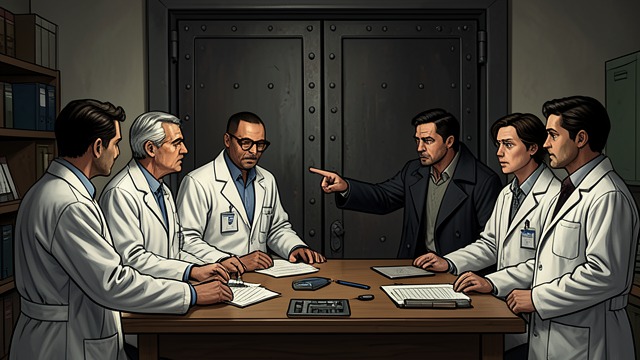
The Shop’s research team argues that psychic abilities begin in the possessor’s willingness to use them. In this model, will explains why Charlie can choose to start a fire and why Andrew’s power may disappear when he is drugged or psychologically defeated.
The theory helps the organization design tests and drug regimens. If will is the key, then tranquilizing subjects or manipulating their incentives may suppress, reveal, or direct the abilities.
A useful model with blind spots
The idea gives the researchers a working framework, but it also risks turning people into instruments. Charlie’s fear, grief, and ethical hesitation are treated as variables in a program rather than as reasons to stop coercing her.
The theory cannot explain the power’s ultimate source or guarantee that intention will remain in control. The blackout, Andrew’s unexpected recovery, and Charlie’s escalating force all expose the danger of treating a partial pattern as a complete law.
The Unanswered Energy
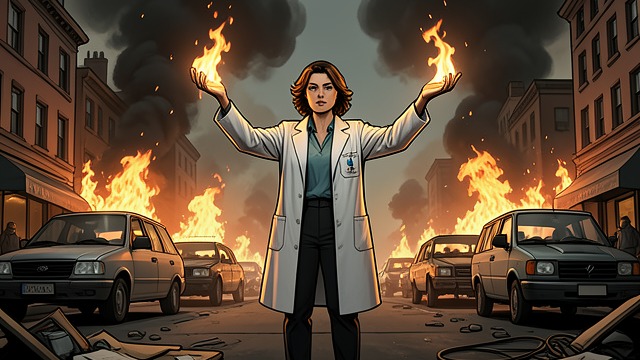
The Unanswered Energy
A catastrophe beyond the models
At the final confrontation, Charlie’s heat consumes the stable, transforms vehicles, and destroys buildings. She eventually directs the expanding force into the duckpond, boiling nearly all its water as she tries to keep the energy from spreading further.
The sequence exceeds the laboratory scale on which the researchers built their explanations. No instrument can reduce the event to a routine test result, and no scientist remains in control of the conditions.
What the disaster cannot settle
The destruction confirms that Charlie’s capacity is immense, but it does not reveal whether the energy originates in her body, passes through her, or depends on a mechanism beyond the researchers’ knowledge. The central scientific question remains open.
Charlie’s restraint is the most important limit shown in the scene, but it is a personal decision made under grief, not a reproducible safety procedure. The researchers’ failure is therefore both intellectual and moral: they learned enough to provoke the power, but not enough to protect the people involved.
October, during the renewed search for the McGees
Early autumn, after Charlie resumes controlled demonstrations
During Charlie’s fourth test, in the former chapel
After the Shop has taken the McGees, before the planned escape
During the October 9 destruction of the Shop compound
