
The Small Room and the Free World
FirestarterThis thread examines how the language of national security turns confinement into a purported public good, how coercion is disguised as care and research, and how Charlie’s escape challenges the assumption that safety can be built by imprisoning a child.
increasing Bearing strength in each event
 decreasing
Bearing strength in each eventdecreasingThe National-Security Rationale
The National-Security Rationale
A person recast as an asset
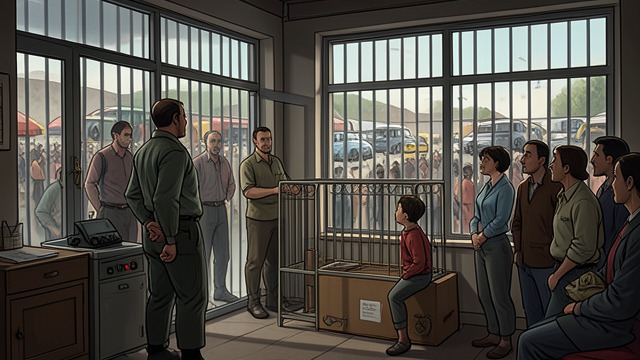
The Shop regards Andrew and Charlie not primarily as citizens or family members but as potential resources. Andrew’s push could serve intelligence aims, while Charlie’s firestarting might justify a renewed research program.
The language of security makes the transition sound administrative. The agency’s leaders speak of tests, containment, and future usefulness, while the possibility of separating the child from her father becomes an accepted operational consequence.
Protection used to excuse control
The agency argues that Charlie could be dangerous in the hands of a foreign power. That possibility is not imaginary, but it is used to rationalize the very confinement and experimentation that make her more isolated and volatile.
The novel exposes the moral inversion in this reasoning: the state claims to protect the public by taking control of a child, while its pursuit repeatedly creates the immediate danger it invokes as justification.
A Comfortable Cell
A Comfortable Cell
Confinement made to resemble care
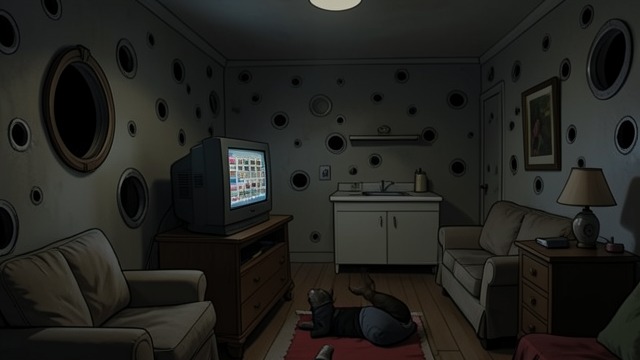
Andrew’s quarters include a television, comfortable furnishings, and a kitchenette, but the doors have no interior knobs and surveillance apertures monitor the rooms. Charlie is likewise isolated, medicated, questioned, and denied access to her father.
The furnishings soften the appearance of captivity without changing its structure. Each is an amenity inside a system that controls movement, medication, communication, and contact between parent and child.
The cost of separation
Andrew’s dependence on Thorazine and his apparent failure in the tests make him seem manageable to the researchers. Charlie, meanwhile, withdraws into silence, becoming less able to engage with the world around her.
The arrangement shows how confinement can be psychologically destructive even when its operators avoid overt violence. The agency’s claim to provide care is undermined by the fact that its central method is deprivation of freedom and relationship.
The Friendly Orderly
The Friendly Orderly
Trust built through isolation
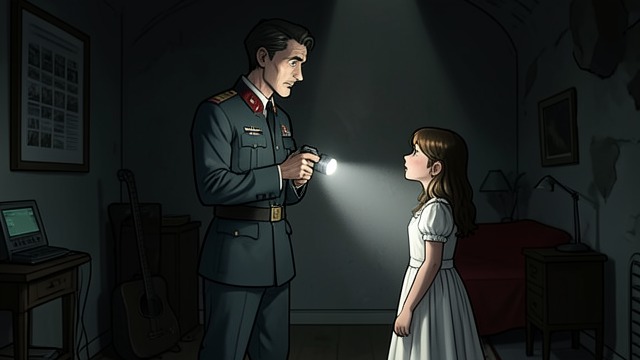
During the blackout, John Rainbird presents himself to Charlie as a frightened and sympathetic orderly. He invents a captivity story, shares her fear of confinement, and becomes one of the few people who appears to listen without interrogating her.
For a lonely child separated from her father, kindness acquires enormous force. Rainbird’s attention helps Charlie speak about her past and gradually persuades her that controlled participation in the tests might bring her closer to what she wants.
Care as a technique of control
Rainbird’s kindness is sincere in feeling but deceptive in purpose. He uses trust to influence Charlie’s decisions while concealing his part in her capture and his ultimate intention to kill her.
The relationship challenges any easy distinction between care and coercion. The emotional bond is real to Charlie, but the institution has allowed a manipulator to become her refuge, turning a human need for connection into another instrument of confinement.
The Father as Leverage

The Father as Leverage
A reward designed to prolong compliance
The Shop and Rainbird offer Charlie privileges in exchange for demonstrations: time outdoors, contact with horses, and the possibility that she may eventually see her father. Each concession is presented as a step toward the reunion she wants.
The promise is structured so that Charlie bears the burden of producing evidence while the agency retains control over whether the reward will ever be granted. Her father’s absence becomes a lever that makes further cooperation seem necessary.
The bargain reaches its limit
After the tests prove how powerful Charlie has become, she refuses to continue without seeing Andrew. The demand makes clear that she is no longer willing to accept small privileges as substitutes for the relationship the agency has taken from her.
Her resistance exposes the cruelty beneath the reward system. What looked like patient negotiation was a way to extend the institution’s control, and the child’s demand for her father becomes a direct challenge to the agency’s authority.
Escape from the Security State

Escape from the Security State
The system collapses around its captive
Andrew’s plan to leave the compound with Charlie depends on exploiting the agency’s own procedures. Rainbird’s intervention turns the stable into a confrontation, and Andrew is shot before Charlie’s power destroys the surrounding institution.
The compound’s fences, locks, guards, and official routines fail to protect either the agency or the people trapped inside it. The apparatus built to control Charlie becomes part of the physical disaster she must survive.
Freedom without resolution
Charlie escapes, but her father is dead, the public account is falsified, and she remains responsible for a power no institution has learned to understand. Her freedom is therefore neither safe nor complete.
When she finally reaches Rolling Stone, she seeks witnesses rather than another official promise of protection. The ending suggests that accountability and public knowledge may offer a better safeguard than a small room, while leaving open whether anyone will believe her.
After the McGees’ abilities become known to the Shop
From the McGees’ capture at Granther’s camp through the summer blackout
From the August blackout to Charlie’s decision to cooperate
From Charlie’s first fire tests to the demand to see Andrew
October 9, from the stable confrontation to Charlie’s arrival at Rolling Stone
