“Know how to will, and you will be free, and will lead”
First Love“Know how to will, and you will be free, and will lead” is Piotr Vassilievitch’s answer to his son’s question about liberty. The maxim makes freedom depend not on liberty alone but on the exercise of one’s own will, which, in his formulation, also brings power and the capacity to lead.
The Conversation
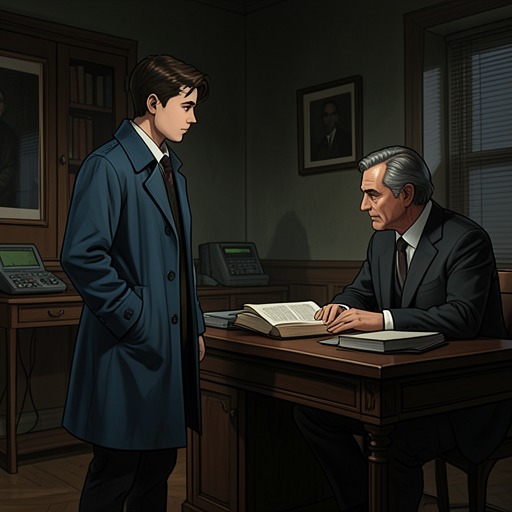
The saying comes during a rare moment when Piotr Vassilievitch is receptive to Vladimir Petrovitch. Vladimir recalls that he had begun airing his views on liberty as a young democrat; his father repeated the word, asked what could give a man liberty, and answered his own question by naming will. The exchange turns a son’s abstract political language into a personal principle: the crucial force, Piotr insists, is the ability to will.
His fuller reply sharpens the distinction: “Will, his own will, and it gives power, which is better than liberty.” The progression is deliberate. Will produces power, and power is valued above liberty; the final promise that one may “lead” extends this self-command into influence over others. The phrase is therefore both advice and an assertion of the father’s hierarchy of values, not a neutral definition of freedom.
A Maxim Within a Relationship
The remembered conversation sits against the distance that marks father and son. Piotr takes little interest in Vladimir’s education and keeps him from becoming truly close, yet at times a word or gesture suddenly draws out the boy’s confidence. These moments of warmth are unpredictable and do not provide a stable intimacy. The discussion of will occurs during one such opening, when Vladimir feels free to speak and his father chooses to engage him.
That setting gives the maxim a personal force beyond its claim about liberty. Piotr speaks as a father to a son who admires him, but the principle he offers centers on belonging to oneself rather than on reciprocal attachment. Vladimir later reflects that his father had little attention to spare for family life and that his heart was satisfied elsewhere. The remembered advice thus stands beside the emotional reserve that shaped their bond: it offers a model of self-possession from a man who remained difficult for his son to reach.
Retrospective Significance
Vladimir’s account also connects the saying to Piotr’s appetite for life. He recalls his father as desiring, above all, to live, and notes that Piotr died at forty-two. The text does not claim that the maxim predicts his death; instead, the father’s insistence on will and the son’s later reflection on his intense attachment to life echo one another. What first sounds like a compact lesson in freedom becomes, in retrospect, a statement of Piotr’s own governing emphasis: life is to be actively claimed, and its savor lies in self-direction.