“Take for yourself what you can, and don’t be ruled by others”
First Love“Take for yourself what you can, and don’t be ruled by others” is Vladimir Petrovitch’s father’s compact lesson in self-possession. Spoken during a rare moment when father and son could talk freely, it joins the pursuit of what one can obtain to the refusal to live under another person’s rule; the father’s next statement gives that independence a sharper formulation in will and power.
The Maxim in Context
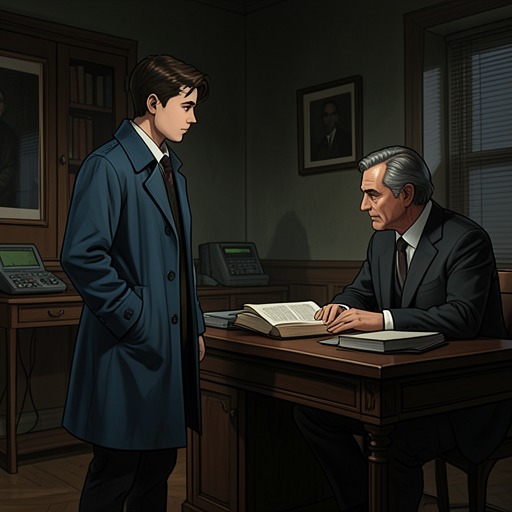
The advice appears within Vladimir’s recollection of a relationship marked by intermittent closeness. His father generally kept him at a distance, though at times a word or gesture could prompt the boy to confide in him as in a wise friend. The maxim belongs to one such occasion: the father was being “kind,” as Vladimir called it, and Vladimir felt able to air his views as a young democrat.
The father’s further phrase, “to belong to oneself – the whole savour of life lies in that,” explains what he values in taking what one can and refusing subjection. Self-belonging is not presented merely as a safeguard against outside control; the father calls it the source of life’s savour. The advice therefore combines an outward injunction—to take what is available—with an inward ideal of belonging to oneself.
Liberty and Will
When Vladimir speaks about liberty, his father repeats the word and challenges him to consider what can give a man liberty. His answer shifts the exchange from a political abstraction to personal agency: “Will, his own will, and it gives power, which is better than liberty. Know how to will, and you will be free, and will lead.” In this formulation, liberty is not the highest end. Will produces power, and disciplined willing is what enables freedom and leadership.
The progression makes the maxim more than a call to resist being ruled. Its logic is active: a person must claim what can be claimed, retain possession of the self, and exercise the will that converts independence into power. The father’s emphasis is on self-direction rather than on any particular political program; the evidence gives no further practical instructions for how his son should apply it.
The Advice and the Relationship
The counsel carries weight partly because of the speaker’s influence over Vladimir. The boy admired his father and longed for his closeness, yet experienced his father’s warmth as sudden and temporary: after encouraging confidence, he could withdraw again. The advice to belong to oneself thus comes from a man whom Vladimir himself could not draw steadily near.
That contrast sharpens the maxim without resolving it. The father advocates freedom from being ruled by others, while his son’s recollection shows how strongly the father’s changing attention could affect him. The statement endures in Vladimir’s memory as a clear principle of will and self-possession, set against the uneven intimacy through which he received it.