First love
First LoveFirst love in Vladimir Petrovitch’s story is both an adolescent awakening and a memory repeatedly revised by adult knowledge. At sixteen, in the summer of 1833, he falls in love with Zinaïda; years later, the recollection returns not as a simple tale of youthful rapture, but as an account of desire, suffering, and the transience of youth. Its decisive significance lies in that double perspective: the boy experiences love as an overwhelming new world, while the older narrator sees how small that experience seemed beside the sorrows he had not yet learned to imagine.
Before Love Takes Shape
Before meeting Zinaïda, Vladimir describes an expectation that precedes any definite beloved. The image of a woman and the idea of love have scarcely taken form in his mind, yet he senses something new, sweet, and feminine moving through his thoughts and feelings. He recalls this anticipation as pervasive, almost bodily, and as something destined to be fulfilled soon. Love therefore begins in the narrative not with a clear choice or a developed relationship, but with an unnamed readiness for an experience the boy cannot yet understand.
That distinction matters to the older narrator. In retrospect, he can identify the anticipation as the threshold of his first love, but at the time it is only a half-conscious presentiment. The memory gives the approach of love a shape before it has an object: the boy’s inner life is already opening toward change, although he cannot yet say what is coming or what it will demand of him.
The Awakening and Its Cost
Vladimir identifies the beginning of his passion with a particular day, after which he understands himself to have ceased being simply a boy and to be in love. The change brings suffering alongside excitement. Away from Zinaïda, he pines and spends whole days thinking of her; in her presence, he becomes jealous, conscious of his insignificance, and alternately sulky or abject. Yet he cannot keep away. Even entering her room gives him a shudder of delight, so that attraction and distress become inseparable parts of the same attachment.
The relationship is unequal in experience and power. Zinaïda quickly guesses that Vladimir loves her, and he makes no effort to hide it. She amuses herself with his devotion, alternately petting and tormenting him; he describes himself as wax in her hands. Her attention gives him joy, while her capacity to unsettle him intensifies his dependence. The older account makes clear that he is not the only man in love with her: other visitors also submit to her changing encouragement and discouragement. His first love is thus private in its emotional force but not exclusive in its social setting. Vladimir experiences himself as helplessly absorbed in Zinaïda, within a circle where she holds several admirers in thrall.
Memory, Form, and Retrospection
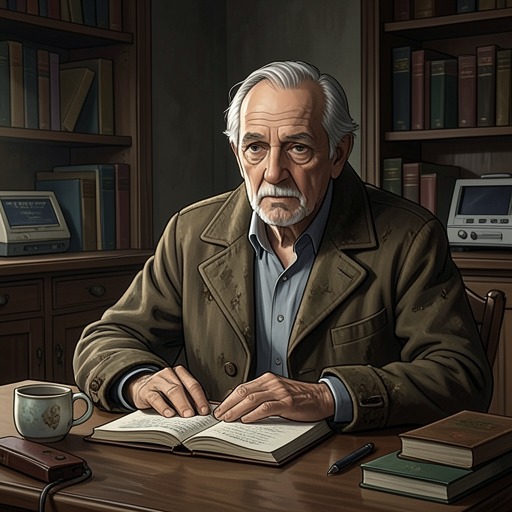
The story’s form makes recollection part of its subject. At a gathering, when the company turns to stories of first love, the forty-year-old Vladimir says that his own was unusual but declines to tell it spontaneously. He prefers to write down what he remembers, judging that oral storytelling would make the account either dry and brief or overlong and affected. A fortnight later, he returns with a manuscript and reads it to his friends. The remembered experience is therefore presented through an adult narrator’s deliberate act of composition, not as an unmediated record of what the boy understood at the time.
That frame establishes a productive distance between experience and interpretation. The adolescent’s feelings appear at full intensity: love seems to remake his identity, and separation from Zinaïda dominates his days. The older Vladimir can preserve those feelings while also questioning their scale. He remembers the tenderness and peace of early rapture, then asks what became of that softened state. The question does not cancel the boy’s experience; it shows that the adult narrator knows its emotional atmosphere was temporary, and that remembering it now involves both recovering its sweetness and acknowledging its disappearance.
Love Measured Against Suffering
The decisive enlargement of Vladimir’s understanding comes when he witnesses his father’s response to Zinaïda. Reflecting afterward, the young man recognizes that a person might endure a blow from a beloved hand without revolt. He measures his own transports and sufferings against this unimagined capacity for love, which seems beautiful but also menacing, and admits that his earlier idea of passion had been inadequate. First love has educated him not by giving him mastery over feeling, but by exposing him to a depth of attachment he cannot yet fully grasp.
The adult narrator places this education within the wider vulnerability of youth. When Zinaïda later dies in childbirth, he learns of it only after delays have prevented him from visiting her at the Hotel Demut. The news brings regret that he did not see her when he could have done so, and the memories of the past rise again. He reflects that youth treats even sorrow as something it can turn to its own use, while its days pass and vanish. In this final perspective, first love is precious not because it promises a lasting future, but because its intensity survives as memory even after the life associated with it has ended.
Ending and Significance
Zinaïda’s death does not leave Vladimir with a simple conclusion about love. His recollection turns instead toward the unequal fates hidden beneath the image of brilliant youth. A few days after hearing of her death, he witnesses a poor old woman dying after a life of want; beside her deathbed, he feels an impulse to pray for her, for Zinaïda, for his father, and for himself. The movement from remembered passion to compassion for the dying gives the first-love story a moral as well as a personal horizon. The boy’s early absorption in his own feelings has not prevented him from becoming attentive to grief, though that attention becomes clearer in retrospect.
First love consequently marks both an awakening and a limit. It first gives Vladimir a name for his changed condition and binds delight to jealousy, dependence, and pain. Later, the adult narrator places that youthful intensity among memories of loss and recognizes how little the boy could foresee. The story preserves the springlike force of the experience without pretending it could arrest time: what remains is not the fulfilment of youthful expectation, but the memory of its brief, storm-like passage and the understanding that sorrow, too, belongs to a life still being learned.