Piotr Vassilievitch
First LovePiotr Vassilievitch, Vladimir’s father, is a commanding and emotionally remote presence whose private relationship with Zinaïda becomes a turning point in his son’s understanding of love. To Vladimir, Piotr first appears almost an ideal of masculine composure: handsome, assured, and difficult to approach. But the same man who teaches self-command keeps his son at a distance, and the relationship Vladimir discovers with Zinaïda exposes a passionate, forceful side of his father that unsettles that ideal.
Identity and Family Background
Piotr is described as still young and very handsome, with an elaborate serenity and self-confidence that make his authority seem effortless. He dresses with care but without ostentation, in a style of his own. When Vladimir sees him bow to Zinaïda, the young narrator notices his graceful figure and the way his grey hat suits his curls; this brief impression makes Piotr’s familiar appearance seem newly vivid.
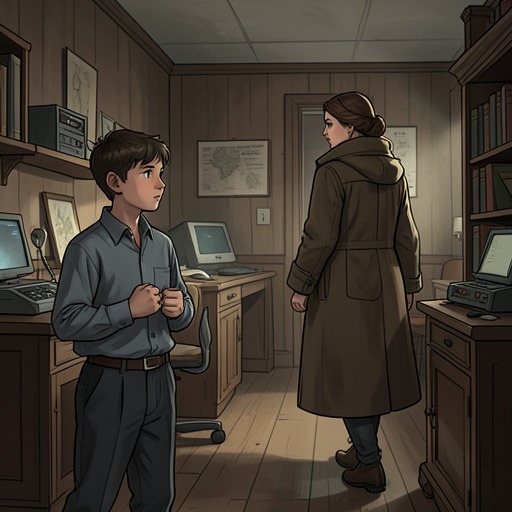
Piotr married Vladimir’s mother for mercenary considerations. She was ten years older than he, and their household is marked by an imbalance of feeling and power: she lives unhappily, often agitated and jealous, and is afraid of her husband, while Piotr is severe, cold, and distant in his behavior. Vladimir is their only child. His mother scarcely notices him, and Piotr takes little interest in his education, leaving the boy unusually free to spend his time as he pleases.
A Father Both Near and Remote
Vladimir’s account of Piotr is shaped by contradiction. Piotr respects his son’s freedom and does not hurt his feelings, treating him with a courtesy that distinguishes their relationship from simple harshness. Yet he does not let Vladimir become truly close to him. Vladimir loves and admires his father, but remains painfully conscious of being held at a distance; the longing for Piotr’s attention is intensified by the very reserve that withholds it.
That distance is not absolute. At times, a word or gesture from Piotr can prompt Vladimir to confide in him as if he were a wise friend and teacher. Piotr sometimes plays and romps with his son, enjoying vigorous physical exercise, and on one rare occasion shows him such tenderness that Vladimir nearly weeps. But these moments arrive unexpectedly and do not establish lasting intimacy. Piotr soon withdraws again, whether by turning to work or becoming abruptly cool, leaving Vladimir unsure how much the brief warmth meant.
Vladimir later concludes that his father’s attention was absorbed elsewhere and that he found satisfaction outside family life. Piotr’s advice to his son expresses an ethic of self-possession: he urges him to take what he can and not be ruled by others, and presents will as a source of power that can exceed mere liberty. The counsel sounds like a general principle of independence; in light of what Vladimir later learns, it also sits uneasily beside the forms of influence and dependence within Piotr’s own relationships.
Zinaïda and the Hidden Relationship
Piotr’s connection with Zinaïda emerges first through small signs that Vladimir does not yet understand. After Vladimir says he has seen her at the Zasyekins’ home, Piotr stops, turns back, and approaches her with a courteous bow. Zinaïda returns it with some astonishment and drops her book. She watches Piotr as he moves away, while Vladimir, who turns toward her, receives no glance before she picks up the book and leaves.
Later, when Zinaïda considers going riding, she says she will ask Piotr for help. Her casual invocation of his name surprises Vladimir, who takes it as evidence that she expects Piotr to be ready to do her a service. The remark acquires greater significance after Vladimir’s accidental discovery of the relationship between them.
While waiting for his father near the Moskva River, Vladimir goes looking for him and sees him at the open window of a small wooden house, speaking with a woman in a dark dress. The woman is Zinaïda. Piotr is leaning toward her, and their conversation appears grave: he seems to be insisting on something, while she refuses to agree. She responds with restrained expressions that Vladimir reads as sorrowful and devoted, but she does not yield. This is not an encounter Vladimir expected, and the sight forces him to recognize a private bond between his father and the young woman he loves.
Violence, Recognition, and Aftermath
The conversation at the window changes abruptly when Piotr raises the whip he has been using to brush dust from his coat and strikes Zinaïda’s bare arm. She shudders, looks at him without speaking, and kisses the mark left by the blow. Piotr throws the whip aside and rushes into the house; Zinaïda moves away from the window. Vladimir watches in shock, unable to reconcile the act with the reserved father he knows. The gesture, her look, and her response become an image he believes he will never forget.
Piotr soon returns to Vladimir, who is waiting with the horses. Asked about the whip, he says he did not drop it but threw it away. He then falls silent, and Vladimir sees tenderness and pity in his stern face, an expression he has witnessed only once before and will scarcely see again. Piotr rides on ahead, leaving his son to follow later. The brief exchange offers no explanation of the relationship or the argument, but it deepens the sense that Piotr’s composure conceals intense feeling.
That night, Vladimir tries to make sense of what he has seen. He understands Zinaïda’s response as evidence of a passion capable of enduring even a blow from the hand of someone deeply loved. His own transports and sufferings, which had seemed so consuming, now appear to him small and childish beside this unfamiliar, daunting form of love. The encounter does not resolve his feelings for either of them; it changes the scale by which he understands them.
Narrative Role and Significance
Piotr’s importance lies in the gap between the ideal Vladimir projects onto him and the more troubling person the boy gradually perceives. His alternating friendliness and withdrawal make paternal affection something Vladimir waits for but cannot rely upon. His advice celebrates the power of individual will, while the hidden relationship with Zinaïda reveals emotional entanglement and a capacity for force that the advice alone cannot explain.
The discovery also shifts the story’s focus from Vladimir’s youthful longing toward an adult passion he can witness but scarcely comprehend. Piotr is at once the father whose approval Vladimir wants and the rival whose connection to Zinaïda overturns the boy’s assumptions. In the aftermath, the whip becomes part of a lasting memory not simply because Piotr uses it, but because Vladimir sees Zinaïda’s response and Piotr’s subsequent tenderness. The episode leaves him with a more complicated image of his father and a markedly altered understanding of what love can demand.