Anna Pou
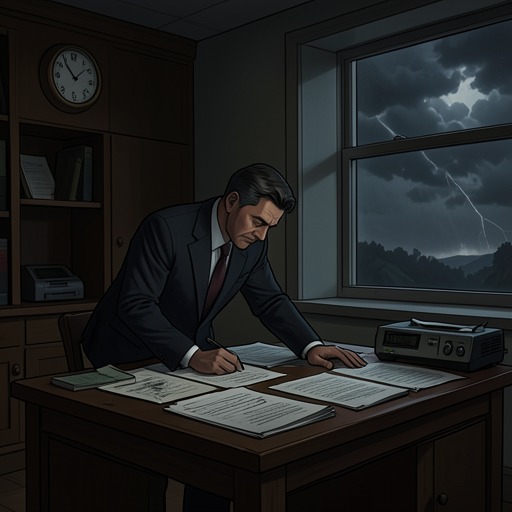
Five Days at MemorialAnna Pou was a head-and-neck cancer surgeon whose work at Memorial Medical Center during Hurricane Katrina placed her at the center of two connected crises: the struggle to move patients through a failing hospital and the later dispute over whether medication given to some of them was intended as comfort care or to hasten death. The account presents her as a doctor accustomed to pressing on when patients had little chance of recovery, then follows how that professional identity was tested by the loss of ordinary medical tools, the evacuation’s improvised priorities, and a criminal investigation that turned her into a public symbol of disaster medicine’s ethical and legal dilemmas.
Training and professional identity
Pou came to Memorial early on Sunday, without family, pets, or provisions. It was her first hurricane at the hospital, and she found the preparations disorganized. Rather than wait for direction, she sought out experienced operating-room and recovery-room nurses and helped move equipment. A bridge separated the main hospital from its newer surgical suites, and administrators feared the bridge might fail in the storm. Pou carried supplies into operating rooms in the older building and arranged them so that surgeons could work there if necessary. Friends noticed how quickly she took charge.
Her route to medicine had itself involved a change of direction. Laboratory technology did not satisfy her, and she later recognized that her father had been right about this. At thirty, she applied to and entered Louisiana State University, where her father and uncle had trained. She eventually chose a demanding branch of otolaryngology rather than the routine practice associated with many ear, nose, and throat careers. In Indiana she trained in microvascular reconstructive surgery, combining plastic and cancer surgery. The work was physically taxing and technically exacting; some operations lasted through the night and into the following day.
That training helps explain both her role in the hospital and the account’s emphasis on the tools she lost. Pou was used to trying the latest treatments and offering patients with poor prognoses every remaining chance, sometimes continuing when other physicians might have stopped. During the crisis, her specialty knowledge also made the loss of hospital suction especially consequential to her: the built-in system normally helped clear patients’ upper airways, but it was unavailable. At one point she tried to stimulate a patient to cough until staff found a portable, battery-powered suction device. The scene marks a sharp reversal for a surgeon whose work depended on specialized equipment and sustained intervention.
Staying at Memorial and the evacuation
Pou was on call for her department when Katrina threatened, so she was expected to remain in the city. Department chair Dan Nuss urged her to transfer responsibility for postsurgical patients to other doctors; her husband also agreed that she could leave. Instead, Pou dismissed the two resident physicians on call with her so they could be with their families, advising them to leave town. The National Hurricane Center warned that Katrina’s storm surge could rise as high as twenty-eight feet above normal tide level and overtop some of the city’s levees. Pou had decided to stay in case people trapped in the city needed her skills.
As the hospital’s circumstances deteriorated, her work shifted from surgery toward moving and supporting patients. After helping load patients onto National Guard trucks, she returned inside and was directed to a Code Blue on the seventh floor, where LifeCare Hospitals operated a long-term acute-care unit. She also took a turn manually ventilating a LifeCare patient with a reinflatable Ambu bag, trading places with a nurse and another staff member. When she returned to relieve one of them, the patient had died.
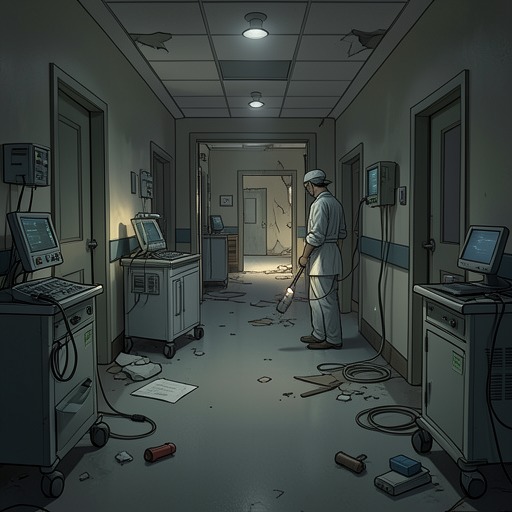
Pou recognized how little she could do without electricity, running water, suction, and the equipment on which her practice depended. She and colleagues concluded that the sickest patients, including those on ventilators, might not survive evacuation. In the heat and unsanitary conditions, she worried that even people who had been healthy were becoming ill and having difficulty breathing. She joined the effort to coordinate the movement of patients: staff and family members searched floor by floor for cots and stretchers, brought them to the second-floor lobby, and carried patients there. Pou rolled up the short sleeves of her scrub shirt and stood ready to receive them.
The sorting process troubled her. Pou and her colleagues had little training in triage systems and no specific protocol to guide them. She regarded their evacuation categories as heartbreaking, and understood the reversal from moving the sickest first to moving them last as a consequence of the doctors’ belief that they could not save everyone. The account sets this judgment within a broader institutional breakdown: improvised decisions were being made under extreme conditions, without a shared triage framework, while patients’ prospects and mobility shaped who could be moved.
Medication and contested accounts
The dispute that defined Pou’s public reputation emerged from conversations about what could be done for patients who appeared unlikely to survive. Susan Mulderick later recalled telling Pou that staff had discussed euthanizing animals but had not discussed what they could do for patients. In Mulderick’s recollection, Pou compared the patients before them to some of her cancer patients, for whom there might be nothing left to do but make them comfortable. Pou said she would use pain medication, though she was uncertain what to give.
Pou wrote prescriptions for concentrated intravenous morphine for three patients in the second-floor lobby: LifeCare patients Wilmer Cooley and Carrie Mae Hall, and Memorial patient Donna Cotham. Cooley, an eighty-two-year-old former truck driver, had heart problems, a serious infection, required dialysis, and had a Do Not Resuscitate order. Hall had a tracheostomy; a nurse had recently been struck by her determination to survive. Cotham, a forty-one-year-old mother of four with liver disease, had worsened after the hurricane. The intensive care unit she was meant to enter was evacuating, and nurses had considered her condition especially poor overnight.
The prescriptions specified nine vials of concentrated intravenous morphine per patient, totaling 90 milligrams each, and gave the administration instruction only as “as directed.” The book contrasts those amounts with the highest dose Pou had prescribed for pain during the preceding two days for a colleague’s cancer patient, who was already taking morphine and tolerant to it: 10 milligrams. The prescriptions bore Pou’s Drug Enforcement Administration number, authorizing her to prescribe controlled substances. These details became central to the later inquiry because they documented what she ordered while leaving disputed how, when, and with what intent medication was administered.
Some patients did not have intravenous lines. Gina Isbell and Pou requested boxes of IV catheters, but not the fluids and tubing that would have been needed to hydrate patients unable to drink adequately. In one account, Pou asked for a light while a male nurse held a flashlight as she started an IV. A nurse later recalled seeing a patient struggle to breathe after an injection and searching unsuccessfully for someone to intervene or order a reversal. She could not establish Pou’s intentions and said that several staff members told her Pou had ordered the drugs. Another LifeCare staff member, Diane Robichaux, recalled Pou saying the patients would not survive and asking whether Robichaux wanted her staff to remain on the unit. A separate recollection described a decision to administer lethal doses. These accounts differ in vantage and certainty; the book does not treat them as interchangeable or settle the disputed intent by presenting any one recollection as definitive.
The investigation also developed evidence from witnesses and records. Kristy Johnson told investigators that she had accompanied Pou to Emmett Everett’s room, recalled Pou saying she would offer him something for dizziness, and remembered that Pou appeared unusually nervous. Johnson also said she had seen Pou draw liquid from vials into syringes, witnessed Pou and Memorial nurses carrying syringes, escorted health professionals to patients’ bedsides, and been present for some injections. She held patients’ hands and prayed. Separately, pathologist John Skinner and laboratory director David Heikamp had been asked to record deaths and locations; they walked through the hospital after the evacuation to establish who had died and where. Such records, witness accounts, and later forensic work formed different strands of a case whose details remained contested.
Investigation, public defense, and legacy
Virginia Rider, investigating for the state, gradually assembled a picture of Pou through documents and identification work. Pou began as a dimly known presence associated with the seventh floor; Rider collected her identifying details and circulated her driver’s-license photograph among hospital workers. She also found Pou’s signature on a job-relocation agreement connected with her Louisiana State University employment and on the three morphine prescriptions dated September 1, 2005. When the two women met during a later tour of the shuttered hospital, they shook hands. Months afterward, Rider returned to New Orleans with arrest affidavits and warrants for Pou, Cheri Landry, and Lori Budo. Pou was alone when agents arrived. She asked to change into fresh scrubs, and Rider accompanied her as she did so.
The arrests were announced as four counts of principal to second-degree murder. The district attorney’s office later prepared a proposed ten-count indictment for grand-jury consideration: one second-degree-murder count concerning Emmett Everett and nine counts of conspiracy to commit second-degree murder, one for each LifeCare patient on the seventh floor, including Everett. The distinction between those proposed counts and the arrest charges matters: the investigation was still working through who had administered which medication and what could be established about intent.
Pou publicly described the experience as the destruction of a life devoted to helping others. In a televised interview, she argued that the hospital’s dreadful circumstances resulted from abandonment and said that she believed in comfort care, not euthanasia. Asked whether she had lost hope, she identified hope as part of her own professional outlook as a cancer specialist. Her account of her actions thus rested on a distinction between relieving suffering and intending death, a distinction that the criminal allegations put under scrutiny. For the time being, her attorney, Rick Simmons, discouraged her from publicly entering a broader debate about end-of-life care, judging that discussion too risky in Louisiana’s political and religious climate.
Pou continued to practice surgery and became a popular national lecturer on ethical questions in disaster medicine. At one conference, she told hospital executives that the Federal Emergency Management Agency had called to say that airboats would be taken at noon, leaving the hospital to get people out before then. The book contrasts that version with the investigative record and years of reporting, neither of which had supported the claim that such a call was made. Her later public account therefore became part of the story in its own right: not only a defense of her conduct, but a disputed reconstruction of the decisions and warnings that shaped the evacuation.
She also helped advance legislation intended to protect health-care professionals working under disaster protocols. The bills she and Simmons helped write passed unanimously in Louisiana. They provide immunity from most civil lawsuits for work conducted in accordance with disaster-medicine protocol, except in cases of willful misconduct, and urge prosecutors to await a medical panel’s findings before deciding whether to bring criminal charges. Pou helped advocates pass similar laws in other states. Her legacy in the account is consequently double-edged: she remained a practicing surgeon and advocate for disaster-care protections, while her Katrina decisions continued to raise questions about medical authority, consent, triage, and the boundary between comfort care and hastened death.
Memory and the limits of the record
The book frames Pou’s story through records and recollections that do not carry equal evidentiary weight. The prescriptions, employment agreement, and patient records were created in connection with events or institutional processes; witness statements were recalled later, sometimes in disagreement. The author notes that media reports can trigger memories and may also contaminate them, and that several LifeCare witnesses discussed their experiences and collaborated on a written timeline after evacuation. The account therefore preserves discrepancies around conversations, medication, and intent instead of smoothing them into a single uncontested scene.
That caution also shapes how Pou appears across the narrative. The same physician is shown organizing operating rooms, staying when she could have left, assisting an evacuation, and confronting a loss of ordinary clinical capacity; she is also the signer of prescriptions that investigators treated as evidence in a potential murder case. Her own public explanation emphasized comfort and opposition to euthanasia, while witnesses and prosecutors advanced more damaging interpretations. The book’s portrait does not erase the conflict between those versions. It makes that conflict—between professional identity, collapsing systems, surviving records, and fallible memory—the defining condition of Pou’s place in the story.