Bellevue Hospital Center
Five Days at MemorialBellevue Hospital Center became the setting for a stark disaster-care dilemma during Hurricane Sandy: its adult intensive-care unit had 56 patients who depended on electrical equipment, while hospital leaders feared that only six outlets might remain powered. The planned allocation forced clinicians to confront who would receive life-sustaining electricity and how those decisions could be made fairly. In the end, volunteers carried fuel up thirteen flights of stairs, preventing the backup system from failing and allowing all of the patients to remain on backup power as the hospital was evacuated.
Hospital and Hurricane Context
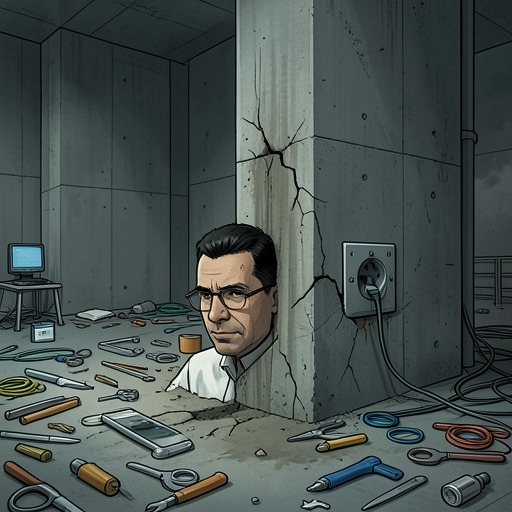
Located in Manhattan, Bellevue Hospital Center is described in the account as the nation’s oldest public hospital. As Sandy approached, a storm surge from the East River was expected to flood the land around the hospital. Hospital leaders warned Laura Evans, the medical director of critical care, that flooding could disable pumps supplying oxygen and vacuum suction, as well as pumps moving fuel from large underground tanks to the backup generators.
The threat lay not only in the generators themselves but in the systems they depended on. If city power failed and floodwater disabled the fuel pumps, the generators could run only on their small attached reserves. Hospital leaders estimated those reserves would last about two hours. The scenario turned the backup system into a countdown: it could sustain care temporarily, but its continued operation depended on fuel reaching the generators.
The Six-Outlet Triage Dilemma
Nearly all 56 patients in Evans’s adult ICU relied on electrically powered equipment. Many were on life support or receiving intravenous drugs to regulate heart rate and blood pressure; some depended on intra-aortic balloon pumps to help maintain blood flow. Hospital leaders believed a generator in a neighboring building, supplied by a separate and better-protected fuel pump, could keep running—but it could power exactly six ICU outlets. They asked Evans to identify which patients should receive them.
The problem echoed the crisis at Memorial Medical Center during Hurricane Katrina, where clinicians had faced life-and-death choices without the allocation guidance available to Evans. In 2008, New York planners had published a ventilator-allocation protocol in response to, among other concerns, the arrests of health professionals after Katrina and fears of a future pandemic. Evans adapted its scoring approach for the very different problem of allocating six outlets. The guidance had not been designed or tested for this situation; it offered a process when the hospital urgently needed one.
Evans assembled an ad hoc committee rather than making the choices alone. Its members—doctors, nurses, and ethicists who had no patients under consideration—could assess patients using shared criteria, while primary doctors remained free to advocate for their own patients. The committee did not include patients or their family members. It communicated its decisions and reasons to staff; some staff challenged the choices but accepted them. Within about two hours, the team had produced a list and worked out how patients would be moved between beds and outlets.
Evans also considered whether the decisions could later be explained to patients, families, and the public. She wanted a transparent, consistent process that could be defended as fair and equitable, and she knew the story of Anna Pou and the Katrina controversy. Yet the immediate plan left a consequential gap: staff feared telling patients and families who would not receive outlets, so they postponed those conversations. In retrospect, Evans believed families had a right to know. The team also did not ask whether a selected patient or family might voluntarily give up an outlet for someone else.
Power Failure and Improvised Protection
As Evans and her colleagues completed the list, the lights went out when city utility power failed. Backup generators took about seven seconds to start. The command center then warned that power outside the six outlets could be lost within sixty to ninety minutes. Floodwater was filling the basement of the 25-story hospital, and water was surging into elevator pits with enough force to dislodge elevator doors.
Staff prepared for the possibility that electrical support would disappear. Two health professionals were stationed at the bedside of each ventilator-dependent patient, ready to provide breaths manually with Ambu bags. Bright-orange extension cords connected to the backup generator system ran through patient corridors. Nurses counted drops on intravenous pumps so that, if the pumps stopped, they could administer vasopressors manually by drops per minute. These preparations converted a threatened technological failure into a set of labor-intensive bedside contingencies.
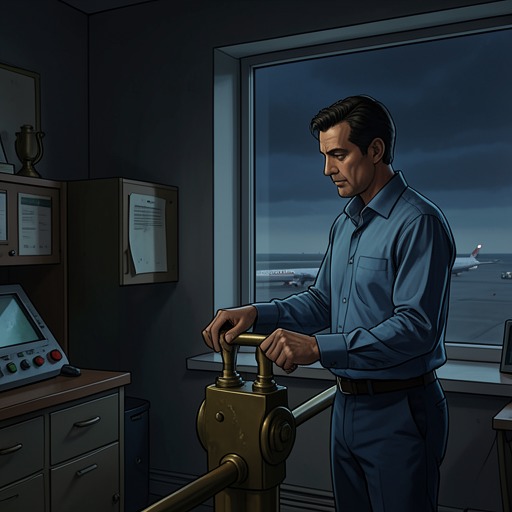
The decisive intervention came not from the allocation plan but from improvisation. Volunteers formed a chain and passed fuel up thirteen flights of stairs to supply the generators manually. Their action prevented the backup power from cutting out. As a result, Evans’s patients remained supported on backup power while the hospital’s evacuation proceeded, and the prospect of having to disconnect patients from power outlets did not become the defining outcome of the crisis.
Evacuation and Outcome
The evacuation took days because the hospital’s elevators were out of service. Staff carried patients and supplies down the long staircases; one scene witnessed during the evacuation involved personnel in blue scrubs carrying a baby in a transport incubator toward a waiting ambulance while other staff carried supplies upstairs. Diesel fumes reached the patient corridors, and the operation remained precarious even after the generators had been kept running.
Two patients were held until last. One weighed about 600 pounds, making movement down the stairs especially difficult without elevators. The other was extremely ill and fragile, and his doctors feared that carrying him might prove fatal. After the other patients had been rescued, soldiers carried fuel up the stairs for several more days, until the elevators could be operated. Doctors performed heart surgery on the fragile patient in the disabled hospital. Both he and the other patient were eventually moved safely to another hospital.
Significance in the Book’s Disaster Narrative
Bellevue’s crisis places planning and improvisation side by side. Evans and her committee had a published allocation framework, assembled a multidisciplinary group, and made a list quickly; nevertheless, the crisis exposed the limits of guidance developed for a different emergency and the difficulty of involving patients and families in decisions about scarce life-sustaining resources. The fuel chain, meanwhile, prevented the feared allocation from having to determine who lost access to power. Preparation mattered, but so did the actions of people responding to a failure their plans had not fully anticipated.
The episode also extends the book’s comparison beyond New Orleans. During Katrina, Memorial Medical Center’s backup generators ultimately failed after prolonged operation, while known vulnerabilities in the hospital’s electrical distribution system had made that failure foreseeable. At Bellevue, the threat likewise arose from dependencies linking electricity, fuel pumps, generators, elevators, and patient care. The contrast is not that one crisis had no danger: Bellevue’s evacuation lasted days, and two patients remained difficult to move. Rather, the outcome depended on a combination of an organized response, bedside workarounds, and a successful improvised way to keep fuel moving. The account uses Bellevue to show that severe triage dilemmas can recur in different cities, while their consequences depend in part on how institutions prepare and how people act when systems begin to fail.