Brenda O’Bryant
Five Days at MemorialBrenda O’Bryant is the wife and principal caregiver of James O’Bryant, whose long treatment for advanced facial cancer brings her into a close relationship with surgeon Anna Pou. When James suffers a serious complication after an operation, Brenda relies on Pou’s guidance through the night and helps get him back into her care. Later, as Pou faces criminal allegations arising from the Hurricane Katrina deaths at Memorial, Brenda continues to trust her, even while James’s cancer advances and their shared future narrows to hospice care and the time remaining together.
James’s Illness and Pou’s Care
Brenda and James were living in Bogalusa, a paper-mill town on the Pearl River, when Pou began treating him. James had initially attributed mouth pain to bad teeth and delayed seeing a doctor. He was a working father of two, and his cancer was unusual among Pou’s patients: he did not smoke or drink. Brenda believed that an orange cloud that had hovered over Bogalusa for several days after a 1995 chemical accident might have caused his illness. The account presents this as her belief, not as an established medical cause.
Pou’s care extended beyond the operating room. Before James’s first surgery, she met with the family, explained the planned removal of a large tumor and reconstruction, and reassured them that they would face the operation together. The procedure lasted more than twenty hours. At follow-up visits during months of radiation treatment, Brenda and James sometimes waited three or four hours, but once they saw Pou, she examined James thoroughly and stayed available for their questions. The family’s experience of care was measured not only by the surgeries but by the time Pou gave them and the attention with which she treated them.
Pou also gave Brenda her personal cell-phone number and invited her to call at any hour about anything. The O’Bryants used it often. In the month before the hurricane, Pou performed another operation, moving a skin flap to repair an area beneath James’s right eye affected after radiation. A further procedure was planned to complete the reconstruction. With Hurricane Katrina approaching, Pou postponed it rather than place James in the hospital during the storm. That decision temporarily kept him out of the hospital, but the planned care and the relationship behind it continued after the crisis.
The Emergency and Return to Surgery
On Sunday, July 16, 2006, Brenda called Pou after James had been discharged from a hospital. A doctor in training had disturbed what he thought was a stitch; James initially seemed well enough to make the two-hour drive home. That evening, Brenda noticed that he was bleeding and contacted Pou. Pou advised her to apply something cold and take him to the nearest emergency room, then asked to speak directly with the emergency physician. When he first declined to take the call, Brenda insisted and handed him her phone so Pou could ask him to check James.
Brenda remained on the phone with Pou even after a security guard escorted her out of the emergency department for violating its no-cell-phone policy. Pou persuaded her to stay connected because she needed to know what was happening. When the bleeding appeared to stop, Pou still wanted James observed for at least an hour and then taken by car or ambulance to Our Lady of the Lake Regional Medical Center in Baton Rouge. She was not comfortable with Brenda simply driving him there without further assessment. When the bleeding started again, an emergency physician placed a stitch. Pou continued to worry that a hematoma might be developing beneath the surface, so the apparent pause in the crisis did not reassure her enough to send the couple on alone.
Pou and Dan Nuss operated on James through Sunday night and into Monday, closing the facial defect and replacing blood he had lost. Brenda was furious with the emergency physician, but Pou tried to calm her: she explained that the complication might have happened regardless, and that stopping at the emergency room may have kept it from occurring on the drive to Baton Rouge. After the operation, James was settled in intensive care. Pou had not slept and left for another hospital, where she had a long operation scheduled. For Brenda, the episode demonstrated the practical force of their connection: she could reach Pou, and Pou stayed involved across hospital boundaries until James was back in surgery.
Trust During Pou’s Case
Nearly six months after Pou’s arrest, she had not returned to performing surgery at the private hospital where James was treated. Her work was instead teaching and administration in Baton Rouge. Yet she remained personally involved with the O’Bryants. In late December, while traveling to see James before another major operation, Pou called Brenda because traffic might keep her from arriving in time. She reached the hospital and found James being wheeled toward the operating room. He recognized her, sat up to greet her, and she embraced him. Pou promised to be there when he came out, then waited with Brenda and the family until they learned that he had come through the operation.
The O’Bryants knew that Pou had not told them what had happened at Memorial. She said she could not discuss the matter on her lawyer’s advice, but told them that she had loved her patients and would never intentionally hurt one. Brenda and James believed Pou rather than the allegations. Brenda told coworkers at the lace factory where she worked that even a confession would not make her believe Pou had killed her patients. She understood Pou as a Christian who sought God’s guidance and could not reconcile that faith with taking another person’s life. Her conviction was rooted in personal knowledge of Pou’s care, though it did not resolve the unanswered questions about Memorial.
Brenda’s loyalty also had a cost. She felt that the attorney general had taken away the doctor the couple trusted when they needed her. When James’s cancer advanced through the bones of his face and reached his brain, Pou was practicing only at the public hospital, while James was being treated elsewhere. After James chose hospice rather than chemotherapy that Nuss believed would make him sick without helping him, Pou called Brenda to ask how he had taken the news. She invited Brenda to call at any hour and phoned repeatedly to check on them. She said she would try to visit.
The Final Visits and Brenda’s Role
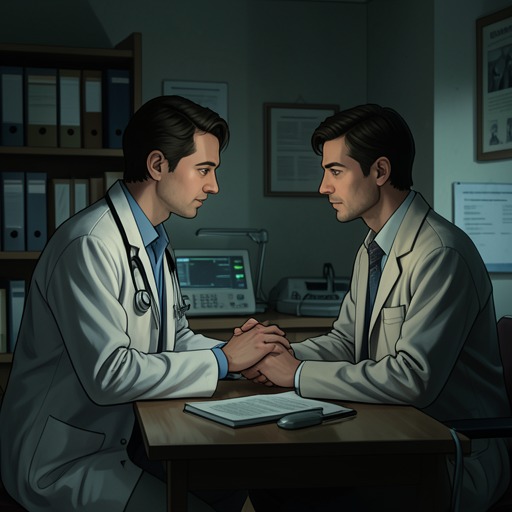
As James grew weaker, stopped eating much, and had difficulty sleeping, Brenda told Pou that the hospice nurse believed he had only days left. Pou had been occupied with work and preparations for a rally, but asked for directions and took a long detour to visit the O’Bryants’ small house on the bayou. She climbed onto James’s bed and embraced and kissed him. His speech was difficult for Brenda to understand, but Brenda translated his concern for Pou. Pou reassured him that she would be all right, as she had often done. James had worried about Pou and cried over what was happening to her; Brenda wanted him to know that the uncertainty surrounding Pou had ended before he died.
After the special grand jury declined to indict Pou, she called Brenda with the news. James was still alive, sleeping much of the time and no longer visibly conscious, despite medical expectations that he would not survive so long. Brenda had begun calling him the bionic man. Pou asked her to tell him the news directly, so he could hear it, and thanked Brenda for his prayers. She also asked Brenda to tell James that she was praying for him. The exchange continued their relationship through the point when James could no longer readily respond: Brenda carried news and care between the two people whose bond had shaped her experience of his illness.
Brenda’s place in the narrative is that of a family member whose trust is formed through repeated, concrete acts of medical care. She is not shown as an investigator of the Memorial allegations; she does not claim to know what happened there. Instead, her loyalty rests on years of treatment, Pou’s availability during an emergency, and the continued attention she offered as James approached the end of his life. That perspective does not settle the case. It reveals what the accusations threatened in the O’Bryants’ own lives: not only their confidence in a doctor, but access to the person they had come to rely on when James’s illness made every decision urgent.