Butch Schafer
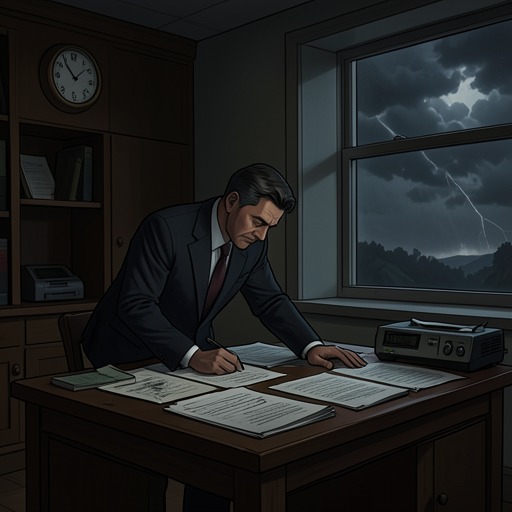
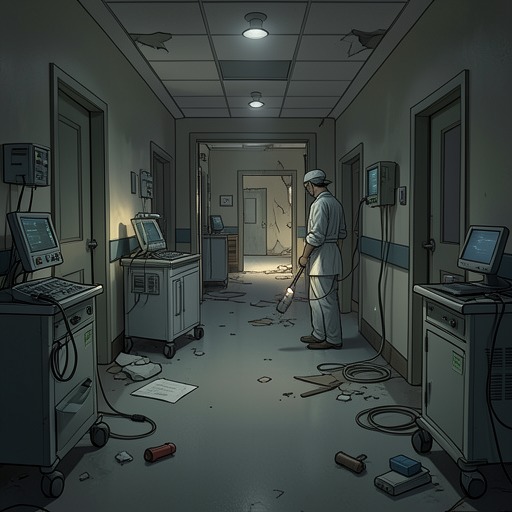
Five Days at MemorialButch Schafer is an assistant attorney general and experienced criminal prosecutor whose investigation into deaths at Memorial Medical Center becomes one of the central threads of the book’s account of Hurricane Katrina. He approaches the case as both a search for evidence and a test of what the law can establish amid catastrophe: the hospital’s crisis, the vulnerability of its patients, disputed memories, and competing prosecutorial authority all complicate the path from suspicion to charge.
Background and Public Responsibility
Schafer worked in Louisiana’s Medicaid Fraud Control Unit, where his duties extended beyond fraud to the investigation of abuse, neglect, and exploitation of elderly and disabled people. After returning to Louisiana from mourning his daughter’s death, he confronted a state in which thousands of vulnerable residents had been displaced. The scale of that upheaval gave his work immediate weight, but his professional focus was already on people whose dependence on institutions could leave them exposed to harm.
His work was part of a wider response to deaths at hospitals and nursing homes. Attorney General Charles Foti publicly pledged a full investigation into what he called a horrific tragedy at St. Rita’s Nursing Home, and the Medicaid Fraud Control Unit opened investigations into every hospital and nursing home where patients had died. Schafer thus entered a broad inquiry, not a case initially confined to Memorial. His experience as a complex-crime prosecutor helped him see that evidence about one institution might lead toward other staff, other facilities, or additional forms of responsibility.
The human circumstances behind the hospital deaths resisted easy categorization. At Memorial, the evacuation plan placed patients with Do Not Resuscitate orders last, including Jannie Burgess, a Black nurse who had once cared for patients in private hospitals where she herself could not receive treatment. In another episode, a patient’s daughter explained that her mother’s DNR order had been given with cardiac arrest in mind, not abandonment during evacuation. These details do not establish what Schafer personally knew at the time, but they show the charged setting in which investigators had to distinguish a patient’s medical instructions from decisions about whether to rescue or evacuate her.
Building the Memorial Investigation
Schafer and Virginia Rider, a special agent and his investigative partner, began interviewing LifeCare witnesses who alleged suspicious deaths on the hospital’s seventh floor. At Rider’s request, a LifeCare lawyer arranged interviews with the first four witnesses. A federal investigator who had previously worked in the Medicaid Fraud Control Unit joined them, reflecting the overlap between state and federal inquiries: the U.S. attorney for southeastern Louisiana had also opened an investigation into deaths at hospitals and nursing homes as possible federal health-care fraud violations.
To search Memorial, the investigators needed a warrant rather than relying on consent. Schafer discussed potential charges with his superiors, while Rider examined Louisiana law and prepared an affidavit summarizing accounts from Diane Robichaux, Therese Mendez, Kristy Johnson, and Steven Harris. The application sought items necessary to prove second-degree murder. The legal distinction between first- and second-degree murder in Louisiana turned on the nature of the victims, not on whether the act had been premeditated; second-degree murder nevertheless required specific intent to kill. The warrant translated witness allegations into a defined investigative theory, without making those allegations a proven account.
The search that followed was unusually large for Rider. On October 1, Schafer and Rider arrived at Memorial with twenty-two special agents, including nearly all the agents from the Medicaid Fraud Control Unit and others from the federal health department’s inspector general office, as well as two Louisiana State Police crime-scene investigators. The team had driven about an hour from Baton Rouge and arrived around nine in the morning. Rider had participated in searches roughly once a month, but had never worked with a search team of this size. The scale of the operation registered how far the inquiry had grown beyond a routine review.
Evidence, Memory, and Partnership
Schafer understood that a promising investigation did not guarantee a particular outcome. He warned Rider against becoming emotionally involved, an admonition grounded in his experience as a prosecutor. Yet the book shows the difficulty of separating professional discipline from the human losses at the center of the case. He felt sympathy for family members and for nurses and doctors he interviewed, and regarded many of them as heroes. His sympathy did not remove the need to test their accounts; it made the investigation’s competing human claims harder to reduce to a simple division between accusers and accused.
That need for testing became especially important once allegations entered the public sphere. News coverage could prompt witnesses to remember events, but it could also shape or contaminate recollection. The witnesses’ memories were fallible and potentially affected by later discussion, and several LifeCare employees had consulted on a written timeline after evacuation. The book notes that nearly three-quarters of convictions later reversed with DNA evidence through the Innocence Project involved faulty eyewitness identification. Schafer and Rider therefore returned to key witnesses and assessed consistency across interviews, with Schafer considering whether testimony could withstand scrutiny in court rather than merely support an investigative lead.
The partnership became unusually consuming. As the case expanded, Rider spent so much time directing it that she was removed from other hospital and nursing-home investigations. She said she thought about the case even at home at night. Schafer and Rider were described as the two colleagues who most fully shared an understanding of the case and its stakes. When Rider received an article at the office and was visibly shaken, Schafer told her to get her purse; they were going to New Orleans. His response shows their working relationship in motion: he recognized the moment as requiring action, even as he had cautioned her against emotional involvement.
A Case Without a Complete Answer
For a time, the investigators still lacked an eyewitness who could directly connect Pou’s words to the injections of LifeCare patients. In January, LifeCare’s attorney told Schafer that physical medicine director Kristy Johnson had remembered additional information. Schafer spoke with Johnson by phone, then informed Rider, who arranged to hear the account herself. Its potential significance was substantial enough that Rider wanted to evaluate it firsthand. The delayed recollection strengthened the investigative picture, but its timing also sharpened the need to examine how memories developed and whether they remained consistent.
Other evidence concerned what happened after Johnson and her LifeCare colleagues had left the seventh floor. Memorial pathologist John Skinner and laboratory director David Heikamp walked through the hospital to confirm that it was empty and record the names and locations of the dead. Medicine chairman Richard Deichmann and chief executive René Goux had asked Skinner earlier in the week to keep track of deaths. This record-keeping supplied another strand of evidence, distinct from witness accounts, about the patients and the places where they were found.
Forensic pathologist Cyril Wecht’s findings appeared to provide probable cause to prosecute Anna Pou and nurses Cheri Landry and Lori Budo, whom prosecutors believed had accompanied her on the seventh floor. Investigators did not believe they had gathered enough evidence against a third ICU nurse they were examining. Schafer and Rider conducted another round of interviews, in part to assess whether key witnesses could give consistent, credible testimony in court. Their work aimed not only to accumulate evidence but to judge what could be responsibly presented to a jury.
Schafer opposed surprise arrests. He believed Pou, Landry, and Budo’s attorneys expected their clients would be allowed to surrender for booking, and he had promised to contact them if arrests were coming. He made his position forcefully within the attorney general’s office, but Foti held the authority to decide how the arrests would proceed. After Pou was booked on four counts of being a principal to second-degree murder, Schafer offered her his phone. She called her mother and then her husband, Vince Panepinto. Schafer kept her apart from other prisoners, and she was released on her own recognizance after signing a $100,000 property bond and receiving a subpoena to return with the bond and her passport.
The investigators’ authority narrowed when they were ordered to stop. Schafer and Rider had hoped to assist the district attorney’s prosecution and continue following leads toward other doctors, nurses, staff members, possible corporate responsibility, and even conspiracy. They also wanted immunity considered for health workers whose testimony might prove critical. The order ended that wider investigative effort under their direction. At the grand jury, hearsay was admissible and the lead investigator commonly summarized the evidence, but Rider, despite knowing the details, was not called. Schafer remained more sanguine than Rider about the case’s outcome: his experience taught him that not everyone brought to trial would be found guilty. His arc is therefore not a simple triumph of investigation. It is the story of a prosecutor who pursues a widening case, learns how deeply it has affected his partner, and confronts the institutional limits on how far their inquiry can go.