CNN
Five Days at MemorialCNN became one of the principal public stages on which the Memorial Medical Center deaths were interpreted. Its coverage helped expose allegations about patient injections to a broad audience, but the book also depicts a tension within that exposure: reporting could gather testimony and context, while television’s appetite for a clear, dramatic accusation sometimes narrowed a complex disaster into the question of whether a killer had stalked the hospital.
The investigation enters the news
On September 19, after reading that Louisiana was investigating the deaths, Anna Pou learned that CNN reporters were preparing a report about possible euthanasia at Memorial. They called her and pressed her to tell her side of the story. Unsure how to respond, she asked Susan Mulderick for guidance; Mulderick advised her to wait for someone from Tenet to contact her. Pou then reached out to fellow doctors. Ewing Cook, who had advised her about medications during the crisis and was also receiving media inquiries, urged her not to speak to reporters, fearing that a sensationalist account could distort their words.
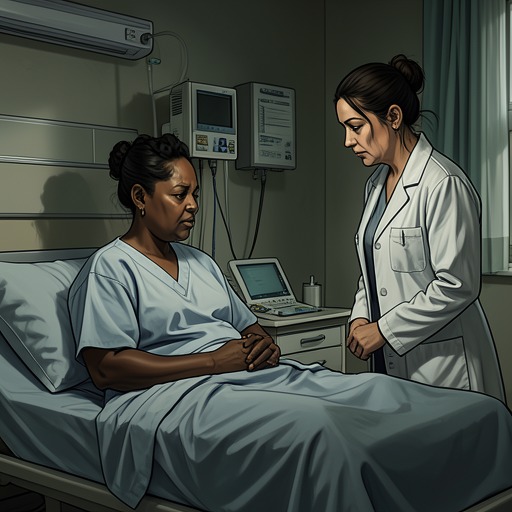
CNN’s October 12 report brought the allegations into national view. Anchor Anderson Cooper introduced the story as a moment when choices made during the disaster had left lasting consequences, and said that authorities were investigating reports of life-and-death decisions and possible mercy killing. Reporter Jonathan Freed described the conditions at Memorial and interviewed Dr. Bryant King, who recounted having heard a doctor discuss putting patients out of their misery and having seen another doctor holding syringes. King did not identify the people involved on air. CNN also protected Pou’s name, in part because of the legal risks of airing an accusation of murder without strong evidence and because producers still hoped she would agree to speak on camera. Freed reported that Pou would not comment and drew on several phone conversations with her without naming her.
The report’s choice to withhold Pou’s identity did not make the story less consequential. It allowed CNN to air allegations while preserving the possibility of a response from the doctor at the center of public suspicion. At the same time, the account relied on witnesses whose knowledge was partial: King described what he had heard and seen, but not what happened afterward. The distinction between an alarming observation and proof of what followed became a defining problem for both the investigation and its coverage.
A contested frame
CNN’s coverage brought experts into the discussion, including forensic pathologist Cyril Wecht and bioethicist Arthur Caplan. Their appearances helped place the allegations in a wider debate about decomposed bodies, evidence, and the legal treatment of compassionate motives. Caplan told viewers that juries had rarely convicted physicians for hastening death when they believed the motive was compassion, while emphasizing the exceptional circumstances that might shape such a defense. The book’s account thus presents the channel not only as a broadcaster of accusations but also as a forum where medical, forensic, and ethical interpretations competed.
The tone shifted as the story became a recurring television spectacle. On Nancy Grace’s program, the discussion repeatedly returned to whether an “angel of death” had been present at Memorial. When a guest began describing the power loss, rising fear, and delayed rescue that preceded the injections, Grace interrupted to insist that the program focus on whether a killer had been in the hospital. The exchange illustrates how the conditions that shaped the crisis could be displaced by a more arresting criminal frame. The distinction mattered: the alleged acts could not be understood apart from the hospital’s emergency and evacuation failures, yet those failures did not resolve what had happened to individual patients.
CNN also aired accounts from people with different kinds of proximity to the patients. In a late-December report promoted as an exclusive, Angela McManus spoke about her mother, Wilda, and her uncertainty about the cause of death after hearing allegations of euthanasia. King again described seeing a doctor with syringes, this time in a report that revisited his account. McManus’s uncertainty remained visible rather than being converted into a definitive accusation: she did not know whether her mother had died from infection or from another cause.
Recurring coverage and public attention
The channel continued to follow the inquiry after its initial reports. CNN reporter Drew Griffin and producer Kathleen Johnson gathered information from multiple sources and broadcast new stories every few weeks. The later segments combined small developments—such as the news that more than one medical professional was under scrutiny or that Wecht had been hired as a consultant—with footage from earlier interviews. This serial form kept the investigation in public view, turning incremental discoveries into an unfolding story rather than a single report.
CNN’s reporting intersected with the lives of people seeking answers. Angela McManus followed coverage from temporary lodgings in Baton Rouge and made sure investigators and reporters could reach her to discuss Wilda. Carrie Everett, whose family sought accountability over Emmett Everett’s death, asked on a CNN Katrina-anniversary broadcast who had given medical professionals the right to decide for patients. These appearances made family members’ unresolved questions part of the public record, while also exposing them to a story increasingly organized around competing claims about compassion, authority, and murder.
CNN also carried much of Attorney General Charles Foti’s press conference live after the arrests of Pou, Cheri Landry, and Lori Budo. Coverage of the arrests spread widely the following day, and public responses included both sympathy for the medical professionals and anger over the deaths. The channel was therefore part of the rapid movement from investigation to public judgment: its broadcasts did not determine the legal outcome, but they helped make the case a subject of national debate.
Reporting, memory, and the record
The book treats media attention as consequential not only because it informed the public, but because it could affect the evidence itself. Once allegations circulated, reports and conversations might prompt witnesses to remember details; they might also introduce information that altered or contaminated recollections. Investigators recognized that witnesses’ memories were fallible and that several LifeCare employees had already discussed the evacuation and worked from a shared written timeline. The concern was not that publicity automatically made testimony false, but that interviews had to avoid suggesting answers and be checked against physical and contemporaneous records.
That problem gives CNN’s role a double edge. The reporting encouraged witnesses and families to speak and brought scrutiny to events that might otherwise have remained obscure. Yet the same circulation of allegations that made the case visible could change the conditions under which witnesses recalled it. The book’s emphasis on careful interviewing and records created at the time of the disaster stands in contrast to the fast repetition of television segments, where a fragment of testimony could return with new emphasis.
CNN later joined The Times-Picayune in a multiyear effort to obtain investigative records held by the state. Pou supported the position of hospital employees seeking to keep the files sealed. Although a lower court ordered disclosure, the ruling was reversed on appeal; in 2012, the employees prevailed, and the records remained sealed because courts considered the case unfinished and further prosecutions possible. The dispute extended CNN’s role beyond broadcast reporting to a struggle over access to the underlying materials. Across the book, the network appears both as an engine of public scrutiny and as a participant in the contested process through which allegations, memories, and documentary evidence became a story.