Charity Hospital
Five Days at MemorialCharity Hospital, New Orleans’s public hospital, became a test of whether a hospital under extreme threat could keep caring for patients while evacuation remained uncertain. Floodwater, power loss, broken communications, and inadequate transport prolonged its evacuation until September 2, 2005. Although it held roughly twice as many patients as Memorial Medical Center and had fewer staff relative to that number, fewer than ten patients died. The book emphasizes that Charity’s preparation, improvised use of equipment, and decision to evacuate its sickest patients first distinguished its response from other hospitals’ experiences during Hurricane Katrina.
A Public Hospital with a Different History
Charity served a large patient population across two campuses and operated as a public hospital without corporate overseers to assist during the emergency. Its staff was accustomed to the comparatively spare and unpredictable conditions of an inner-city institution, where resource limitations were familiar rather than exceptional. Some emergency-room doctors, described as veterans of the Vietnam War era, brought bravado and a capacity for improvisation; many workers had learned to make do with what was available.
That institutional history sits alongside New Orleans’s history of racial exclusion in medicine. Jannie Burgess, an African American nurse who had worked for decades in the city’s hospitals and nursing homes, was born only months after the institution opened in 1926 as Southern Baptist Hospital. She could care for patients in private hospitals but could not receive care in many of them. Baptist was among the last Southern hospitals to integrate: in 1966 it refused to join federal hospital programs whose reimbursements depended on nondiscrimination, arguing that it should remain free of government conditions. More than four decades passed before Burgess could herself become a patient there. Her history makes the hospital’s institutional past part of the disaster narrative, not merely background to it.
Charity also shaped the experience of people connected to it beyond the evacuation. Wilda McManus had been the hospital’s longtime patient information manager, the first person visitors encountered beneath its ornate metallic screen and Art Deco entrance. After a stroke and the effects of medication made communication difficult, her daughter Angela became her advocate and caregiver. During the Katrina crisis, Wilda was a patient at LifeCare, not Charity; her former work at Charity nonetheless ties the institution’s public-facing role to the personal history of a family confronting the consequences of evacuation and illness.
Preparation and the Long Evacuation
Charity’s leaders had drilled for a Category Three hurricane and levee failure. With federal preparedness funds made available after the September 11 attacks, the hospital acquired portable generators, oxygen-powered ventilators, and a ham radio system, and provided special disaster training for security officers. These preparations did not prevent the hospital from flooding or make evacuation swift, but they gave staff equipment and practices with which to sustain care during the crisis.
The evacuation unfolded amid a citywide transport problem. Officials had ordered New Orleans residents to leave, but many had neither cars nor a reliable way to get out; roads were gridlocked, and ambulance dispatchers were overwhelmed by calls from hospitals, nursing homes, and homes. Some ambulances redirected patients to the Superdome rather than take them out of the city. At Charity, the scale of the task was especially severe: approximately twice as many patients were present at its two campuses as at Memorial, with fewer staff in relation to patients. Charity’s transfer of all patients was not completed until Friday afternoon, September 2; Memorial’s evacuation had been completed the previous day.
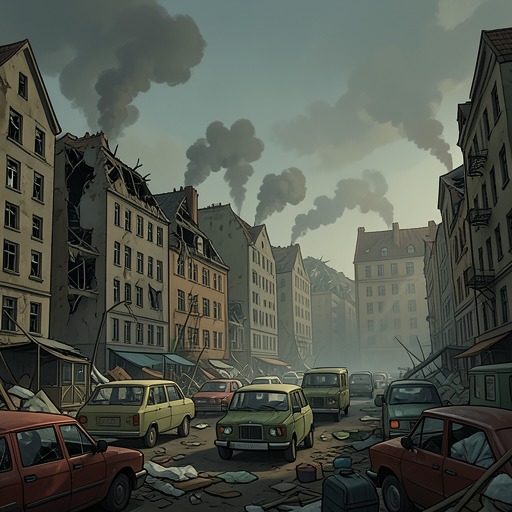
Conditions worsened while patients waited. Charity flooded and lost electricity, working plumbing, computers, telephones, and elevators. It had no helipad. Reports of a gunman on a nearby roof disrupted evacuation; convoys trying to reach the hospital over water were reportedly shot at and looted. Soldiers brought additional ventilator-dependent patients to the hospital, while news reports incorrectly suggested that Charity had already been evacuated. More than a hundred psychiatric patients were also inside. The emergency therefore involved not just moving patients out, but sustaining treatment and managing confusion as the hospital’s ordinary systems failed.
Improvisation and Sustained Care
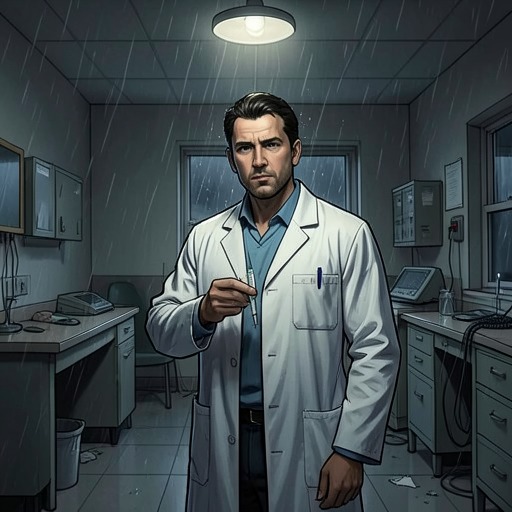
Staff improvised power for critical care by siphoning gasoline from cars to fuel ten small portable generators. The generators powered ventilators and cardiac monitors in the intensive-care units, helping keep critically ill patients alive, including a very premature baby. This use of portable equipment had a direct consequence: Charity could continue powering essential medical devices. At Memorial, by contrast, patients were ventilated by hand with Ambu bags after the power failed; two similar generators were later used for lights and fans in common areas and at the helipad, rather than for medical equipment.
Charity’s response also included efforts to preserve routines and steady morale. Leaders held meetings in the lobby every four hours, bringing together staff from doctors to janitorial workers. Employees staged a talent show by flashlight, painted, and laughed. The hospital maintained services such as physical and occupational therapy and encouraged workers to keep shifts and regular sleep schedules. These routines did not erase the danger or restore lost infrastructure; they helped signal that some measure of order remained and limited panic. Staff were also urged to resist rumor, following the instruction, “You can only say it if you’ve seen it.”
A doctor from Charity, Bryant King, later worked at Memorial during the crisis. There, after a family with small children arrived by boat and was turned away, King protested that the hospital had to help people. His advocacy reflects a concern that also runs through the account of Charity: patients and people seeking help could not be reduced to administrative burdens when resources were scarce. The comparison is not that conditions were identical, but that decisions about who received care became consequential in a disaster extending beyond hospital walls.
Evacuation Priorities and Mortality
The book identifies Charity’s evacuation priorities as a decisive difference. Its leaders did not classify a group of patients as too ill to rescue. Instead, the sickest patients were taken out first, rather than placed last. That approach contrasts with the DNR-last evacuation policy established at Memorial, where a DNR order—which concerned whether to attempt resuscitation after breathing or heartbeat stopped—was used to push some patients to the end of the evacuation queue. At Charity, the sickest-first decision made the opposite judgment about the urgency of patients’ dependence and vulnerability.
Fewer than ten patients died at Charity despite the protracted evacuation and the extreme conditions. The number is not exact across the sources cited in the book: it notes that patient totals vary and are estimates, and that body-recovery records do not match the higher count of deaths mentioned in a Senate account. The uncertainty matters because the hospital’s outcome should not be mistaken for a complete or perfectly settled tally. What remains clear in the narrative is the contrast between the scale of the crisis and the staff’s continued provision of care.
Meaning and Record
Charity’s Katrina experience is presented neither as a story of effortless resilience nor as proof that preparation could overcome every failure. The hospital flooded, lost essential utilities and communications, and remained occupied until Friday. Its preparation was practical but limited; its staff still faced danger, shortages, and a prolonged transfer operation. Yet portable generators, locally improvised fuel, routine, communication discipline, and a sickest-first evacuation priority helped sustain care under conditions that could easily have made abandonment appear inevitable.
The account also corrects the public record. Reports and later recollections sometimes described Charity as evacuated before the work was complete; the hospital remained occupied through September 2. A 2006 panel account, cited in the book, described a different hospital evacuation in terms suggesting no patient had been left behind, but its author was not present during Katrina and apparently did not know of Odun Arechaga, a patient associated with that episode. Charity’s documented difficulties and comparatively low reported mortality thus sit within a larger narrative about how incomplete accounts can obscure who waited, who was rescued, and how hospital workers made decisions under pressure.