DNR-Last Evacuation Rule
Five Days at MemorialThe DNR-Last Evacuation Rule was a decision by doctors at Memorial Medical Center to evacuate patients with do-not-resuscitate orders after other patients during the hospital’s response to Hurricane Katrina. It transformed a medical instruction about whether to attempt resuscitation into a criterion for deciding who would be rescued first, despite the absence of such a rule in the patients’ orders or the hospital’s disaster plans. As evacuation became difficult and delayed, the distinction had immediate consequences for patients and families.
Formation During the Evacuation Crisis
When Susan Mulderick told an emergency meeting that floodwaters were approaching, ICU nurse manager Karen Wynn understood the change in the room as a shift from a hospital emergency to a military operation: staff had to act before power failed. Nearly two hundred patients needed safety. The initial proposal was to move those most dependent on life support and mechanical aids first, including ICU patients, newborns, high-risk pregnant patients, dialysis patients, and two vulnerable bone marrow transplant patients.
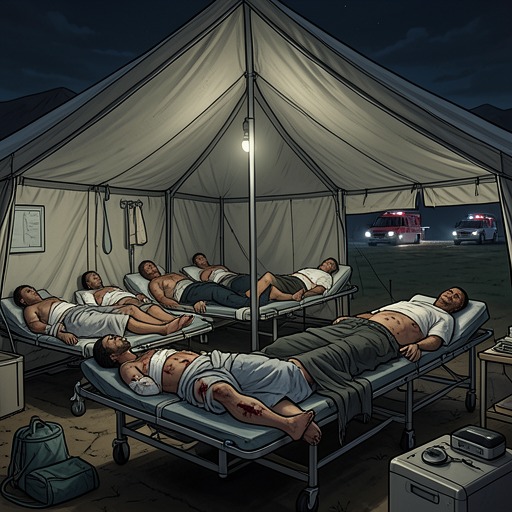
Doctors established an exception to that approach: all patients with DNR orders would go last. Four ICU patients fell into that category, including Helen Breckenridge and Jannie Burgess. When Breckenridge was brought downstairs, a doctor ordered her returned to the ICU because she could not go in the first sweep. Wynn learned of the policy from Ewing Cook and Roy Culotta and passed it to Susan Mulderick. A nurse assisting with Breckenridge’s transfer was told that the most salvageable patients had to leave first.
What the Rule Assumed About DNR
A DNR order addressed a specific circumstance: if a patient’s heartbeat or breathing stopped, the patient should not be revived. It was different from a Louisiana living will, which could allow a patient with a terminal and irreversible condition to request in advance that life-sustaining procedures be withheld or withdrawn. The evacuation rule treated these distinct decisions as if a DNR order also indicated that its holder should rank below other patients for rescue.
Richard Deichmann, Memorial’s medical chairman, later said he had believed the law required DNR patients to have a certified terminal or irreversible condition. He also thought they had the least to lose if disaster struck. Bill Armington and other doctors agreed with the plan. Armington reasoned that patients who did not want their lives prolonged by extraordinary measures might not want to be saved at others’ expense. But neither the DNR orders nor Memorial’s disaster plans said that those patients should be left behind or evacuated last. The rule therefore depended on clinicians’ interpretation of patients’ wishes, not on an evacuation instruction those patients had given.
The distinction mattered especially because a DNR order did not itself mean that a patient refused rescue. One daughter, whose ninety-three-year-old mother depended on oxygen, had agreed to a DNR on the understanding that her mother would not be resuscitated after cardiac arrest. When staff initially left her mother behind, the daughter explained that she had not understood the order to mean do not rescue. She asked to cancel it; after a doctor removed it, the patient was taken downstairs toward the helipad and survived the immediate ordeal.
Patients and Families Confront the Policy
Breckenridge’s transfer showed how the rule could interrupt care even before the hospital was emptied. A team had carried her downstairs while manually breathing for her and monitoring battery-powered pumps delivering medication. After she was sent back, staff reconnected the pumps and ventilator, but she soon died. The account presents her death as perhaps imminent, while noting that it nevertheless seemed to be the hospital’s first death hastened by Katrina.
On another floor, transporters stopped moving a bed-bound patient after seeing her DNR order and repeatedly maneuvered other patients around her. Nurses were told not to tell her daughter that the order was the reason for the delay. When staff were later instructed to leave the floor without having rescued the patient, nurse Michelle Pitre-Ryals told the daughter she could request that the DNR be discontinued. The daughter did so, making clear that her earlier decision about resuscitation had not been consent to abandon her mother. The policy had made the practical meaning of the order something the family had to contest in the middle of the evacuation.
The same problem appeared at LifeCare, where Angela McManus learned that her mother, Wilda, would be deferred because she had a DNR order. McManus begged staff to rescind it, but they told her no doctors were available. Her experience underscored the gap between a family’s ability to change an order in principle and the ability to do so amid a disaster, when the relevant clinician might not be accessible.
Significance and Aftermath
The rule’s authors had agreed to it in the expectation that the hospital could still be emptied quickly. Under that assumption, putting one group last might not have seemed decisive. But evacuation required coordination beyond Memorial, while patients, staff, and available transport were under pressure. In those circumstances, a last-place category could become more than an abstract ranking: it could determine who waited, who had to challenge the decision, and whether a patient’s DNR status was mistaken for a wish not to be saved.
The rule also exposed a conflict between professional authority and patient autonomy. Deichmann and the other doctors interpreted DNR status as a basis for triage, although the orders concerned resuscitation and did not direct rescue priorities. Families who had authorized a limit on one intervention had to clarify that it was not permission to withhold evacuation. The rule’s significance lies in that consequential slippage: a patient’s choice about what should happen after cardiac or respiratory arrest was made to govern whether the patient should be carried to safety at all.