Disaster Medical Assistance Team
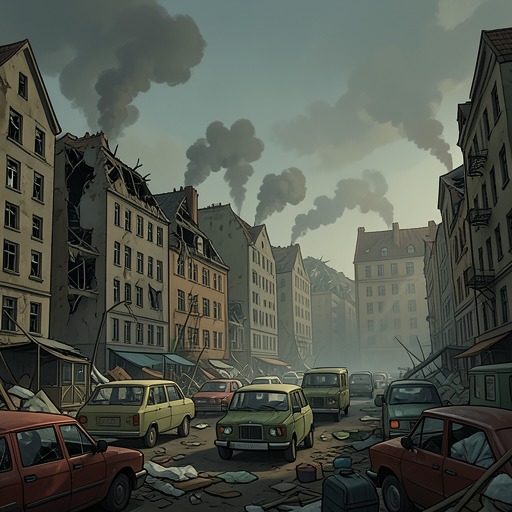
Five Days at MemorialDisaster Medical Assistance Teams (DMATs) are federally trained medical teams intended to respond to national emergencies. Their deployment after Hurricane Katrina placed them at the overwhelmed New Orleans airport, where the distance between emergency-response protocols and conditions on the ground became stark. The teams were trained and willing to help, but faced far more patients than they had been told to expect, inadequate supplies, and no dependable communications or resupply.
Purpose and Operating Model
DMAT members included doctors, nurses, and paramedics who had trained and drilled for emergency response. Their role depended on specialized teams and established procedures, including restrictions on working with medical personnel whose qualifications had not been vetted. Those procedures addressed a real operational problem: at a chaotic disaster site, there was no reliable system for confirming whether an unfamiliar person offering medical care was qualified. But the same boundary could keep experienced clinicians out even when the teams were overwhelmed.
The account presents the teams as part of a wider emergency system, not as a self-sufficient rescue service. Their work required timely delivery of supplies, communication with superiors, and a way to move patients onward to functioning hospitals. At the airport, the failure of those supporting arrangements would limit what the teams could accomplish, despite their training and commitment.
Deployment at the New Orleans Airport
Three DMATs had established a field hospital at the airport early Wednesday morning. A fourth arrived on Thursday. By then, patients were continuing to arrive by helicopter from hospitals and nursing homes across the city. The teams’ members had expected a much smaller operation: the number of people arriving was described as ten times more than anyone who worked with a DMAT believed could possibly be cared for.
The conditions exceeded the teams’ available capacity. Their supply caches, transported by road from the West Coast, arrived late and short. Supplies ran out within a day, and the teams had no communications with their superiors and no provisions for resupply. The unanswered question of where the departing flights were to take patients to real hospitals pointed to another missing link: receiving care elsewhere was as important as stabilizing people at the airport. The teams could establish a field hospital, but could not by themselves create the transport and hospital capacity needed to clear it.
The strain was visible among the responders as well as the patients. One group of three dozen paramedics, nurses, and doctors toured the site in disbelief, and many cried. Staff who had already worked for more than two days without sleep were exhausted and arguing with one another. In this setting, the gulf between a planned deployment and an improvised mass response was not abstract; it shaped how much care the teams could deliver and how quickly they could act.
Protocol and the Limits of Assistance
John Thiele, a doctor who had accompanied a nurse from Memorial Medical Center, offered to help at the airport. A physician sent them away, explaining that the DMATs were not supposed to work with unvetted outsiders. The refusal reflected the teams’ operating rules, but the account places it beside the extraordinary pressure on their members: they were already overwhelmed, while additional doctors and nurses stood ready to assist. Without an effective way to verify outside clinicians, the teams faced a difficult choice between maintaining procedural safeguards and expanding help in an emergency.
The organization’s work also contrasted with the public picture of the response. Federal officials outside New Orleans praised the DMATs in news interviews, even as the teams on site lacked sufficient supplies, communications, and resupply. The contrast does not erase the responders’ effort; it shows how public accounts of a deployment could diverge from the limitations confronting the people carrying it out.
Recurrence and Significance
The book returns to disaster medical teams in January 2010, when an American team established a tent field hospital on a college campus in Port-au-Prince after the earthquake. The team struggled to record unfamiliar names and assigned patients numbers; one woman appeared in its records as Jane Doe 326, although her name was Nathalie LeBrun. Her treatment required oxygen, and the account describes repeated difficulty securing supplies and power for equipment. It also notes that the supply chain to the American teams was failing, as it had after Katrina.
Across these deployments, the central issue is not a lack of medical expertise but the dependence of emergency care on logistics, communication, and the ability to match incoming patients with available resources. In New Orleans, the scale of arrivals outstripped the teams’ expected capacity; in Haiti, oxygen and power remained vulnerable to supply failures. The DMATs’ experience thus illustrates both the value of trained emergency teams and the limits imposed on them when the systems meant to support their work cannot keep pace with need.