John Thiele
Five Days at MemorialJohn Thiele was a New Orleans pulmonologist and critical-care physician whose work during Hurricane Katrina placed him among the doctors caring for patients left at Memorial Medical Center as evacuation proceeded. On September 1, 2005, he gave several of those patients morphine and midazolam, then, after one man continued to breathe, covered his face with a towel. Thiele understood the actions as an attempt to relieve suffering in an unfolding catastrophe, but the question he had asked before acting—“Can we do this?”—returned through the years that followed, reframed as a moral, legal, and personal reckoning.
Identity and Medical Background
Thiele’s professional connection to Memorial stretched back to 1977, when he rotated there as a medical student at Louisiana State University Medical System. He specialized in critical care and lung disease and had trained at Charity Hospital, where the ordinary demands of a busy trauma center had taught him to attend first to the most critically ill. A classmate later described him as the kind, gentle, understanding doctor their peers hoped to become, while also recalling his struggles over the years with alcohol and changes in mood. Nurses knew him as “Dr. T”; friends sometimes called him “Johnny.” He was remembered for greeting nurses by name and, at times, addressing them as “kiddo.”
A native New Orleanian, Thiele had married at twenty and had three children. Away from the hospital, he enjoyed golf, followed the Saints, and liked to smoke a cigar while listening to Elvis. He was not a hospital-based doctor who had to remain on duty during the storm, but he had spent nearly every hurricane at the hospital, and stayed again. He arrived on Sunday with a friend recovering from pneumonia, who was too weak to comply with the city’s mandatory evacuation order. Hospitals had been exempted from that order.
Katrina and the Patients Left Behind
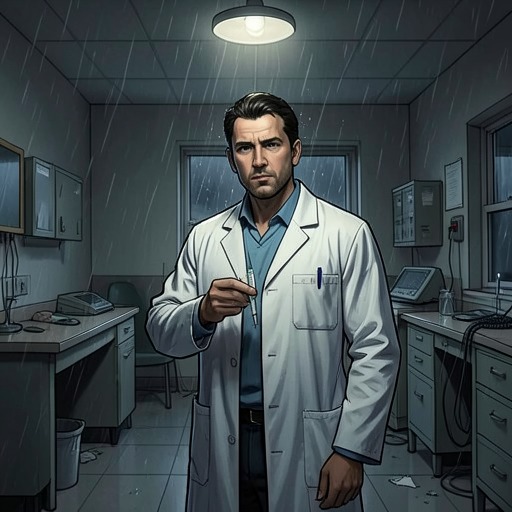
Early Monday, the storm shook Thiele’s fourth-floor corner office. Wind drove rain through its large windows, and he and colleagues moved computers and used sheets and gowns to soak up water. The city’s power failed; Memorial’s backup generators did not run the air-conditioning, and the temperature rose inside the humid, increasingly damp building. Floodwaters climbed on Tuesday. Early Wednesday, the generators failed, leaving the hospital dark and cutting power to equipment supporting patients’ lives. Rescue aircraft arrived irregularly as volunteers moved patients to staging areas.
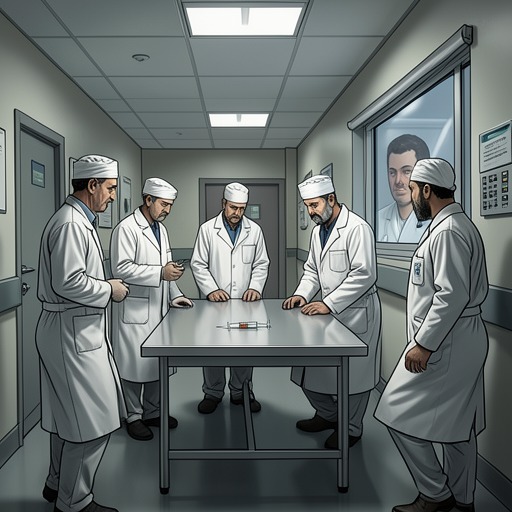
By Thursday, Thiele’s original responsibility for a unit of twenty-four patients had ended: they were gone, presumably on their way to safety. Two had died before rescue, and their bodies lay nearby in the chapel, which had become a makeshift morgue. Elsewhere in the hospital, the sickest remaining patients had been tagged for last evacuation. A small group of doctors had made that decision at a meeting Thiele did not attend, without consulting patients or families; the stated aim was to save those thought more likely to survive over the longer term. The disaster drills Thiele knew had imagined mass arrivals, such as casualties from a chemical attack. They had not prepared him for a hospital losing backup power, running water, and transportation at once.
Thiele saw the remaining patients while moving between the hospital and his medical office. Airboats made it difficult to use a stethoscope, but the patients’ condition appeared plain to him: after days of heat and little access to medication or fluids, they had deteriorated. He encountered Anna Pou, a head and neck surgeon, directing care on the second floor. Although many physicians had shifted to evacuation work or left, Pou remained with the sickest patients. Thiele understood her to be in charge and accepted her judgment that the patients assigned to the last evacuation category could not be moved safely. Hospital leaders L. René Goux and Susan Mulderick had told him that everyone needed to be out by nightfall. Their statements left him unsure what would happen to the patients if staff departed before them.
The emergency also intensified Thiele’s fear of what might happen inside the hospital. On Wednesday afternoon, his friend John Kokemor had told him that doctors were being asked to leave last; Thiele understood Kokemor’s gesture as an indication that injections might be involved. Thiele said, “Man, I hope we don’t come to that.” That night, after hearing gunshots and losing his footing in a dark stairwell, he believed he might die and called his family to say goodbye. His fears of violence were also expressed through racist assumptions about Black people outside the hospital. Those fears formed part of his perception of a breakdown in public order, but they do not erase the decisions he made inside the hospital or the patients who depended on its remaining staff.
Decisions on the Second Floor
Thiele’s ethical vocabulary came from both religious and medical sources. He was Catholic and had been mentored by the Jesuit priest Father Harry Tompson. A medical-school motto also stayed with him: “Heal Frequently, Cure Sometimes, Comfort Always.” With patients’ families gone and almost no control over the wider evacuation, Thiele saw comfort as one of the few forms of care still available. The situation, however, was not the palliative care he had encountered in a course: these patients had not been described as choosing comfort over every other treatment goal, and staff were working amid extreme uncertainty.
Morphine, syringes, and nurses were gathered in the makeshift second-floor unit. Thiele believed that Cheri Landry, a longtime intensive-care nurse, had brought medication down from the ICU. He knew medication was being used and agreed with what was happening, though another doctor declined to participate. When Thiele took responsibility for four patients near the windows—three elderly women and a heavyset man—he tried to start IVs in patients whose blood pressure was so low that their veins had collapsed. They barely responded. A nurse disinfected an IV port before an injection; Thiele registered the ordinary precaution as a striking detail against the patients’ extreme condition.
As he prepared to act, Thiele turned to Karen Wynn, an experienced ICU nurse manager who also led the hospital’s bioethics committee. He trusted her judgment and asked, “Can we do this?” Wynn believed medication was necessary to make the patients comfortable. Thiele later recalled that, despite his confidence in the plan in principle, carrying it out made him waver. Her assent mattered to him at that point of uncertainty.
Thiele administered morphine and midazolam in doses higher than he ordinarily used in the ICU. He held patients’ hands and reassured them, “It’s all right to go.” Most died within minutes. One man continued to breathe despite additional morphine. Thiele thought the amount may have reached 100 milligrams and wondered whether the man’s poor circulation prevented the drug from taking effect. Thiele and Wynn prayed together. Thiele then covered the man’s face with a towel; he later recalled that the man stopped breathing in less than a minute.
The act did not resolve the question that had preceded it. Thiele said it went against every fiber of his being and was something he had never imagined doing. He continued to wonder whether the man had been aware, whether he would have died soon anyway, and how those possibilities altered the meaning of what he had done. His account therefore holds together two claims that do not cancel each other: he believed the patients faced severe suffering and little prospect of surviving evacuation, and he could not make the final act feel uncomplicated or ordinary.
Evacuation, Investigation, and Illness
Thiele left Memorial by helicopter on Thursday evening. The airport where he landed was crowded with evacuated patients and other people displaced from hospitals and nursing homes. The scene—patients on litters, in wheelchairs, and on the floor; people separated from regular medicines; and a limited medical response—sharpened his conviction that the patients he had medicated would have suffered and died had they been sent there. Yet the consequences of the storm did not end with evacuation. After flying out, he endured further uncertainty and fear among evacuees before traveling onward to reunite with family.
On Labor Day, less than a week after the storm began, Thiele awoke unable to speak clearly or raise his right arm. He had suffered a stroke and was fifty-three. He later attributed it to the stress of the storm; he had also lost twelve pounds during the disaster and its aftermath. His speech and abilities returned gradually, and he took pride in the rapid, slurring New Orleans brogue that remained. When CNN contacted him weeks later, he first considered whether to tell his story, then followed guidance from Memorial’s media director and spoke with Tenet media representatives and attorneys.
The question he had once asked Wynn acquired a new emphasis after the disaster: not only whether the acts were morally permissible, but what legal consequences might follow. Thiele’s home had been destroyed, Memorial had closed, and he was out of work while facing an investigation and the expense of legal representation. At a December meeting of Memorial doctors discussing a possible reopening, he read aloud from his lawyer’s letter saying Tenet had not agreed to cover his legal fees. Although Thiele had worked as a physician contractor rather than a direct employee, his attorney argued that Tenet had authority to pay. Thiele wanted support from his colleagues.
After the arrests of Anna Pou, Cheri Landry, and Lori Budo, Thiele’s lawyer warned him to be ready if authorities came to his door and outlined possible felony charges, including murder, manslaughter, and negligent homicide. Thiele first said he would fight, but he also confronted the possibility that a conviction could mean prison and the loss of his medical license. He believed he could not live in prison; losing the ability to practice, by contrast, seemed bearable only if he could find another way to serve people. His attorney advised him not to communicate directly with Pou and the nurses, fearing that such contact could be construed as conspiracy. Thiele felt for Pou, felt guilty that he was not sharing her anxiety more directly, and attended a rally in her support. Few people at the rally knew that he, too, had injected patients.
Recovery, Conviction, and Ending
In 2007, Thiele underwent surgery after becoming seriously ill. His surgeon, John Walsh, found advanced metastatic colon cancer that had blocked part of his bowel and spread to his liver and spleen. Walsh believed the strain of the investigation and Thiele’s worry about becoming the next Pou may have contributed to how little attention he had paid to his health. Thiele then developed a life-threatening abdominal infection that entered his bloodstream. He underwent five operations, received blood transfusions, and spent weeks mostly unconscious and sedated. A lung specialist, he also developed severe breathing problems and required a ventilator through a tracheostomy.
During sedation, Thiele experienced frightening visions, including recurring sensations of being underwater and struggling to surface. A nurse who knew him from Memorial thought he seemed remorseful about the patients and wished he could have acted differently. Thiele later rejected that interpretation: he said he remained confident in what he had done. He distinguished his own condition from that of the patients at Memorial because, despite the severity of his illness, his problems were potentially reversible. He believed that a physician advising a family in comparable circumstances would explain the poor odds of recovery but continue treatment because improvement remained possible. For him, that possibility separated his case from the patients he had helped medicate.
Thiele returned to medical work, making rounds while wearing a chemotherapy pack. During the case, he learned that a nurse questioned by the grand jury had described him as a good doctor. His life thus continued to hold together professional commitment, serious illness, and unresolved legal danger. The evidence presented here does not establish a final legal outcome for him. It records instead a physician who remained convinced that his actions had been compassionate, while the hospital crisis and its aftermath had permanently joined that conviction to questions of responsibility, care, and the limits of medical judgment. Thiele died at home on December 31, 2010. Until then, he continued practicing medicine during treatment for metastatic cancer.