Karen Wynn
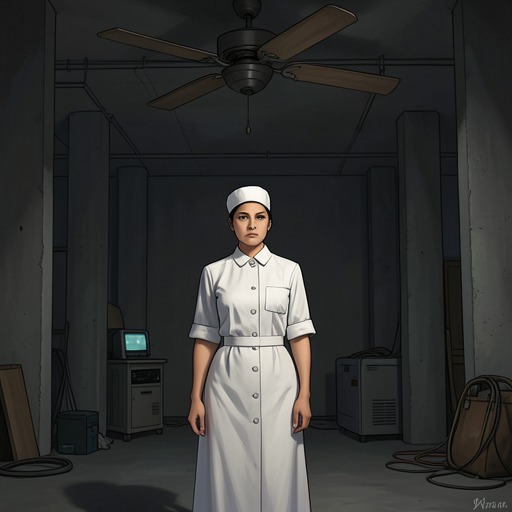
Five Days at MemorialKaren Wynn, the nurse manager of the intensive care units at Memorial Medical Center, became one of the people on whom the hospital’s staff relied as its Katrina crisis unfolded. Her experience with end-of-life decisions made her a trusted ethical adviser, but the emergency forced those decisions into an extraordinary setting: patients and staff were trapped in a failing hospital, evacuation plans changed, and the distinction between comfort care and decisions that could hasten death became a matter of lasting dispute. Wynn helped manage patient care and evacuation, participated in administering medication to patients on the second floor, and emerged convinced that the team had acted rightly even as the experience altered her sense of herself and her work.
Identity and Clinical Role
Wynn had worked at Memorial for decades. Alongside managing the intensive care units, she headed the hospital’s bioethics committee, whose members were asked to consult on difficult questions about treatment near the end of life. She had become comfortable with decisions to withdraw life support through her ICU work with Ewing Cook, whom she regarded as a compassionate and accomplished practitioner. The committee’s usual work involved deliberation about treatment and communication with families; during the disaster, Wynn encountered a crisis that seemed to resemble those dilemmas but lacked the familiar conditions in which they were normally handled.
Her professional authority rested not only on her committee role but also on her close knowledge of the ICU’s patients and staff. Early in the emergency, a hospital leader turned to her for counsel because she was experienced in end-of-life questions and trusted by colleagues. That trust would become consequential as decisions about which patients to evacuate, what care could still be provided, and how to respond to suffering were made under severe constraints.
The patients affected by those decisions included Jannie Burgess, an African American nurse who had spent her working life caring for others. Burgess had taken up nursing to support her children after working as a taxi dispatcher and a secretary to a mortician. In mid-twentieth-century New Orleans, racial discrimination meant that she could work in private hospitals that would not admit her as a patient. Born only months after Memorial opened in 1926 as Southern Baptist Hospital, she waited more than four decades before she could receive care there. Her presence among the ICU patients made the hospital’s own history of unequal access part of the human context for its evacuation priorities.
Managing the Hospital in Crisis
As the emergency developed, Wynn’s work combined clinical concerns with the practical movement of patients through an increasingly hazardous building. When maintenance crews surveyed the hospital, they roped off danger areas and moved patients from exposed locations into interior hallways. In the top-floor ICU, Jannie Burgess and roughly twenty other patients occupied small rooms along the outer walls. Many depended on oxygen, IV pumps, and monitors connected to electrical outlets, making them difficult to move. Maintenance workers boarded the windows from inside with plywood, an unusual protective measure that reflected the danger around the unit and the patients’ limited mobility.
Wynn’s duties also took her into the hospital’s changing command arrangements. After the sky cleared and the streets around Memorial remained dry, she went to a disaster-leadership meeting at the command center, which had been relocated to the fourth floor. Later, as patients were being moved from the upper floors, she heard the elevator shaft filling with water. She wanted to get patients down from the eighth floor, but the elevator could not safely remain in service indefinitely. A security guard stayed inside to prevent anyone from sending it to the basement. The scene brought the evacuation’s central problem into focus: even a route that had been usable could quickly become dangerous.
Hospital doctors made an exception to the usual priority of evacuating the sickest patients and those dependent on machines. They placed all patients with Do Not Resuscitate orders last in the evacuation sequence. Four such patients were in the ICU, including Helen Breckenridge and Jannie Burgess. Wynn learned of the decision from Ewing Cook and Roy Culotta and relayed it to Susan Mulderick. A nurse helping move Breckenridge was told that the most salvageable patients had to go first. Wynn thus occupied a position between policy and bedside care: she communicated the priority while remaining closely involved with patients whose status placed them at the back of the line.
After midnight, ICU nurses gathered on the eighth floor and congratulated one another for getting all their non-DNR patients out safely despite the heat, confusion, and physical demands. Two DNR patients remained, with two nurses caring for them overnight. The following day, Wynn briefly took a shower in the doctors’ lounge; only a trickle came from the shower, and the water had been declared contaminated and unsafe to drink. When she heard that her staff might be sent to transport patients from other units, she objected. She felt responsible for the people she had called in to work and for their families, and did not want the team moved without direction. She went to find Mulderick, the person she trusted to provide it.
Evacuation Work and Responsibility for Staff
Wynn’s responsibilities extended beyond the ICU’s original evacuation. During the night, she and another nurse went down one flight and found LifeCare staff carrying ventilator-dependent patients into a stairwell after word arrived that the Coast Guard might evacuate people from the helipad. Nurses squeezed oxygen from Ambu bags as patients were moved. Wynn helped transfer patients onto backboards and was struck by how hot they felt. She understood that older people and patients with conditions such as stroke or head injury, as well as those affected by dehydration, heart disease, weight, or medication, could have difficulty regulating body heat. The heat was not merely uncomfortable; it could further complicate serious illness.
In dim light, staff later reviewed patient charts with flashlights and assigned evacuation categories using large handwritten numbers. Wynn and Gina Isbell took charge of patients classified as category 1 while they waited on the ambulance ramp. Roughly three dozen patients from Memorial and LifeCare Hospitals were guided there, initially in anticipation of transport by airboats to dry ground. Wynn tried to keep track of the people under her care by memorizing their faces. The sorting process was both administrative and intimate: categories determined movement, while she understood the waiting patients as individuals whose safety depended on not being lost in the confusion.
She also responded to people outside the planned hospital evacuation. A man from the neighborhood arrived after wading through floodwater because he was overdue for dialysis and believed he needed treatment to survive. Wynn had a full workload on the ramp, but the situation continued to concern her, and she went inside to see about a woman who needed care. These incidents show her work widening from managing assigned ICU patients to confronting needs that the formal evacuation plan had not anticipated.
When staff estimated that 115 patients from Memorial and LifeCare remained, Wynn went to find her ICU nurses and told them that a night shift would be needed. They had already volunteered to care for patients in the second-floor lobby, although most had worked through the day carrying patients and trying to keep them cool. Wynn wept as she told them how proud she was. Her response joins two aspects of her role that recur throughout the crisis: she made decisions about staffing and movement, and she understood those decisions as obligations to particular colleagues who had exhausted themselves in the work.
Second-Floor Care and Ethical Conflict
On the morning of the final evacuation, Wynn helped clear wheelchair-bound patients from the first floor before arriving on the second floor. Plans for those patients had shifted as hospital leaders disagreed among themselves and with state police about how to evacuate them. Wynn urged her ICU nurses to leave when they encountered one another, while saying that she would remain until they were on their way. She did not feel the same urgency about her own departure. A patient, Janice Jenkins, had encouraged her that morning. Jenkins had fractured both legs, was confined to bed after surgery, and had previously survived a dangerous heart rhythm disturbance that Dr. Horace Baltz and colleagues treated successfully. Wynn’s recollection of the patient’s words helped sustain her as she stayed at the hospital.
Wynn had assumed the patients on LifeCare’s seventh floor were already gone. She was surprised when Cheri Landry said she was going upstairs with Anna Pou to make patients comfortable. When Landry later returned and told Wynn that sedatives were being given to patients on the second floor, Wynn asked how she could help. John Thiele also turned to her with a question about whether the staff could proceed. Wynn’s familiarity with withdrawing life support shaped her understanding of the situation: she believed the patients before her were suffering, even when they were not conscious, and saw comfort and dignity as the remaining forms of care available to them.
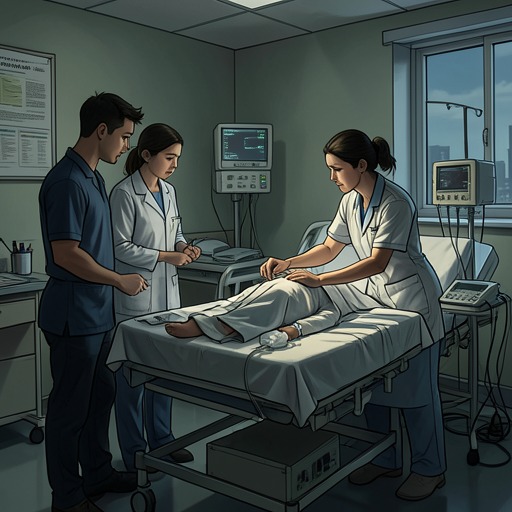
Wynn administered medication to an elderly patient who was breathing with difficulty. She later recalled diluting a 10-milligram vial of morphine with a small amount of midazolam in saline, injecting it slowly through the patient’s IV, and flushing the line. The patient appeared to struggle less to breathe and died within about half an hour. Wynn and her colleagues covered patients who died and moved them to the chapel, trying to do so discreetly so that more alert patients waiting for evacuation would not be alarmed. Someone unlocked the chapel for them and locked it again after they left. The movement of patients from the improvised care area into the chapel became part of the larger controversy over what had happened at Memorial.
Wynn’s participation cannot be separated from the setting in which these decisions occurred: the hospital was hot, evacuation plans were unsettled, and the remaining patients had limited prospects for rescue. But the ethical significance of her actions also lies in the conflict between her established understanding of end-of-life care and the emergency’s altered circumstances. In ordinary ICU practice, she had been accustomed to withdrawing life support after discussions that included patients’ families. Here, the family members who would usually receive an explanation were generally absent, and the care team itself had to judge what could be done for people still waiting inside the hospital.
Aftermath and Lasting Change
Wynn emerged from the disaster confident in the team’s decisions. She maintained that they had done the best they could and that the actions were right under the circumstances. She did not deny that a colleague had told investigators she had spoken about euthanasia on the seventh floor; Wynn’s response was that acts described in that way could occur in everyday practice under another name. Her later account therefore did not present her as uncertain about the central judgment, even though the legal inquiry made the distinction between comfort care and euthanasia newly explicit.
The one decision she questioned was sending her sixteen-year-old daughter away from Memorial by helicopter without her. Her daughter’s difficult journey to safety led the girl to tell others that she questioned her belief in God. Wynn said that this broke her heart. The regret was personal and distinct from her continuing defense of the care decisions: she could believe the staff had acted rightly for patients and still grieve the cost of having separated from her child in order to remain responsible for the hospital.
As the prospect of testifying before a grand jury approached, Wynn’s lawyer prepared her for the kinds of questions she might face and helped her maintain a clear account of events. Wynn came to love the lawyer’s patience and protectiveness, but revisiting the disaster in their meetings could leave her struggling for weeks to recover. The legal process was not simply an external demand for testimony; it repeatedly returned her to an experience she was trying to move beyond.
Wynn also described feeling that she had given up part of herself at the hospital. After roughly a quarter century there, she no longer wanted the kind of managerial responsibility that had shaped her working life. She remembered fifty- or sixty-hour workweeks and the many occasions when she had placed patients and her career ahead of family. She had called Cheri Landry and Lori Budo to tell them they were scheduled to work during the storm. Her desire to leave nursing responsibility behind had been building even before Katrina, but the disaster gave that exhaustion a new weight. She joked about selling shoes at Saks Fifth Avenue, while acknowledging that she felt worn and did not want to continue in the same role.
Wynn’s account gives the crisis no simple resolution. She continued to defend the decisions made for patients, yet she also described a lasting personal cost, distress at reliving the events, and regret about the separation from her daughter. Her character is defined by the tension between professional conviction and the damage of carrying responsibility under conditions that had stripped ordinary care of its usual safeguards. At Memorial, she was at once a veteran ICU manager, an ethics committee chair, a coordinator for exhausted staff, and a participant in decisions that would remain contested long after the evacuation ended.