LifeCare Hospitals of New Orleans
Five Days at MemorialLifeCare Hospitals of New Orleans occupied the seventh floor of Memorial Medical Center, where a medically vulnerable patient population depended on staff and on the hospital’s increasingly strained systems. During the crisis, its patients were caught between a slow, divided evacuation effort and a deteriorating care environment. The floor became both a place where staff labored to keep patients alive and the setting for allegations that some patients were deliberately given lethal drugs—claims that became the focus of a criminal investigation.
Setting and patient population
LifeCare operated within Memorial rather than in a separate building. Its seventh-floor unit held 52 patients during the storm, including seven who relied on ventilators to breathe. Two other patients still needed to reach a lower floor for dialysis after the elevator stopped working. Moving patients therefore required more than finding transportation: it could mean getting them out of their rooms, down the stairs, and through the hospital to a rescue point. One patient was a large paraplegic man whose possible evacuation became the subject of a difficult discussion among staff.
The people remaining in Memorial extended well beyond its patients. Staff counted 460 Memorial employees, 447 family members, and 52 LifeCare employees still in the building, while Memorial’s patient census had fallen from 187 to about 130. LifeCare’s patients were thus part of a crowded, shared emergency in which the hospital’s units, personnel, and rescue arrangements overlapped, but the corporate structures responsible for the two providers were distinct.
Delayed evacuation and strained coordination
LifeCare patients had not yet been moved when Memorial proposed asking its corporate overseers at Tenet to approve their transport with the Coast Guard. From the fourth-floor command center, community relations manager Sandra Cordray sent a message to Michael Arvin at Tenet about LifeCare; the message did not convey urgency. Meanwhile, LifeCare personnel were looking to their own management structure for an evacuation plan. Susan Mulderick later said that LifeCare had initially not asked Memorial for help because its staff indicated they were working through their corporate or management structure.
The accounts also describe an early offer of help from Acadian Ambulance. Keith Brisbois recalled going to LifeCare soon after the evacuation decision to offer assistance, and being surprised that staff were waiting for word from the corporate office about a transportation contract he believed Acadian held. Later that day, communications show LifeCare personnel requesting evacuation assistance from Memorial, Tenet, and Acadian. The shift from waiting on corporate arrangements to asking several parties for help captures the uncertainty around who could authorize or provide transport. More broadly, the city’s evacuation efforts were already constrained: ambulances were overwhelmed with requests, and many vehicles were trapped in interstate traffic. LifeCare’s difficulties unfolded inside this wider breakdown, not apart from it.
The Coast Guard had flown four LifeCare patients out of Memorial early Wednesday. On Wednesday, Robbye Dubois, a LifeCare senior vice president, spent much of the day trying to locate those patients and arrange their transfer to other LifeCare facilities. Their rescue from the hospital did not immediately settle the next question of where they could receive care. The episode shows that extraction and placement were separate tasks, each requiring coordination beyond the seventh floor.
Care inside the unit
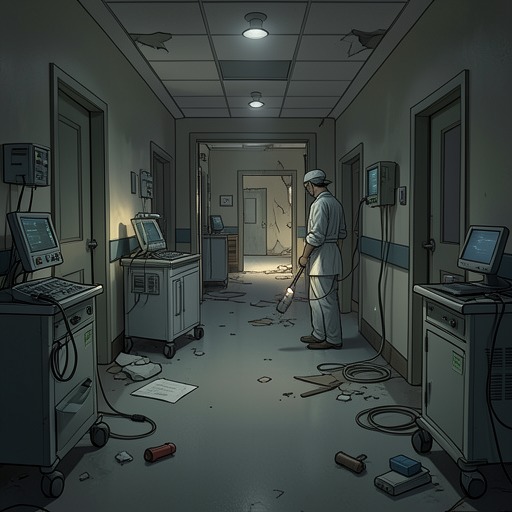
Staff continued trying to care for patients as conditions worsened. Diane Robichaux, LifeCare’s pregnant assistant administrator, later described staff working through the night with rubbing alcohol and gravity-drip IVs to cool patients and keep them alive. The smell from the unrefrigerated morgue on Memorial’s eighth floor had reached the stairwell by Wednesday, while the building’s heat made the conditions on the floors above part of the account of care. The detail of those improvised cooling efforts is important: it records work directed toward sustaining patients even as staff faced shortages and the prospect that evacuation might not be possible.
Family caregiving also became part of the unit’s response. Angela McManus, exhausted and anxious about a sibling who lived near the levees, cared for her mother, Wilda, herself. She used Wilda’s feeding tube, changed her colostomy bag, and sought a nurse’s help to clean her mother and replace a wound dressing. With no running water, even these basic tasks were difficult to arrange. Angela continued talking, singing, and praying with her mother. Before the storm, LifeCare staff had sometimes bowed their heads during Wilda’s prayers, in gatherings they called church. In the emergency, that familiar religious practice remained alongside the practical labor of care.
The September 1 allegations
On Thursday, September 1, Robichaux recalled going downstairs with two colleagues to speak with Mulderick, who told them the plan was not to leave living patients behind. Back on the seventh floor, Robichaux found Anna Pou. In her account, Pou said that the patients would not survive, or words to that effect, and asked whether Robichaux wanted her staff on the unit. Robichaux said she did not. The exchange placed LifeCare’s staff in a grave position: they had to consider the safety and presence of their own employees while the fate of the patients remained uncertain.
The discussion about the large paraplegic patient made that uncertainty concrete. Staff considered whether people could physically get him down the stairs and lift him through an opening to board a helicopter. Robichaux recalled that this seemed unlikely, after which Pou asked whether a staff member the patient trusted would be willing to sedate him. Robichaux identified a strong nurse named Andre, then said that he would not do it. Her testimony describes a proposed course of action and her refusal to involve that nurse; it does not, by itself, establish what subsequently happened to the patient.
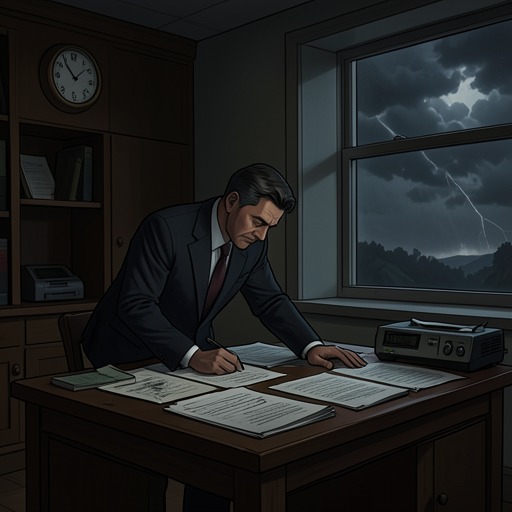
A day later, an attorney for LifeCare reported by fax that nine seventh-floor patients at Memorial had died under suspicious circumstances. LifeCare witnesses later alleged that Pou had come to the floor to end the lives of the nine patients who remained there. Two witnesses recalled her saying that her intention was lethal. The patients’ deaths were confirmed, but those statements were allegations, not a resolution of who acted, what happened to each patient, or whether others were involved. Investigators sought corroborating evidence, including the deceased patients’ medical records, evacuation plans, computer hard drives, employee information, pharmacy records, and medical waste that might contain discarded drug vials or syringes.
Aftermath and institutional consequences
The account of LifeCare’s seventh floor holds together two kinds of evidence that should not be collapsed into one another: testimony about improvised efforts to sustain patients, and testimony alleging that patients were intentionally killed. The distinction matters because the same setting—extreme heat, restricted movement, scarce supplies, and uncertain rescue—can explain the pressure staff faced without settling the truth of the specific accusations. The investigation turned on precisely that gap between what witnesses reported and what physical and documentary evidence could establish.
LifeCare’s institutional relationship with Memorial also continued to matter after the storm. Its leases at Memorial and at another Tenet-owned hospital were not renewed. Some LifeCare employees considered the nonrenewal retaliation for cooperating with Attorney General Charles Foti’s investigation; the evidence records that as their interpretation, not as an established explanation. The seventh-floor unit thus remained significant beyond the evacuation itself: it was a site of care under severe constraint, a source of disputed testimony about patient deaths, and part of the institutional aftermath of the investigation.