Michael Morales
Five Days at MemorialMichael Morales was the young assistant district attorney assigned to lead the criminal case concerning deaths at Memorial Medical Center after Hurricane Katrina. Five years out of law school and with about two years of homicide-prosecution experience, he entered a case already shaped by a year of investigation by the attorney general’s office. His central problem was not simply whether patients had received drugs, but whether the evidence could establish that the injections were intended to kill rather than to relieve suffering. That distinction connected the medical debate over palliative care and double effect to Louisiana’s legal requirement of specific intent for murder.
A Prosecutor Inheriting the Case
Morales arrived at the Orleans Parish coroner’s office with his senior colleague, Assistant District Attorney Craig Famularo, while experts were reviewing toxicology and autopsy evidence. Their initial encounter with the investigators and forensic pathologists was brief and strained; the prosecutors left after about half an hour, and the experts regarded their manner as skeptical and uninterested. The distance reflected a larger institutional divide. Unlike investigators and prosecutors in the Medicaid fraud unit, the Orleans Parish District Attorney’s Office generally did not join an investigation unless the investigative agency asked it to. The attorney general’s office had not sought Morales’s involvement in the Memorial investigation, and he was only now confronting the scale of the work ahead.
The professional setting was strained in other ways. Floodwaters had ravaged the district attorney’s building, and staff had relocated to a cramped suite with stained carpets and folding tables. Morales regarded the temporary offices as an improvement over the old building, whose carpet had been held together with duct tape. He was one of a small number of homicide prosecutors in a city with a high murder rate and a poor record of bringing perpetrators to justice; colleagues nevertheless considered him smart and capable. The Memorial case, a high-profile and politically exposed matter, began consuming most of his time.
Morales’s office had also been kept out of the investigation for roughly a year. He had followed the case’s court filings because Rick Simmons, Anna Pou’s lawyer, had sued to keep her post-storm conversations with a Tenet attorney private. Simmons sent Morales courtesy copies as the litigation progressed, but the attorney general’s office ordinarily did not. The result was an unusual handoff: Morales was expected to prosecute a complicated case without having helped shape the investigation that produced it.
Law, Disaster, and Institutional Conflict
The case landed in a politically fraught office. District Attorney Eddie Jordan, the first African American elected to that position in Orleans Parish, was receiving hostile letters from members of the public over his association with the prosecution. He was already fighting a federal racial-discrimination judgment concerning his earlier replacement of dozens of white employees with Black employees. Tenet had investments in local politics, while Simmons and several Tenet lawyers, like Jordan, were former federal prosecutors. Attorney General Charles Foti had attached his reputation to the case after the arrests. Foti needed to defend the decision to arrest the three medical workers; Jordan had reason to avoid an unpopular prosecution. Those pressures surrounded Morales, but the account does not show Jordan directing him to bury the case.
Morales’s hesitation had both legal and personal dimensions. He understood why the deaths merited investigation, but the alleged conduct arose amid a disaster in which military forces had been called to restore order and the governor had publicly described troops as prepared to use lethal force. Morales felt that prosecutors were being asked to apply civilian criminal law to a war zone. His unease was sharpened by a separate investigation involving a former student clerk, a New Orleans police sergeant, connected to the Danziger Bridge shootings of unarmed civilians. Morales regarded the officer as a promising lawyer and a good police officer, and believed that people who did good work should not necessarily be charged for harmful actions taken in a crisis. That outlook did not erase the legal question; it made his judgment about responsibility under emergency conditions more difficult.
A conflict over who controlled the investigation further eroded cooperation. Virginia Rider and Butch Schafer had subpoenaed Pou’s outspoken boss, Dan Nuss, without Morales’s participation. Morales regarded that move as an intrusion on the prosecutor’s role. The attorney general’s team, in turn, had not invited the district attorney’s office into its earlier work. Morales drafted a letter for Jordan asking Foti’s office to stop investigating until the grand-jury process began, arguing that parallel work would not benefit the case. Rider and Schafer had hoped to pursue leads beyond the three arrested workers, including possible responsibility among other hospital staff and a corporate thread; they also wanted to consider immunity for health workers who might provide important testimony. By then, they had amassed about 50,000 pages of documents. The order to halt their investigation was therefore a sharp institutional reversal, not a routine transfer of files.
Building a Legal Framework
Morales’s work required a rapid education in medical ethics and end-of-life care. When Simmons again asked for the forensic laboratory and autopsy results, he offered to let the defense’s experts examine the case in exchange. Morales declined: Pou had not been indicted, and Louisiana procedure would give her counsel access to certain evidence if that stage arrived. He was willing to hear what Simmons wanted to present, but was not ready to disclose the prosecution’s material. Simmons continued to remind him that the district attorney had discretion to reject the case or return it to the attorney general, while also volunteering the defense’s concepts as Morales learned the medical vocabulary.
Morales began keeping a glossary of terms including agonal breathing, double effect, euthanasia, palliative care, and triage. The glossary became a shared reference for prosecutors and officials discussing what the evidence meant. The case required far more than the single charging conference typical of an ordinary prosecution: the team moved toward five. For Morales, the medical concept of double effect offered a way to frame the legal issue. A treatment intended to palliate distress might foreseeably hasten death; murder, however, required proof of specific criminal intent. He began organizing the case around that distinction: whether the injections were meant to relieve patients or to harm and kill them. The medical and legal questions did not become identical, but the ethical framework helped him see how intent might be tested against the available evidence.
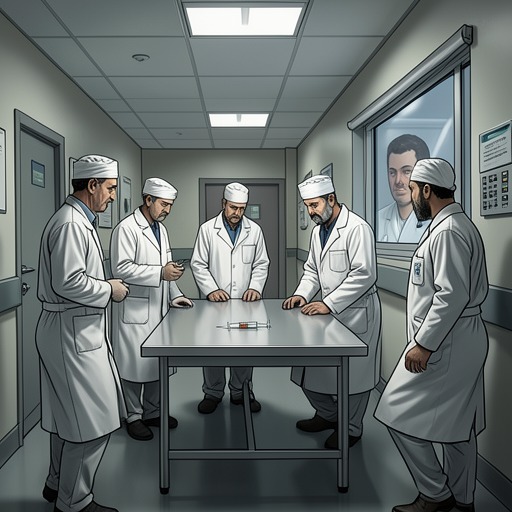
The laboratory findings made the issue concrete without resolving it on their own. In one report on eighteen Memorial cases, the toxicologist said that nine were positive for morphine and approximately five or six more were positive for midazolam. Morales’s task was to assess such findings within the wider circumstances of patients’ deaths, rather than treat the presence of a drug as a complete answer to questions of cause or intent. The underlying investigation had also confronted practical limits: bodies recovered after more than a week in the heat had decomposed, making blood tests impossible. Investigators turned instead to other tissues and samples, and forensic analysis became one part of a larger, contested evidentiary record.
The Grand Jury and Compelled Testimony
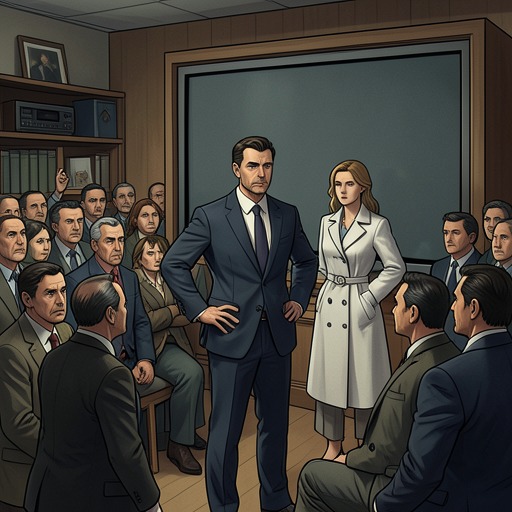
In 2007, Morales chose an unusual way to bring the case before a special grand jury. Rather than present a completed prosecution theory and ask for an indictment, he intended the jurors to act as an investigative body alongside the district attorney’s office, deciding what evidence they wanted to hear. He described the case as unusually complicated. The jurors ultimately stopped hearing evidence when they believed they were ready to decide; they were to deliberate and vote independently, with Morales serving as their legal adviser during the proceedings. An indictment required agreement from nine jurors.
Morales also sought testimony from Cheri Landry, Lori Budo, and nurse manager Mary Jo D’Amico. The district attorney had decided not to prosecute Landry and Budo, but subpoenaed the women to testify without counsel so that the grand jury could learn what they knew about Pou. A court order required their testimony under protections tied to the Fifth Amendment: their statements and evidence derived from them could not be used against them in a criminal case unless they lied or failed to comply. Their lawyers challenged the subpoenas through the state supreme court, pointing out that murder had no statute of limitations and that prosecution could remain possible on evidence obtained independently. They also invoked the Danziger Bridge case, in which officers compelled to testify under similar conditions were later indicted. The arrangement reflected the difficulty Morales faced in gathering evidence while protecting the legal process and managing the risks to witnesses.
Outcome and Lasting Lesson
When the special grand jury returned its decision, it did not indict Pou. Jordan publicly said that he respected and agreed with the jury’s decision, and the case was over in New Orleans. Morales later said that he and Jordan had not been eager to prosecute, but had also refused simply to discard the matter. Pou was not a typical career criminal accused of murder; still, a judge had signed an arrest warrant and multiple witnesses were prepared to testify. Morales said the office would not shirk its duties or sabotage the case. His position remained a tension between caution toward a defendant acting in exceptional circumstances and the obligation to pursue a serious allegation.
After the decision, Morales looked at the boxed evidence in his office. It was the last homicide he would prosecute in New Orleans: his unit had been disbanded, and he was reassigned to other felony work. He said the outcome did not make him feel one way or another. The practical lesson he carried from the case was the need to evacuate before future storms. As a former history major, he also regretted that the grand jury’s proceedings would remain secret from the public. He thought a congressional hearing might have offered a way to make the accumulated information public, and believed there would never be an open debate about what had happened.
Morales’s role in the narrative is defined by the distance between a case’s evidentiary record and the public account of its resolution. He inherited investigators’ work without having helped direct it, confronted medical concepts that complicated ordinary homicide analysis, and tried to use a grand jury as both investigative forum and decision-maker. The non-indictment ended the prosecution without settling the larger public dispute over the deaths. Morales’s emphasis on advance evacuation points back to the conditions that made the case possible: in his view, the most consequential lesson was not only how to judge actions taken in crisis, but how to prevent patients and medical workers from being placed in such a crisis again.