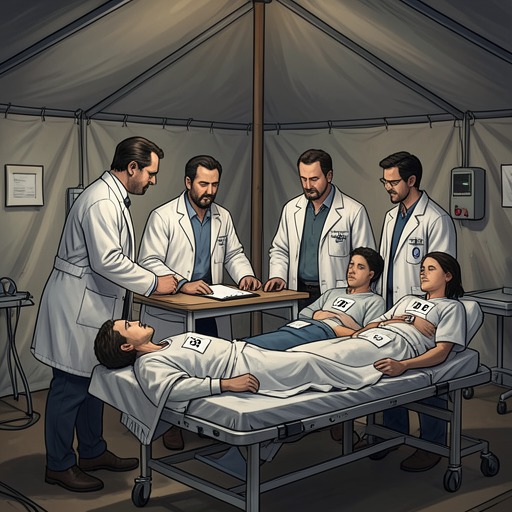
Nancy Cruzan Case
Five Days at MemorialThe Nancy Cruzan Case brought a difficult question of patient autonomy before the United States Supreme Court: whether a severely brain-damaged patient’s feeding tube could be removed at her parents’ request. The Court recognized a person’s right to refuse life-sustaining care, but also held that states could require strong evidence of the patient’s own wishes. The case thus linked the right to refuse treatment with the practical problem of establishing what a patient wanted when she could no longer speak for herself.
The Case and Its Question
In 1990, the Court considered the case of thirty-three-year-old Nancy Cruzan, who had been severely brain damaged in a Missouri car accident years earlier. Her parents sought to have the feeding tube that nourished her removed. The dispute was not simply whether continued treatment served her best interests; it also concerned who could decide, and what evidence could establish her wishes, when she was unable to communicate them.
The Supreme Court’s Ruling
By a five-to-four margin, the Court agreed that the right to liberty included the right to refuse life-sustaining medical care and die. At the same time, the ruling permitted states to require clear and convincing proof that a patient wished to discontinue treatment. A belief that withdrawal would be in the patient’s best interest, by itself, did not necessarily meet that standard. The decision therefore affirmed a right while leaving states room to set safeguards for determining whether that right reflected the patient’s own choice.
Evidence of Cruzan’s Wishes
After the Supreme Court’s ruling, a Missouri judge allowed Cruzan’s nutrition to be discontinued. Acquaintances had provided evidence that this would have been her wish. Their testimony supplied the proof needed in her case and made the distinction between a family’s judgment about a patient’s interests and evidence of the patient’s preferences concrete. The case also showed why recording treatment preferences in advance could matter when a patient later could not express them.
Legacy and Relevance to Disaster Care
The case contributed to increased adoption of living wills and advance directives, which document treatment preferences before a catastrophe. That legacy bears on later emergency-care disputes, including decisions at Memorial Medical Center during Hurricane Katrina. There, some patients with Do-not-resuscitate (DNR) orders were placed last in evacuation priority. But a DNR order concerning resuscitation was not necessarily an instruction to refuse rescue: when a nurse explained that her ninety-three-year-old mother’s order could be discontinued, the patient’s daughter said she had not meant for her mother to be left behind. The Cruzan precedent underscores the importance of the patient’s wishes and the evidence for them; it does not make a treatment-limiting order a blanket authorization to withhold other care.