New Orleans Police Department
Five Days at MemorialThe New Orleans Police Department (NOPD) has a limited but revealing role in the account of the hurricane response. At Memorial Medical Center, officers were preparing to leave as people arrived by boat seeking food and assistance; hospital staff received no direction from them about where to send those people. Later, a police captain used the radio to report that alarming stories about violence at the Superdome were false. These moments place the department within a fragmented response in which reliable information and practical help did not always arrive together.
Presence at Memorial Medical Center
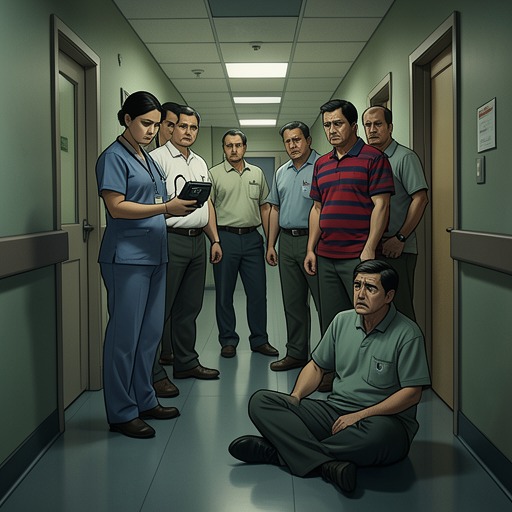
Around a dozen people, including children, had reached Memorial Medical Center by boat and needed food and assistance. The National Guard had already left, and a contingent of NOPD officers was about to depart. They offered no advice to hospital security guards about where the arriving families should go, leaving the hospital staff to decide what help they could provide and whether to direct people elsewhere.
The uncertainty mattered because Memorial Medical Center staff were considering sending people to the New Orleans Superdome, more than two miles away. Reports monitored by hospital personnel described deteriorating conditions there, while families arriving at the hospital had immediate needs. The officers’ departure did not resolve that dilemma; it left the people at the hospital with no clear referral from the police.
Radio Report and the Superdome
That night, a New Orleans police captain called in over the radio to say that reports of severe violence at the Superdome were false. His report checked rumors circulating amid the disaster, but it did not settle the question of whether the shelter was safe or adequately supported. At a nighttime news conference, Governor Kathleen Blanco said roughly 20,000 people were stranded there without power and with deteriorating sanitary conditions, and called for the building to be evacuated, particularly for people with medical conditions who had been directed there.
The distinction between false stories of violence and worsening conditions was consequential. The police captain’s statement addressed the former; the governor’s account described the latter. The two reports show how rumor correction could coexist with a genuine emergency, without providing hospital staff or displaced residents with a complete picture of what to do next.
Role in a Fragmented Response
The account does not describe a coordinated NOPD plan for people reaching Memorial Medical Center, nor does it identify the officers who were leaving or explain their reasons. It records instead two specific interventions: officers gave no referral guidance to hospital security, and a captain reported that stories of violence at the Superdome were false. The limited record places the department within a wider response marked by poor communication and coordination among agencies, without assigning it responsibility for failures beyond those documented actions.
Together, these episodes underline the difference between correcting information and organizing assistance. The radio report challenged rumors, while the earlier encounter at Memorial Medical Center left staff and families without police guidance at a moment when the usual routes to safety were uncertain.