Virginia Rider
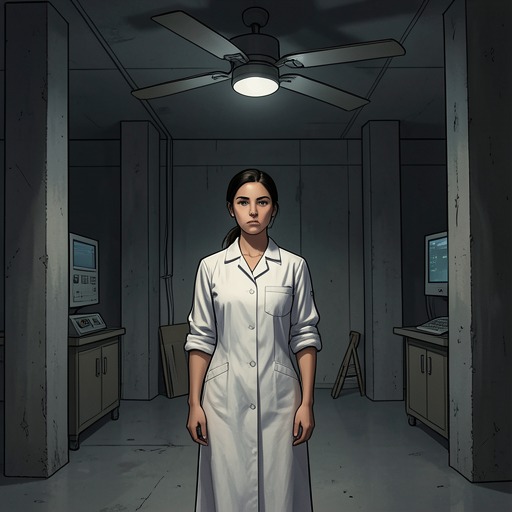
Five Days at MemorialVirginia Rider is the special agent whose methodical investigation turned allegations about the deaths of patients at Memorial Medical Center into a sustained criminal inquiry. Working with prosecutor Butch Schafer, she pursued records, searched the hospital, and assembled physical and testimonial evidence concerning the nine LifeCare patients who died there. The case made her a determined investigator and, increasingly, a personally invested one: its unresolved outcome unsettled the faith in justice that had shaped her life.
Background and Investigative Work
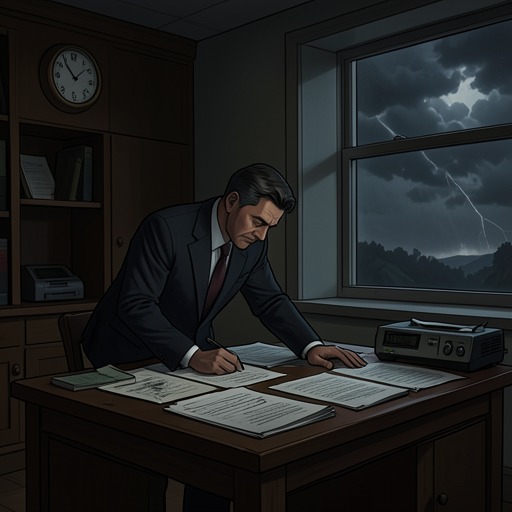
Rider had spent ten years in the unit where investigators and prosecutors worked cases together. Colleagues regarded her as thorough, diligent, and intelligent. Her own family history joined practical public service to careful record-keeping: her father was a mapmaker who served in army intelligence during the Korean War and later worked on the interstate highway system, while Rider followed her mother into accounting. The book presents her investigative habits as part of this inheritance of fact-gathering and method, rather than as a sudden response to the Memorial case.
Her partnership with Schafer gave the investigation a working structure. He brought prosecutorial experience; she led much of the evidence-gathering. They had to determine whether accounts of suspicious deaths could be confirmed, what actions had occurred, and who might have been involved. The allegations were serious, but the investigation could not treat them as proof. Its task was to test them against records, physical evidence, and witnesses.
From Allegations to a Search
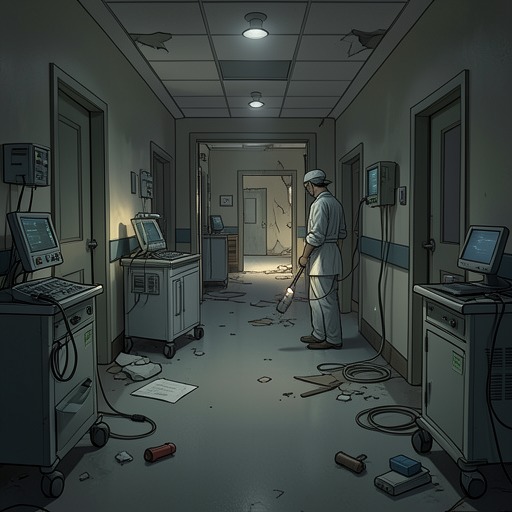
The inquiry accelerated after LifeCare reported allegations about deaths on the hospital’s seventh floor. Rider requested medical records from Tenet, which controlled access to Memorial, but officials were vague about where the records had gone. Rider, Schafer, and colleagues traveled to New Orleans with subpoenas. Hospital security refused them entry, citing the need for protective equipment. Federal investigators found hazardous-materials suits and entered, but the group recovered little information about the nine patients.
Rider and Schafer then interviewed the first of four LifeCare witnesses. Their accounts converged: each alleged that Anna Pou had gone to the seventh floor to end the lives of the surviving patients, and two witnesses recalled her directly describing her intention as lethal. The patients had died, but agreement among witnesses did not by itself establish that the alleged plan had been carried out. Rider therefore set out to find corroboration. Her list of requested evidence included the deceased patients’ medical records, evacuation plans, computer hard drives, employee contact information, pharmacy records, and medical waste that might contain discarded vials or syringes.
The judge granted a search warrant. On October 1, Rider and Schafer returned to the hospital with twenty-two special agents, including almost the entire Medicaid Fraud Control Unit and investigators from a federal health-care oversight office, as well as two Louisiana State Police crime-scene investigators. The team arrived from Baton Rouge at about nine in the morning. Rider had taken part in searches before, but never one on this scale. Afterward, she delivered seized medical items to the state police laboratory for fingerprint and controlled-drug analysis. On the request form, she identified Pou and described the suspected conduct as possible euthanasia of multiple patients after Hurricane Katrina. That notation recorded an investigative suspicion, not a court finding.
Evidence, Witnesses, and the Case’s Expanding Scale
Two weeks after the search, laboratory director Robert Middleberg called with preliminary toxicology results. Rider put the call on speaker so Schafer and another agent could hear whether the case’s central physical-evidence question had an answer: whether the LifeCare patients’ bodies contained detectable morphine and other sedatives. The book identifies the results as crucial to the investigation, but the significance of Rider’s work lies not in a single test alone; the team was building a case from evidence that had to be interpreted together.
A separate lead emerged from the LifeCare pharmacy. When pharmacist Steven Harris accompanied investigators to the pharmacy, he confirmed that 125 ten-milligram morphine vials, along with dozens of Versed and Ativan injection vials, were missing. Other controlled drugs remained. The selective absence of these medications gave investigators a concrete line of inquiry, while not by itself establishing who had taken or used them.
The witness record also changed over time. Schafer and Rider initially lacked an eyewitness who could connect Pou’s words directly to injections of LifeCare patients. In January, a LifeCare lawyer told Schafer that physical medicine director Kristy Johnson had remembered additional information and wanted to share it. Schafer informed Rider, who arranged to hear Johnson’s account herself. The development mattered because it addressed a gap in the investigation: investigators were seeking more than repeated reports of what witnesses believed had happened. By the time Johnson came forward, all nine of the remaining LifeCare patients had died. Rider and Schafer had obtained the eyewitness they had been missing, though the evidence still had to be assessed and tested through the legal process.
As the case grew, Rider’s work consumed more of her professional life. She was taken off other hospital and nursing-home investigations to concentrate on Memorial. She said that she thought about the case at home even at night. Schafer warned her against becoming emotionally involved, recognizing both the demands of the investigation and the risk that personal commitment could burden the people pursuing it. Their partnership was unusually close: the two investigators understood one another’s investment in the case in a way others did not.
Arrests and Personal Cost
That summer, Rider drove to New Orleans with arrest affidavits and warrants for Pou, Cheri Landry, and Lori Budo. She and a male colleague went to Pou’s house at about nine in the evening. Rider wore body armor and carried a firearm; the book notes that months of work and marital problems had contributed to weight loss, and she had not had time to replace her pantsuit. The detail makes the arrest a procedural act undertaken by a person whose private life had not been insulated from the case’s pressure.
Rider read Pou her rights. Pou signed her full name, Anna Maria Pou, to acknowledge that she understood them and indicated that she would not answer questions without her lawyer. Rider then handcuffed her, checking for enough space at the wrists to preserve a measure of comfort before double-locking the cuffs. The care she took with that small procedure stands beside the seriousness of the accusation: she was executing a warrant, not deciding guilt. The arrest marked a major step in the investigation, but it did not settle whether the deaths met the legal standard for prosecution.
That distinction became painfully clear when Rider heard that Frank Minyard had made a coroner’s determination concerning the deaths. A coroner’s homicide finding meant that a death had resulted from another person’s actions; it was not itself a judgment of fault or criminal responsibility. Yet the district attorney’s office had told Rider that it would not pursue the case without such a ruling. She stopped to buy a newspaper, read the report, and cried. The decision mattered not simply as a new piece of procedure, but because it seemed to her to threaten the possibility that the work she had devoted herself to would lead to a criminal case.
Rider had also attended a meeting organized by Minyard with Attorney General Charles Foti and District Attorney Eddie Jordan. One suggestion raised there was that proving intentional acts by individual health professionals might damage survivors’ prospects of obtaining compensation from corporate defendants such as Tenet. The episode exposed a conflict between criminal accountability and civil recovery: establishing individual responsibility could have consequences beyond the question of whether a prosecution was justified. Rider’s investigation therefore unfolded amid disputes over evidence and blame, but also over who might bear the financial consequences of the deaths.
Faith in Justice and the Investigation’s Afterlife
Rider knew she was taking the case personally, yet its course shook a foundation of her life. She had grown up in a state where politicians could exploit opportunities for corruption, but had retained faith in the ideal of an American justice system in which good would prevail over evil. Her investment was not merely professional pride. The prolonged investigation and the obstacles to prosecution tested a belief she had carried since school and to which, by her early forties, she had devoted much of herself.
The wider circumstances made a simple assignment of blame difficult. Reports produced after the storm faulted action and inaction across government, private organizations, and the systems responsible for disaster response. The book traces echoes of earlier failures: warnings went unheeded, investments were not made, and assistance was sometimes turned away. At Memorial, patients with Do Not Resuscitate orders had been placed last for evacuation, including Jannie Burgess, a nurse who had once been able to care for patients in private hospitals but could not receive care in them. During the evacuation, a patient’s daughter protested that her mother’s DNR status had not meant she should be left without rescue. These events illuminate the stakes and institutional setting of the case; they do not make Rider a participant in decisions she was later assigned to investigate.
The comparison with Charity Hospital further complicates the setting. Charity had flooded and lost power, plumbing, communications, computers, and elevators, and it lacked a helipad and corporate overseers. Its larger patient population and lower staffing ratio meant it took until September 2 to transfer everyone, a day later than at Memorial, yet fewer than ten patients died. Such contrasts do not alone explain what happened at any one hospital, but they belong to the broader record against which claims of individual and institutional responsibility were examined.
Months after Rider had left the investigation, other officials in Baton Rouge remained troubled by the grand jury’s handling of the Memorial deaths. They drafted a forceful letter to the district attorney arguing that essential evidence was being ignored. Rider and Schafer did not regard the case as morally concluded simply because a conviction was uncertain. In the book’s final account of their position, justice could also be served by retelling the events through the court process. Rider’s arc thus ends without the clean resolution of a successful prosecution: the investigator who trusted evidence and procedure confronts their limits, while insisting that careful reconstruction itself can keep the deaths and the questions surrounding them in public view.