Al Qa'im
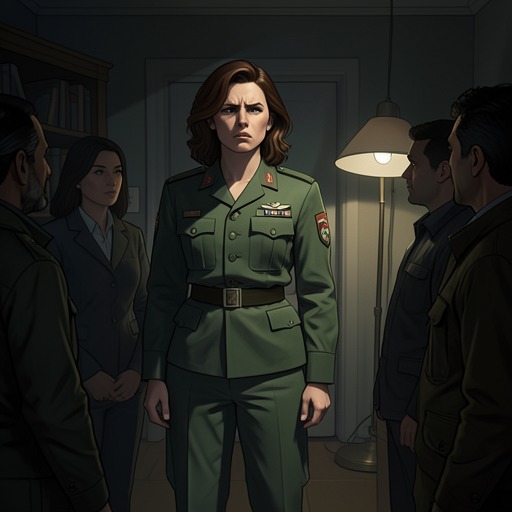
Fool Me OnceAl Qa'im is the setting of the combat decision that follows Maya Stern long after she leaves the battlefield: during a rescue mission near the Syrian-Iraqi border, she fires on a black SUV despite a warning that its occupants may be civilians. The soldiers under threat survive, but the strike becomes the source of Maya’s recurring auditory flashbacks and a painful confession about what she values, what she regrets, and what she would do again.
Border setting and the rescue mission
The action takes place in Al Qa'im, not far from the Syrian-Iraqi border, amid an ambush in which four soldiers have already been killed. Three of the dead are people Maya knows and loves. Two more soldiers remain alive, pinned down by enemy fire, while a black SUV moves toward them. The mission begins as an attempt to rescue those survivors, not as an attack undertaken in isolation from the danger on the ground.
Maya and Shane fly toward the threat in a Boeing MH-6 Little Bird light helicopter gunship. Over the radio they hear the two soldiers pleading for help. The men sound so young that Maya imagines the four who have already died would have sounded just the same. Their calls place the immediate human stakes inside the aircraft: the endangered soldiers are not an abstract objective, but voices Maya recognizes as her own side’s people in need of rescue.
The strike and its disputed authorization
Once Maya and Shane have the SUV in view, they wait for confirmation from Joint Operations Command at Al Asad. The command radio keeps cutting in and out, while the soldiers’ urgent calls remain audible. As the survivors scream for help, the delay becomes unbearable. Maya’s helicopter fires an AGM-114 Hellfire Missile at the SUV, which explodes high into the air. Infantry then move in; both pinned-down soldiers have been hit, but both survive.
The first account of the strike can make it appear to be a straightforward rescue under pressure. The later conversation between Maya and Shane changes that understanding. Shane recalls that they had identified the target and called it in, but that command wanted them to wait to establish that the people in the SUV were not civilians. Maya tells him that they never received authorization to engage: Joint Operations Command had ordered them to hold off because it believed at least one occupant might be a civilian, possibly underage, and assessed only a fifty-fifty chance that the people in the vehicle were enemy combatants.
Maya also reveals that she turned Shane’s signal off and relayed the information to him herself. She says she knew civilians might die and chose to act because she would not lose another soldier if she could prevent it. Her account makes Al Qa'im the site not only of a battlefield rescue but of a decision made against an explicit warning, with the lives of the two endangered soldiers set against the possible lives inside the SUV. The strike saves the soldiers; it does not erase the civilians who die.
Memory, symptoms, and moral responsibility
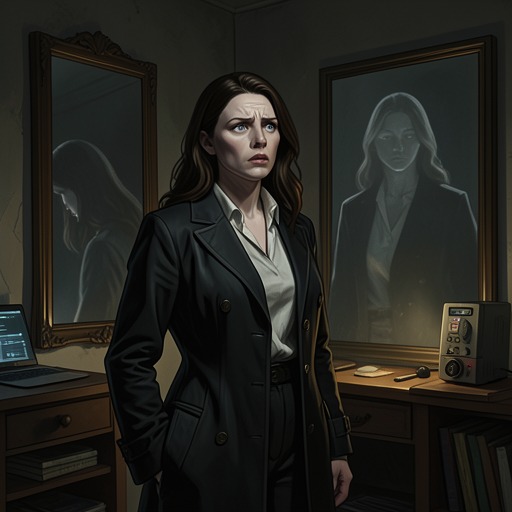
The event returns to Maya not as a clear visual haunting but through sound. A clinical conversation distinguishes her nighttime experiences from hallucinations, describing them instead as vivid flashbacks that can resemble hallucinations. Maya’s episodes are auditory: she does not see the dead men, the mother, or the child. The absence of those faces does not make the memory less persistent. She is repeatedly carried back to the helicopter and to the sounds of soldiers pleading for help.
Maya rejects the assumption that her flashbacks arise from guilt over civilian deaths. She says she does not feel guilty about those deaths; what torments her is knowing that, if she were in the same position again, she would make the same choice. Each night she tries to find a way to save the soldiers, while Shane recognizes the other side of that repetition: the civilians die again in the memory. Al Qa'im thus remains bound to an unresolved conflict between the consequences of the strike and Maya’s refusal to claim remorse she does not feel.
The strike’s later reverberations
The combat mission also acquires a public afterlife when footage of what began as a rescue mission is leaked to Corey Rudzinski. Maya later finds the old video in Corey’s archive, although versions are also available elsewhere online. The footage turns a private memory into material others can watch and interpret, linking the physical attack at Al Qa'im to the controversy around the leaked combat recording.
For Maya, the consequences extend beyond the battlefield and beyond her own symptoms. She comes to understand the sounds that will not leave her as an echo of what she did in the helicopter, an echo that eventually reaches her sister Claire Walker. In her grief, Maya believes that if she had not made those mistakes at Al Qa'im, Claire would still be alive with her children. The novel presents that conviction as Maya’s painful understanding of the chain of consequences, not as proof that the strike directly caused Claire’s death.
Al Qa'im therefore functions as both a specific place and the origin point of a recurring moral reckoning. The rescue succeeds in keeping the two soldiers alive, yet success cannot settle whether Maya’s choice was justified, undo the civilian deaths, or silence the voices that return at night. The location’s significance lies in that unresolved balance: the same act that expresses Maya’s loyalty to her comrades becomes the burden she carries into her family life, and the event she cannot imagine herself choosing differently.