Corey Rudzinski
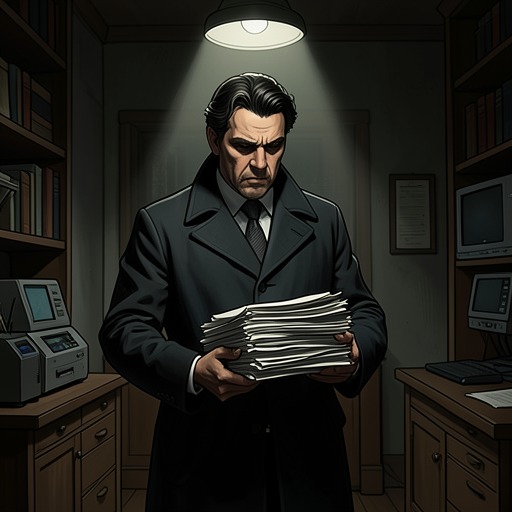
Fool Me OnceCorey Rudzinski, known online as Corey the Whistle, is the founder of CoreyTheWhistle, a confidential platform for whistle-blowers exposing illegal activity in government and business. He enters Maya Stern’s investigation as a shadowy figure linked to Claire’s secret inquiries, but his influence reaches much further: his publication of Maya’s combat footage helped set her life unraveling, while a later live feed from the Burkett home brought his site a vastly larger audience. His character is defined by that tension between disclosure as a public good and the damage that exposure can cause to individuals caught in its path.
Identity and the whistle-blower site
CoreyTheWhistle is presented as a place where sources can submit information confidentially. Its purpose is not limited to one kind of scandal: examples associated with the site include a South American official’s kickbacks from oil companies, police corruption involving racist emails, abusive treatment of prisoners in Idaho, a covered-up nuclear accident in Asia, and security forces hiring escort services. The range of those disclosures establishes Corey’s platform as an established outlet for allegations about both public institutions and powerful businesses, rather than a site created solely for the Burkett case.
The site’s promise of confidentiality is central to how its work operates. Information reaches a public audience through the platform, while the people supplying it are meant to be protected. That arrangement gives Corey’s work the potential to expose conduct otherwise kept hidden, but it also makes the path from source to publication consequential: the information can outgrow the private circumstances in which it was first shared. Claire’s contact with the site brings that conflict into Maya’s family story.
Corey does not describe himself as a radical or an anarchist. When Maya encounters him, he resists those labels, distinguishing his work from an attempt to overthrow society for its own sake. His stated position is more limited: the site discloses illegal activity. The distinction matters because the scale and disruptive effects of the leaks might make the work appear driven by spectacle or wholesale opposition to authority, while Corey presents its purpose as revealing wrongdoing.
Claire’s contact and Maya’s investigation
A military intelligence report leads Shane, who is still serving and heads the local branch of the military police, to tell Maya that Corey may be back in the United States. The report does not establish where Corey is or what he intends to do; it gives Maya an early indication that the name connected to the leaks may soon become relevant in person. Later, Maya realizes that the man following her in a red Buick is Corey, who had also been communicating secretly with Claire in the weeks before her murder.
Corey tells Maya that Claire first emailed his website a few months before her death, and that the message eventually reached him. The email is more than a trace of past contact: it establishes that Claire had sought out an independent outlet while investigating matters connected to the Burkett family. Corey then invites Maya to see what Claire found. Through him, Claire’s private research acquires a possible route into public view, even as Maya must decide whether pursuing that route will actually bring her closer to the truth.
Maya recognizes the risk of treating Corey as a means to an answer. She considers the legal and moral implications of what might happen if she acted against him, but also fears that the answers she needs could die with him. That conflict places their meeting at the intersection of her personal investigation and his wider publishing project. Corey is not simply a source of information: he is a custodian of material Claire entrusted to the site, and Maya depends on his willingness to show her what he knows.
The material Claire sent concerned EAC Pharmaceuticals. Corey tells Maya that Claire had supplied more about the company than he had previously disclosed. The revelation widens the scope of Claire’s investigation and shows that what Maya has already learned is not the whole of the information held by Corey. It also leaves a consequential gap between possessing documents and understanding their full significance: the evidence opens another line of inquiry, rather than instantly resolving it.
Methods, attention, and limits
Corey has also been tracking Tom Douglass’s emails. When Maya questions the possibility that Tom used an ordinary storage facility, she reasons that a check or credit-card payment might have left a record Corey could find. Her inference is that Tom took pains not to create such a trace. The exchange shows the investigation working through digital and financial footprints, but it does not make Corey’s access or conclusions omniscient: Maya tests what the absence of a record might mean, and the possibility of a hidden arrangement remains an inference rather than a confirmed discovery.
Corey is wary of relying on public attention to sustain his work. He tells Maya that he does most of it himself because causes célèbres can fade when audiences are distracted; he invokes Kony 2012 as an example of a cause that once drew attention and then receded. His skepticism contrasts with the enormous reach his website later achieves. The platform can make concealed information visible, but attention is unstable, and visibility alone cannot guarantee that the people who came forward will remain protected or that a story will continue to matter to its audience.
A news report describes Corey as promising a large collection of new leaks that, he claims, will embarrass a leading official in the current administration and likely lead to resignation and prosecution. The report presents the promised disclosures as a developing public event, not as a completed outcome. It also captures the scale of Corey’s reputation by this point: his work is being framed in terms of political consequences, even before the reported material has produced them.
Combat footage, surveillance, and consequences
Corey’s role in Maya’s life began before she knew him. Maya later identifies him as the person who released the helicopter combat video that started her tailspin. Looking back, she traces the chain farther to her actions on that mission and her decision to join the military, but singles out the release of the tape as the event that directly preceded the unraveling that led to Claire’s and Joe’s deaths. This is Maya’s own account of the chain of causation, and it makes Corey’s publication part of the story’s history without suggesting that he caused every event that followed.
The contrast between a leaked combat recording and the later nanny-camera feed is especially sharp. In the first case, Corey’s publication exposes a military operation to an outside audience and alters Maya’s private and professional life. In the later case, a person working with Corey helps establish a live feed using the nanny camera at the Burkett home. Shane later recalls that the public watched everything happening in the house that night as it happened. The same broad logic of disclosure moves from recorded military footage to real-time domestic surveillance, carrying information into public view while changing the meaning and reach of the images.
The live feed brings Corey’s site to a new level of prominence. Shane, whose own mission had been exposed by the earlier combat-video leak, remembers having a personal grievance against the site. Yet his retrospective account also acknowledges that Corey used the publicity from that night to do good: people who had been frightened, wounded, or powerless found the courage to speak, and corrupt governments and businesses fell. The account preserves both sides of the consequence. The platform’s growing influence is tied to a violation of private boundaries, but it also creates a channel through which other hidden abuses can be challenged.
Narrative role and unresolved judgment
Corey connects separate strands of the plot: the release that shapes Maya’s trauma, Claire’s concealed investigation, Tom Douglass’s digital trail, and the public exposure of the Burkett home. He is therefore both an investigator and a conduit. People send information to his site; he follows records and communications; and what passes through the platform can become larger than any one source intended. The novel gives that power a concrete cost in Maya’s case and a broader public consequence in Shane’s account of the people who come forward afterward.
The judgment of Corey remains complicated rather than settled. Shane’s personal anger at the exposure of the combat mission does not disappear, but his account recognizes the good that followed the livestream. Maya, meanwhile, sees the leaked tape as the event that directly set her world unraveling. Neither view cancels the other: the same system of exposure can give vulnerable sources a voice and impose lasting consequences on the people whose images or secrets it makes public.
The book also leaves uncertainty around the private cost of disclosure. Eileen reveals that cameras thought to be using an SD card could still be vulnerable to hacking, illustrating how a device intended for local recording can become an opening into private life. That episode is not attributed to Corey, but it sharpens the wider surveillance context in which his work operates: images can be stored, accessed, or broadcast in ways their subjects did not expect. Corey’s platform embodies one form of deliberate exposure; the hacked camera demonstrates that exposure can also occur without the subject’s consent or knowledge. Together, those strands make his work neither a simple instrument of justice nor merely a source of harm, but a powerful and ethically unsettled means of turning hidden information into public consequence.