Hector
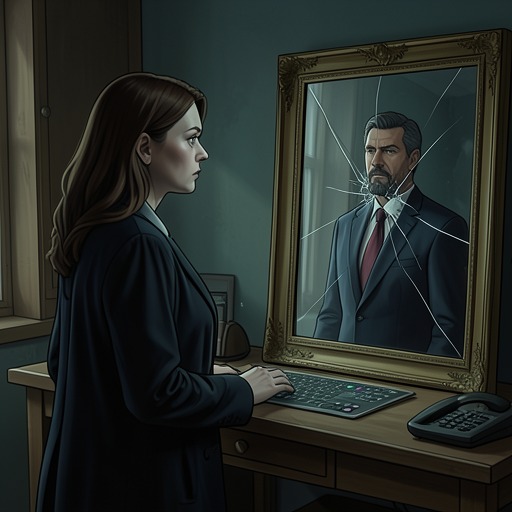
Fool Me OnceHector is the Burkett family’s practical link between a staged image of Joe and the nanny camera that makes it seem real. His resemblance to Joe allows him to perform the part, while his movements between Farnwood and a Paterson housing project give Maya Stern a trail to follow toward Isabella and the deception.
Identity and Introduction
Maya Stern begins to suspect that Isabella did not act alone: she reasons that Isabella’s mother, Rosa, who had been on the yacht that night, and her brother Hector may also be involved. The possibility turns Maya’s attention to Hector’s movements. Using the GPS tracker she had attached to his vehicle, she sees that his truck is parked in the servants’ complex at Farnwood, then reviews its recent travel history. Most journeys fit the expected pattern of a landscaper’s work; one repeatedly visited address in a Paterson housing project does not. Maya cannot yet tell what the visits mean, but their incongruity gives her a lead.
When Maya later watches Hector approach his pickup, she registers his troubled expression, while noting that he rarely looks relaxed or happy. His family connection and access to Farnwood make him more than a person of interest: he is positioned where the household’s routines, vehicles, and hidden arrangements meet. Maya decides to use him to reach Isabella, approaching with her gun already drawn and planning to force him to take her there.
Capture and the Fabricated Sighting
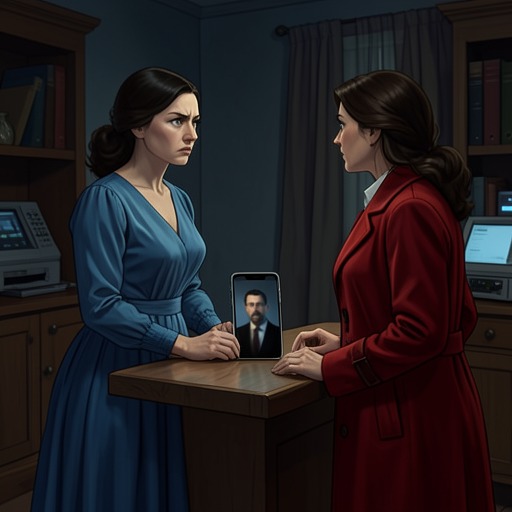
After waiting outside the high-rise for half an hour, Maya sees Hector emerge and acts on the plan she has formed. She slips into the back of his truck and presses her gun to the back of his head, ordering him to keep his hands on the wheel and Isabella to put hers on the dashboard. The ambush turns Hector’s vehicle from a trail Maya had followed into the means of confronting both siblings at once; neither has time to conceal their shock.
As Maya forces them to answer, she pushes aside a gray sweatshirt and recognizes Joe’s forest green shirt. The familiar garment intensifies her rage, but the larger question is how the supposed sighting of Joe was made. Maya reasons that Hector’s height and build would let him play Joe in the nanny-camera recording, and that Lily, who knew Hector, would approach him willingly. She also suspects that the image of Joe’s face came from the couple’s wedding video.
Hector eventually confirms the essential parts of her reconstruction. He says that he dressed as Joe and let the nanny camera record him, then took its SD card back to Farnwood. The family had a CGI specialist alter the footage; about an hour later, Hector returned to the house with the modified card, and Isabella placed it in the digital frame. The apparently spontaneous image of Joe in Maya’s home was therefore a coordinated fabrication, assembled from Hector’s performance, recorded footage, digital alteration, and the frame Isabella installed.
Isabella explains how she recognized the camera’s purpose. The day after the funeral, Maya had a new digital frame already loaded with family photographs, despite not keeping pictures of Lily around or displaying her daughter’s artwork. To Isabella, that mismatch made the frame conspicuous and exposed the hidden surveillance device. Her explanation reveals that she inferred the nanny camera from Maya’s behavior and the unusual frame, rather than discovering it through some technical intervention.
Coercion and the Limits of Hector’s Role
The confrontation becomes physically violent when Isabella tells Maya that she will not kill them. Maya tightens her grip on the gun and brings its metal butt down on Hector’s nose. The break is audible; blood seeps between his fingers. The injury marks a decisive change in the encounter: Maya’s plan to force Hector to take her to Isabella has become an immediate interrogation of both siblings, with Hector’s body bearing the cost of their refusal to speak.
Hector’s eventual account establishes a specific division of labor in the deception. He performed Joe for the nanny camera, retrieved the SD card from Farnwood, and returned with it after the family had arranged for a CGI specialist to alter the footage; Isabella then put the card in the frame. Hector’s part depended on his resemblance to Joe and his access to the house, but the account does not make him the person who digitally transformed the recording. The false sighting instead emerges from several linked acts, each of which depends on the next: a convincing stand-in, a camera recording, altered footage, and Isabella’s installation of the card.
That chain also complicates the force of Hector’s confession. Maya has already reconstructed much of the scheme aloud, including the possibility that Lily would approach Hector because she knew him and that Joe’s face came from a wedding video. Hector’s reply begins, “Like you said,” confirming the reconstruction rather than introducing an unrelated explanation. His admission supplies the mechanics behind the image Maya saw, while leaving the scene’s uneasy terms visible: the truth comes only after she has threatened both siblings and struck him. Hector is therefore both an operative in the fabrication and a pressured source through whom Maya can verify how it was made.
Narrative Role and Limits of the Evidence
Hector’s role is defined by the gap between what Maya can infer and what he can confirm. His resemblance to Joe and his access to Farnwood make him a plausible stand-in; his account then verifies the recording and SD-card handoff, while identifying the CGI alteration and Isabella’s installation as separate steps. The sequence turns the apparent image of Joe from an inexplicable return into a manufactured effect with human participants and a traceable process. Yet Hector’s confession is given under threat, after Maya has already supplied much of the explanation, so its force lies in confirming the mechanics rather than establishing every detail independently. He emerges as a participant in the deception and a source of verification, not its sole architect.