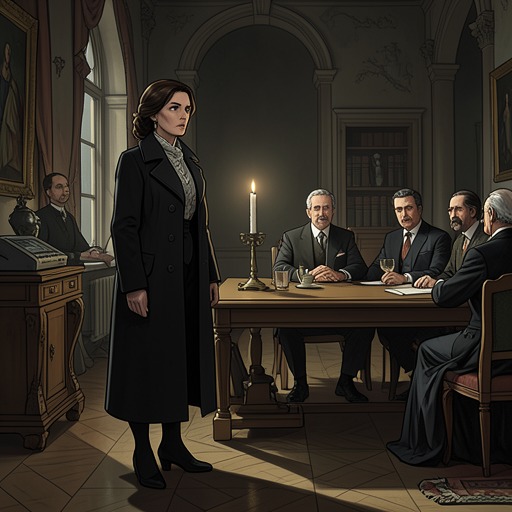
Maya Stern—Judith Burkett
Fool Me OnceMaya Stern and Judith Burkett are bound by Maya’s marriage to Judith’s son Joe, but their family connection offers no easy intimacy once Maya begins investigating the Burketts. Their defining encounter turns the former daughter-in-law and mother-in-law relationship into a contest over who will name the family’s secrets: Maya presses for answers about Tom Douglass and Andrew, while Judith first denies knowledge and finally tells Maya not to hurt her sons further. The scene leaves their conflict unresolved, with the truth about Andrew and the alleged payment to Roger Kierce still carrying the weight of family loyalty and loss.
Family Ties and the Burden of Loss
Judith is Maya’s mother-in-law through her marriage to Joe. That connection gives Maya’s questions about Andrew a personal as well as investigative charge: she is not asking about an unrelated case, but about the death of another of Judith’s sons and the account of it accepted within the family. The kinship is therefore a channel into the Burketts’ private history, but not a guarantee of trust. When Maya addresses Judith directly, she approaches her as someone close enough to the family to demand an explanation and distant enough from its protective loyalties to challenge the account she has been given.
The novel also places the question of a body and the acceptance of death beside Maya’s investigation of the family. Caroline explains that she never saw Andrew’s body and still struggles to accept his death; Maya, having heard this, says she begged to see Joe’s body so she could know he was truly gone. These moments do not establish Judith’s role in either decision, but they clarify what is at stake when Maya asks her to face the circumstances of Andrew’s death: the family’s version is not merely a matter of reputation, but part of how the living understand loss.
The Questions Maya Brings to Judith
Maya confronts Judith in the parlor, where Judith appears composed in a black pantsuit and long strand of pearls, holding a crystal glass. Maya dispenses with pleasantries and asks about Tom Douglass. Judith responds as if she does not know whom Maya means. Maya then supplies the connection: Douglass worked in the Coast Guard and investigated Andrew’s drowning. At that, Judith drops the glass. The sharp physical break interrupts her polished presentation, but it does not by itself explain what she knows; the scene leaves Maya and the reader to weigh the gesture against Judith’s immediate demand to know what Maya is talking about.
Maya shifts from the investigator’s trail to the family’s account of Andrew’s death. She tells Judith that Andrew committed suicide. Judith stiffens and denies it. Maya observes that Judith looks worn out and devastated, yet cannot tell whether she is being played or whether Judith genuinely knows nothing about the information Maya has uncovered. That uncertainty matters: Judith’s distress is visible, but Maya cannot treat it as proof of either ignorance or deception. Their exchange keeps the relationship suspended between intimate knowledge and strategic concealment.
Denial, Money, and a Warning
When Maya asks why Andrew’s death was treated as a drowning rather than suicide, Judith answers that Burketts do not commit suicide. The statement asserts a family boundary as much as it rejects Maya’s claim: it places the family name against the possibility Maya has raised, without resolving what happened. Maya then changes direction and asks why Judith paid Roger Kierce. Judith initially acts not to recognize the name, then identifies him as the police officer. The sequence makes the alleged payment part of the confrontation, but the evidence in the scene does not establish its purpose or settle what Judith knew about it.
Judith’s final response is protective rather than explanatory. She says her boys have been hurt enough and warns Maya against hurting them more. The appeal reframes Maya’s pursuit of the truth as a potential injury to the family, while Maya’s questions have treated disclosure as necessary to understand its losses and wrongdoing. Judith does not answer the underlying questions about Andrew or the payment. Instead, she makes the family bond her last defense, leaving Maya with a warning where she had sought an account.
An Unresolved Relationship
The encounter’s force comes from the collision of two positions that neither woman abandons in the scene. Maya presses Judith with specific information and questions; Judith moves from apparent nonrecognition, through denial, to an explicit defense of her sons. The dropped crystal glass briefly makes Judith’s composure crack, but no confession follows. What remains is not a settled reconciliation or a demonstrated break in kinship, but a relationship under pressure: Maya’s access to the Burketts gives her the means to confront Judith, and Judith’s loyalty to her sons gives her reason to resist the inquiry.
The scene also distinguishes emotional evidence from factual resolution. Judith appears devastated, yet Maya remains unsure whether that appearance reflects ignorance or concealment; Judith’s insistence that Burketts do not commit suicide reveals her refusal to accept Maya’s claim, not the truth of Andrew’s death. By ending on the warning about her sons, the exchange makes family protection the visible limit of Judith’s answers. Maya and Judith remain connected by Joe and by the Burketts’ history, but that shared connection has become the ground on which their conflict is fought.