Maya Stern’s combat-related PTSD
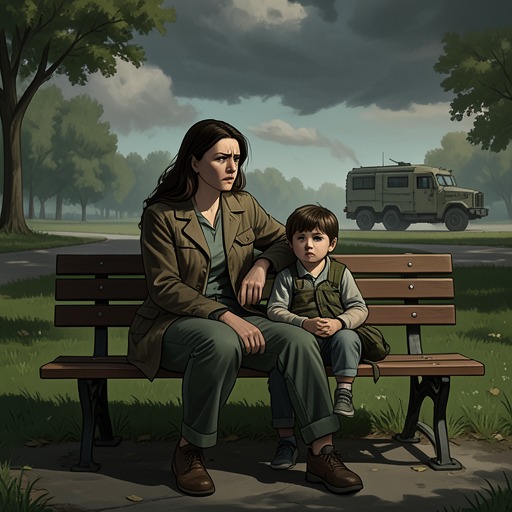
Fool Me OnceMaya Stern’s combat-related PTSD is both a persistent part of her civilian life and a lens through which the novel examines memory, responsibility, and the limits of remorse. Her symptoms return with particular force at night, but the deepest source of distress is not what others assume: Maya says she is haunted by the knowledge that, given the same circumstances, she would make the same choice again.
Identity and Military Background
Maya knows that she has a mental condition connected to her service, but she does not regard that condition simply as damage. The experience of war feels to her like a form of hard-won understanding: she believes that returning soldiers carry scars and that she now sees a world other people do not. This conviction complicates any neat division between illness and insight. Her heightened perception burdens her, yet she also treats it as knowledge civilian life cannot supply.
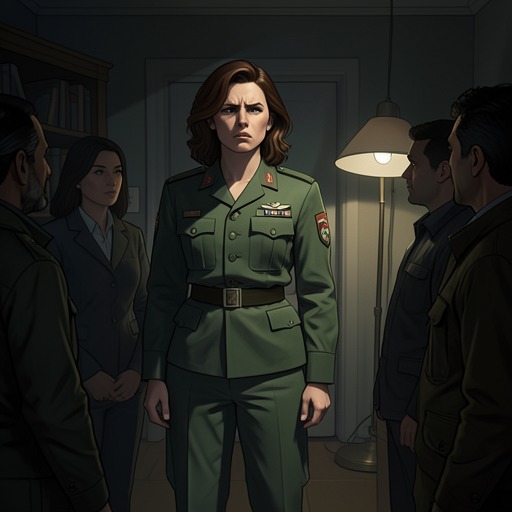
That outlook has roots in her work as an Army helicopter pilot. Maya flew combat missions providing cover and clearing routes for advancing ground troops. She began flying UH-60 Black Hawks at Fort Campbell, then sought a place in the 160th Special Operations Aviation Regiment in the Middle East. She had expected to remain in the service, perhaps for life, but the release of combat footage on CoreyTheWhistle disrupted that plan. Her military past is therefore not merely a memory that intrudes upon civilian life; it is also the career and identity from which she has been forced to depart.
Symptoms in Civilian Life
Maya’s military vigilance persists in an ordinary setting. As she walks to her car in her own driveway, she scans for places where an enemy might hide or launch an attack. There is no visible threat, but the habit remains: she continues to assess the environment as if danger could emerge from it. The scene gives concrete form to the divide between civilian surroundings and the alertness her service has made habitual.
Her most acute episodes come at night. Warning signs begin, and Maya closes her book, gets into bed, and turns off the lights. Sweating and visions give way to the sounds that overwhelm her: helicopter rotors, radio static, gunfire, and the laughter, ridicule, panic, and screams of people caught in the violence. Trying to block the noise with a pillow makes it worse; the sounds seem to tear through her thoughts rather than remain outside them. Expecting a bad night and needing help, she takes two Klonopins from a bottle in her nightstand drawer. The pills do not stop the experience, but eventually muffle it enough for sleep.
Diagnosis and Flashbacks
When the nature of these episodes is discussed, Maya resists the polite label of episodes and calls them hallucinations. The clinician’s distinction is more qualified: what she experiences may be vivid flashbacks, a recognized feature of PTSD, and such flashbacks can resemble or even be mistaken for hallucinations. The exchange does not make the experience less real or less distressing; it clarifies how a remembered event can return with the force of present perception.
The clinician also identifies a specific limit to the nighttime episodes. Maya confirms that she does not see the dead during them, and the figures named in the conversation—the three men, the mother, and the child—do not haunt her as faces in those night-time experiences. Her account earlier includes visions among the episode’s warning signs, while this later exchange distinguishes those symptoms from seeing the dead. The novel thus presents both the sensory intensity of her distress and the difficulty of fitting it into a single, uncomplicated description.
Responsibility and Repetition
Maya rejects the idea that guilt for civilian deaths explains her flashbacks. She says that, during the mission, she cared about protecting her soldiers and chose not to lose another of her own if she could prevent it. Civilian deaths were collateral damage she accepted. What haunts her, she tells Shane, is not remorse for those civilians but the certainty that she would make the same decision again.
The flashbacks return her to the helicopter without allowing her to alter the outcome. Each night, Maya tries again to find a way to save the soldiers; the effort is trapped in repetition because memory gives her the scene but not the power to change it. Shane answers that the civilians are killed again in these nightly returns. His response exposes the other side of Maya’s recurring rescue attempt: the same remembered choice that keeps her trying to save her own also repeats the deaths she says do not trouble her.
Persistence and Narrative Significance
The symptoms continue amid new pressures. Judith asks whether Maya is still seeing her doctor and points to the stresses of Joe Burkett’s murder, Maya’s witnessing it, the danger she faced, and her responsibility for raising Lily alone, all layered over her earlier diagnosis. The conversation situates her trauma within a present already crowded by bereavement and care, without reducing her condition to those later events.
The ending preserves uncertainty rather than resolving Maya’s account into a diagnosis of guilt or innocence. In retrospect, Shane says that Maya claimed never to have felt guilty about what she did overseas, but admits uncertainty about whether he believes her; he wonders whether people without remorse would be haunted by such flashbacks. He recalls Eddie Walker’s sense that death was part of Maya and that it followed her. After Iraq, the voices did not fall silent, and the returning memory became an enduring presence. The account connects that persistence to Maya’s effort to keep death from following Lily, while leaving the contradiction at the center of her trauma intact: she says she feels no guilt, yet she cannot escape the choice she would make again.