Theo Mora
Fool Me OnceTheo Mora is a seventeen-year-old student at Franklin Biddle Academy whose death during a hazing prank becomes the buried origin of the novel’s later chain of loss. First encountered through a school memorial page and an old photograph, he is eventually remembered by Christopher Swain as a funny, outgoing friend and extraordinary soccer player. Swain’s account reveals how a prank led by Joe Burkett turned fatal, while Andrew Burkett’s part in the incident links Theo’s death to the guilt and silence surrounding Andrew’s own later death.
Identity and First Appearance
Maya first finds Theo not through a living witness but through a photograph on a Franklin Biddle Academy memorial page. He wears the jacket and tie of a school portrait, his hair slicked down but already springing back, and a smile that looks awkwardly posed. Beside Andrew Burkett’s neat Windsor knot, Theo’s tie seems less carefully arranged. The photograph offers little beyond this ordinary adolescent image: the caption commemorates a student gone too soon, but gives no account of what happened to him.
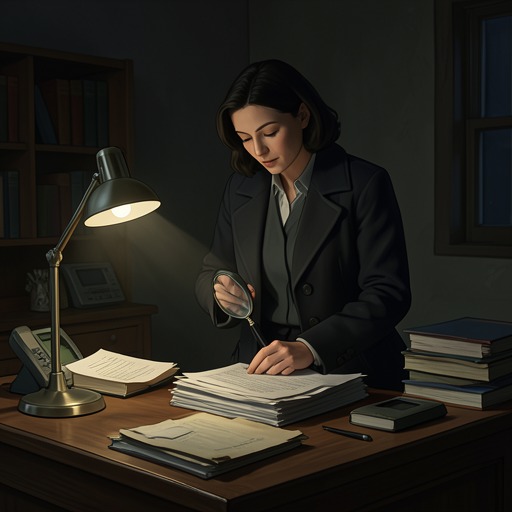
Maya searches online and finds a brief obituary in a Philadelphia newspaper. It lists Theo’s death as September 12, about six weeks before Andrew fell from a yacht, and records that Theo was seventeen, the same age Andrew had been. It gives no cause of death. That omission leaves Theo’s story unresolved and turns the apparent coincidence of two young deaths into a question Maya pursues through their shared school and soccer records.
A Friend, Roommate, and Exceptional Player
Christopher Swain remembers Theo as funny and outgoing, someone who did not retreat or defer to the wealthier students at Franklin Biddle Academy. Swain rejects the simple version of events in which rich students ostracize a poorer newcomer: Theo fit in, the other boys liked him, and, in Swain’s recollection, they wanted to belong together. Theo’s background sets him apart socially, but Swain describes a friendship that initially crossed that divide rather than being defined by it.
Theo’s talent on the soccer field made him more than accepted company. Swain calls him not merely good but great: he could score from anywhere and helped the school win the prep-school state title and the wider state tournament, competing against public and parochial schools as well. Swain first wonders whether Theo’s ability might have made him a threat, then distinguishes the roles: Swain played midfield, while Andrew, Theo’s roommate and best friend, was the goalkeeper. The memory of shared success therefore stands beside, rather than explains away, the closeness that made the later betrayal consequential.
The Prank and Theo’s Death
Swain’s confession traces Theo’s death to a night when Joe presented the hazing as a prank. Swain admits that he followed Joe, whom he describes as the leader, and that Andrew followed too. Swain frames his own participation as weakness; he also recalls the group treating hazing as a familiar practice at a school like Franklin Biddle Academy. He, Joe, and Andrew went to Theo’s room, where Andrew was already present, jumped on Theo, and carried him downstairs.
At first, Theo seemed to understand the event as part of the joke. He smiled, played along, and pretended to call for help as the boys tied him to a chair. Swain remembers leaving one knot loose and Joe tightening it. The turn comes when Joe puts a drinking funnel into Theo’s mouth. Theo’s expression changes, but the others continue laughing; Andrew pours beer through the funnel as the boys chant for him to drink. Joe then replaces the beer with grain alcohol. Swain remembers Andrew telling Joe to stop, but the drinking has already become dangerous. Theo’s leg begins thrashing as if he is having a seizure.
The school’s later account identifies the cause of death as alcohol poisoning. Theo had not been known as a partier, and this was the only such death in the campus’s history. He apparently stumbled into a basement; a custodian found him the next morning, when he was already dead. The sparse obituary that first sent Maya searching concealed a death that was not an unexplained accident in the ordinary sense: it followed a group act whose participants had mistaken a familiar hazing ritual for something they could control.
Guilt, Silence, and the Link to Andrew
Swain says that he had never told the story before the conversation prompted by Maya’s email. His doctor knew some of it, but the full account had remained unspoken. He describes being afraid that Joe would kill him if he spoke—not only when they were teenagers, but even years later. His fear helps explain the long silence, without undoing his admission that he took part in carrying Theo downstairs and helping tie him up.
Asked whether the event made Andrew break down, Swain cannot say for certain. He allows that Andrew might have broken down anyway, but says that he and Andrew were never the same afterward. Javier Mora’s judgment, which Maya recalls, gives that change a sharper name: it was guilt, not grief. The distinction does not lessen Theo’s loss; it clarifies how the survivors’ knowledge of their own actions persisted beneath the public story of mourning and Andrew’s later death.
Narrative Role and Legacy
Theo’s death becomes the point to which Maya can trace the chain of events back from the yacht. The investigation begins with a portrait, a date, and an obituary without a cause; school records and Swain’s testimony gradually supply the relationships and circumstances those fragments omit. Theo is therefore central to the mystery even though he is absent from the present-day action: each account changes the meaning of the one before it, from apparent coincidence to a shared history of friendship, complicity, and concealed guilt.
Near the end, Maya insists that Joe did not only kill her sister; he also killed Theo. Another speaker characterizes Theo’s death as a hazing incident gone wrong, while Maya names Joe’s responsibility directly. The novel holds those descriptions in tension: Theo was not shown to have been deliberately murdered in the same way as Maya’s sister, but Joe’s substitution of grain alcohol for beer turns his leadership of the prank into the decisive cause of the fatal danger. Theo’s death remains both a specific loss and the earliest revealed wound in a history the survivors tried to keep buried.