Frankenstein's creation of the monster
Frankenstein, or the Modern PrometheusVictor Frankenstein's creation of the monster is the central, catastrophic event of the novel, the moment when his obsessive pursuit of the secret of life culminates in an act of such profound horror that it instantly shatters his ambitions and unleashes a chain of destruction upon everyone he loves. It is the irreversible point of no return, transforming a noble if reckless scientific dream into a personal and familial apocalypse.
The Long Preparation and the Moment of Animation
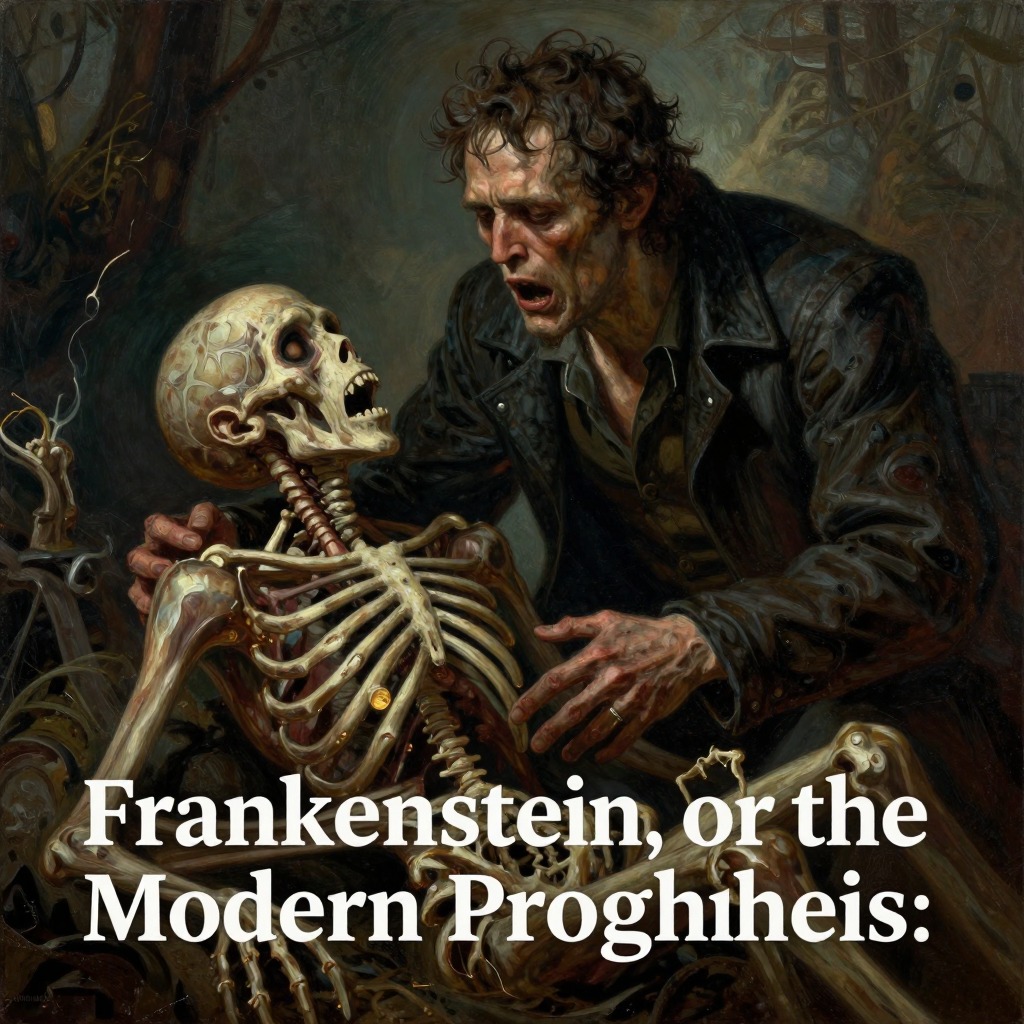
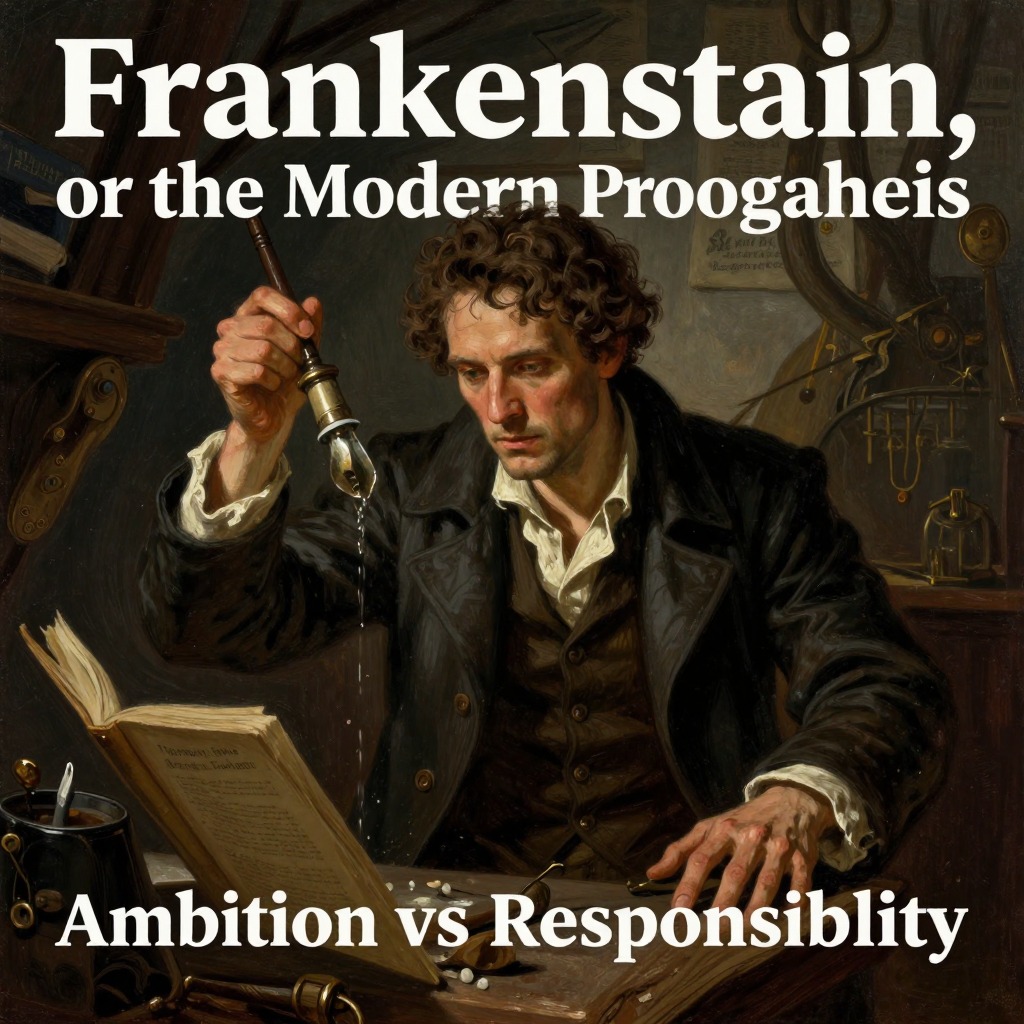
Victor's path to this moment was paved by two years of feverish, secret labor in a solitary chamber at the top of his house in Ingolstadt, a workshop he describes as a "cell of filthy creation." Driven by a "resistless and almost frantic impulse," he had collected bones from charnel-houses, disturbed the "tremendous secrets of the human frame," and sourced materials from dissecting rooms and slaughterhouses. His health deteriorated—his cheek grew pale, his body emaciated—and he became a nervous wreck, shunning his fellow creatures as if guilty of a crime. He neglected his family and the beauty of the seasons, his entire being consumed by the single purpose of infusing life into an inanimate body. The culmination came on a dreary night of November. With an anxiety that almost amounted to agony, Victor collected the instruments of life around him. At one in the morning, by the glimmer of a nearly burnt-out candle, with rain pattering dismally against the panes, he saw the dull yellow eye of the creature open. It breathed hard, and a convulsive motion agitated its limbs.
The Immediate Horror and Disgust
The moment the creature lived, Victor's dream of a new species blessing him as its creator evaporated, replaced by "breathless horror and disgust." He had selected the creature's features as beautiful, but the reality was a hideous mockery: yellow skin scarcely covering the work of muscles and arteries, lustrous black hair, pearly white teeth, and watery eyes that formed a horrid contrast with a shriveled complexion and straight black lips. Unable to endure the aspect of the being he had created, Victor rushed out of the room. He was then tormented by a nightmare in which he kissed Elizabeth, only to see her features transform into the corpse of his dead mother, with grave-worms crawling in the folds of her shroud. He awoke to find the monster at his bedside, its jaws opening and muttering inarticulate sounds, one hand stretched out as if to detain him. Victor escaped and spent the rest of the night in the courtyard, walking in the greatest agitation, catching and fearing every sound.
The Immediate Aftermath and the Beginning of Misfortune
The morning after the creation, Victor fled into the streets, drenched by rain, unable to return to his apartment. He encountered his friend Henry Clerval, who had just arrived in Ingolstadt, and the sight of him brought a moment of calm. But when Victor returned to his room and found the creature gone, his relief was short-lived. The encounter triggered a severe nervous fever that confined him for several months, during which he raved incessantly about the monster. The event marked the beginning of his misfortunes, creating a violent antipathy to natural philosophy and a permanent psychological wound. The creature, abandoned by its creator, wandered into the world, and Victor's subsequent life became a desperate attempt to undo the consequences of that single night. The creation is the original sin from which all subsequent tragedies—the murders of William, Justine, Clerval, and Elizabeth, and the deaths of his father and himself—inevitably flow.
The Creation as a Defining Act of Hubris
The creation is the ultimate expression of Victor's dangerous ambition. He had sought to penetrate the secrets of nature, to "pour a torrent of light into our dark world," and to become the creator of a new species. He believed he could break through the ideal bounds of life and death. Yet the act itself was a filthy, loathsome process that he undertook in cold blood, and the result was a being so hideous that even he, its maker, could not bear to look upon it. The event is a stark illustration of the novel's central warning about the perils of unchecked knowledge and the creator's responsibility for his creation. Victor's failure to anticipate the horror of his work and his immediate abandonment of the creature constitute a profound moral failure that sets the entire tragedy in motion. The creation is not a triumph but a catastrophe, a testament to the gulf between the ambition to create and the wisdom to nurture.