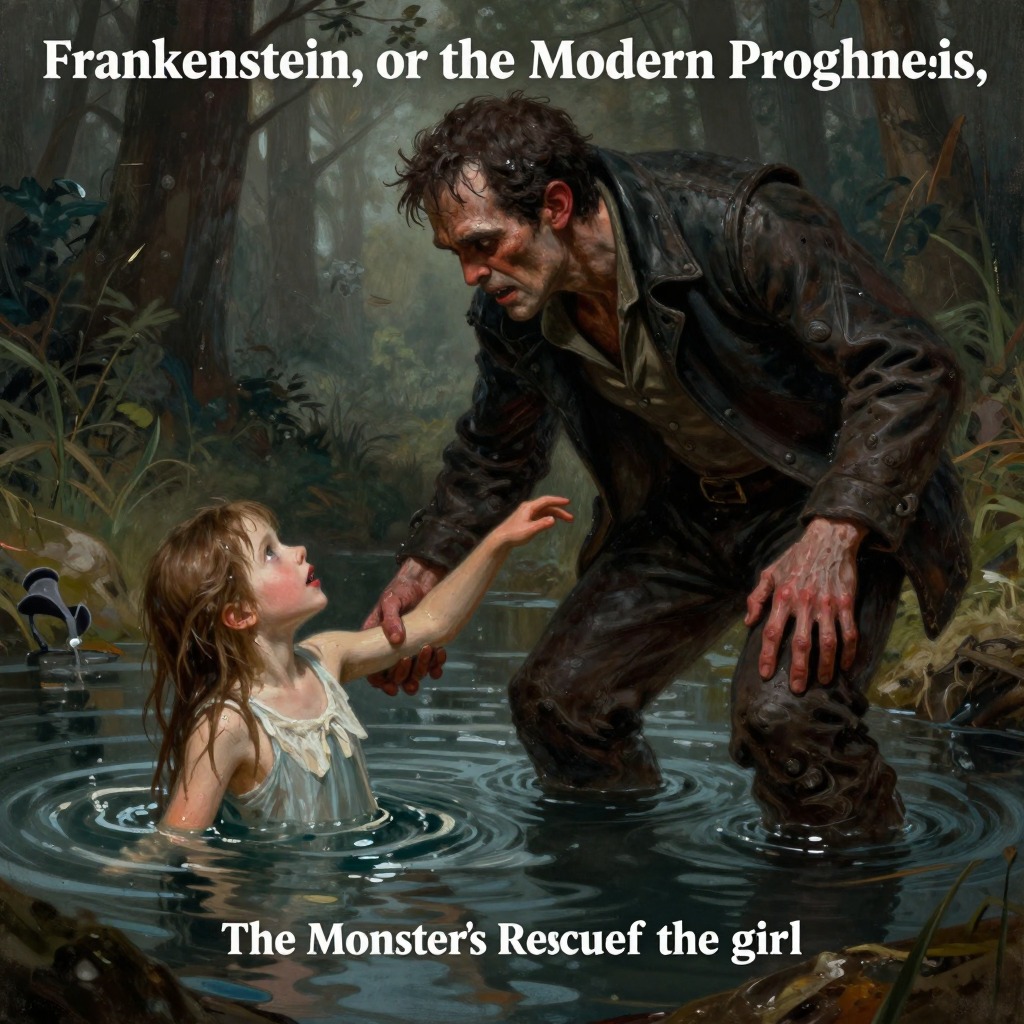
Monster's Rescue of the Girl
Frankenstein, or the Modern PrometheusThe Monster's Rescue of the Girl is a decisive turning point in the creature's moral trajectory, the moment when a spontaneous act of kindness is repaid with a gunshot, extinguishing the last embers of his benevolent nature and confirming his conviction that humanity will never accept him. Occurring as he crossed the border into Switzerland during his long journey from the De Laceys' cottage to Geneva, this event marks the final, irreparable rupture between the monster and the human race, transforming residual hope into a vow of eternal war.
Circumstances and Setting
The rescue took place in early spring, when the sun had recovered its warmth and the earth was beginning to turn green again. The monster, who had traveled only at night to avoid human sight, ventured to continue after sunrise through a deep wood, a rare daytime journey permitted by the cover of trees. The loveliness of the sunshine and the balminess of the air stirred emotions of gentleness and pleasure that had long seemed dead within him; he allowed himself to be borne away by these novel sensations, forgetting his solitude and deformity, and even raised his eyes with thankfulness toward the sun. He came to the boundary of the wood, skirted by a deep and rapid river into which many trees bent their budding branches. There he paused, uncertain of his path, when he heard voices and concealed himself under the shade of a cypress.
The Rescue and Its Immediate Aftermath
A young girl came running toward the spot where the monster was hidden, laughing as if she were fleeing from someone in sport. She continued along the precipitous banks of the river, suddenly slipped, and fell into the rapid stream. The monster rushed from his hiding place and, with extreme labor against the force of the current, saved her and dragged her to shore. She was senseless, and he endeavored by every means in his power to restore her to life. At that moment a rustic approached—probably the person from whom the girl had been playfully fleeing. On seeing the monster, the man darted forward, tore the girl from his arms, and hastened toward the deeper parts of the wood. The monster followed, hardly knowing why, but when the man saw him draw near, he aimed a gun at his body and fired. The monster sank to the ground, wounded, while his injurer escaped into the wood with increased swiftness.
Consequences and the Turn to Vengeance
The wound shattered the flesh and bone of the monster's shoulder; he did not know whether the ball had remained inside or passed through, and he had no means of extracting it. For some weeks he led a miserable life in the woods, trying to cure the wound, his physical suffering augmented by the oppressive sense of injustice and ingratitude. The feelings of kindness and gentleness he had entertained only moments before gave place to hellish rage and gnashing of teeth. Inflamed by pain, he vowed eternal hatred and vengeance to all mankind. His daily vows rose for a deep and deadly revenge, such as would alone compensate for the outrages and anguish he had endured. This event, more than any other single experience, completed the monster's transformation from a being who still hoped for human sympathy into one who embraced his role as an enemy of the human race, a change he would later articulate to Victor Frankenstein on the glacier: "I was benevolent and good; misery made me a fiend." The rescue and its violent repudiation became a foundational memory in the creature's narrative, the proof he offered that his malice was not innate but produced by the cruelty of those he tried to help.